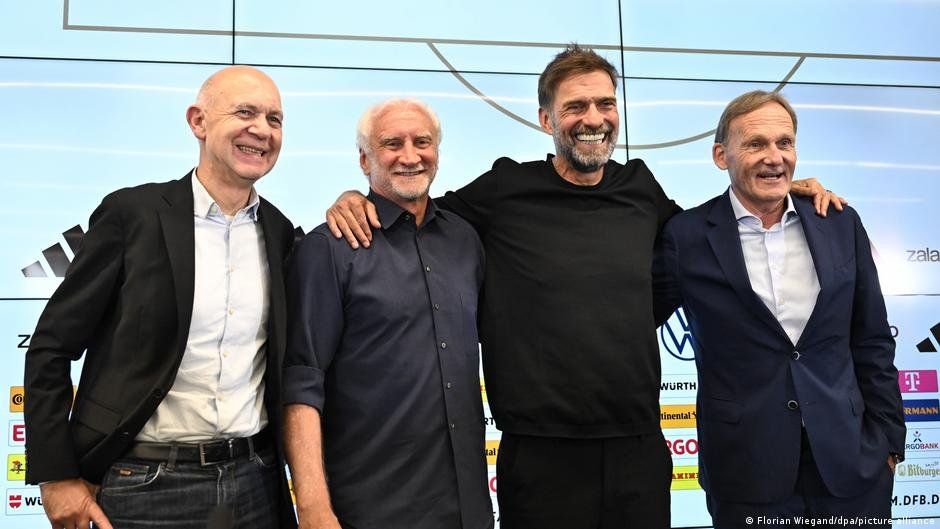
“We must not let this become a pawn in the hands of investors. We must not lose the support of the fans, but we are on our way to ruining that support. I find this extremely problematic and unacceptable.”
These were the words of the head of Germany’s football association, the DFB, in response to FIFA’s plan to create a commercial subsidiary to sell to private investors. The DFB president, Bernd Neuendorf, sits on the FIFA Council, which FIFA describes as its “main decision-making body”, but he was surprised by Tuesday’s proposal.
Neuendorf said that he “had to learn the news from the newspaper. This is no way to treat people.” He said Infantino’s approach was “extremely disturbing. When you sit on the committee, you want to be able to actively participate in decisions and express your opinion. It should be a process, but nothing like that is happening at FIFA – not on important issues, and especially not now on the investor issue.”
Bundesliga clubs criticize FIFA World Cup plan
As well as widespread fan discontent expressed via social media, major German clubs have expressed their dissatisfaction with the plans.
“I feel ashamed that we even discuss such ideas in football. Football is not ours,” Bayern Munich sporting board member Max Eberl told Sky.
“I think FIFA exists only to make profits. That disgusts me,” he said.
“Why does FIFA feel it needs to reinvent the wheel? In my view, this initiative is not a good idea at all,” said Borussia Dortmund CEO Carsten Kramer, while his counterpart in Stuttgart, Alexander Wehrle, gave his support to the stance of the DFB and European football governor UEFA against the proposal.
“Taking the commercialization of football in this direction without even the semblance of a common, sensible goal would send a devastating message,” he said.
Earlier this year, Germany refused to sign a document recommending Infantino’s re-election and Neuendorf also criticized FIFA suspending the World Cup red-card ban for American striker Folarin Balogun after US President Donald Trump intervened.
Germany’s new manager Jurgen Klopp, who was working as a TV pundit during the tournament, also criticized the decision.
He said, “Let’s just say this: It’s our game, not theirs. These two people (Infantino and Trump) have no clue about football, they should have nothing to do with it.”
Germany and UEFA are willing to raise their voice
Despite lagging on the pitch in recent times, the German still wields considerable influence in European football’s governing body and will reportedly be a leading voice when the organization meets on Thursday. Neuendorf said that: “If UEFA rejects this request (for approval of the plan), it is dead, because I believe that with UEFA out you will not find any investors willing to go ahead with this project.”
This is not the first time that Germany has protested against FIFA’s decision. At the Qatar World Cup in 2022, the men’s team covered their mouths before the game against Japan in protest of not being allowed to wear rainbow bracelets to support LGBT+ rights. Germany was hesitant to repeat it at the World Cup in 2026 despite widespread concerns about ticket prices, the failure to issue visas to fans and officials from some countries, and Infantino’s ties to Trump due to the lack of support from other federations for that action.
Fan engagement means DFB needs to be strong in messaging and action
But the Balogun case, and the new sales pitch, may be irrelevant. The DFB knows that they have to be particularly careful on these issues because of the country’s football culture.
In 2024, the DFL, the body that governs the Bundesliga, was forced to withdraw from plans to sell a portion of its TV rights to foreign investors due to fan protests, which included smoke bombs being thrown onto the pitch during matches with tennis balls and remote control cars.
More recently, Bayern and Stuttgart fans unfurled a huge banner bearing the DFB logo at this year’s German Cup final in protest of high ticket prices.
Such actions are common in German football, with a 50+1 ownership model that prevents single investors from holding a majority stake in a club, ensuring that fans retain more power than in most other European countries.
Even if Germany and UEFA continue to oppose Infantino’s decisions and presidency, the Swiss executive will likely retain control until other confederations, particularly in Africa and Asia, follow suit. Although UEFA only has 55 votes out of 211, it remains the most powerful confederation within FIFA and with a powerful nation like Germany leading the way, Infantino may be beginning to feel the heat.
Edited by: Chuck Penfold