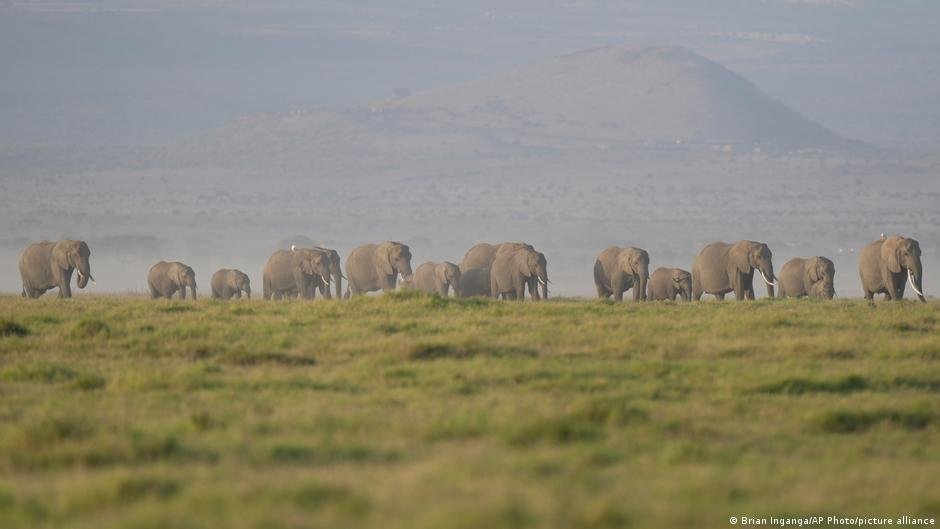
Wildlife officials in Kenya said on Thursday that 15 elephants found dead in one of the country’s most famous wildlife parks this month were likely poisoned by cyanide.
Officials said the poisoning probably originated from pesticides used on farms. The elephants lived in Amboseli National Park near the Tanzanian border.
Kenya Wildlife Service spokesman Duncan Juma Wanyama told the AFP news agency that investigators suspect the elephants ate tomatoes contaminated with “very strong pesticides”.
Officials say tomatoes were found in the stomachs of several elephants from the same herd. Wanyama said the animals were probably attracted to the raw plants growing in nearby fields.
It is not clear whether the poison was given intentionally or not.
At least one elephant died in a field after eating tomatoes, while another elephant moved toward a water source before dying a few days later despite receiving treatment by veterinarians.
“Cyanide is a poisonous substance… which is very lethal, very toxic,” Wanyama said. “Whenever elephants consume it, it affects their lungs and liver,” he said.
Authorities have not said who they suspect is responsible for the contamination of tomatoes in fields adjacent to Amboseli National Park.
But all this happened because farmers have in the past been suspected of deliberately poisoning elephants to stop them from eating their crops.
Wildlife officials are investigating whether other farmers in the area also use the same chemicals.
The Kenya Wildlife Service has warned that such contamination could have an even greater impact on animals grazing in the area.
“Apart from the elephants and the wildlife that graze on those farms, we also have local livestock. We have goats. We have cattle that are there. Ultimately, if it’s really in the system, we’re going to see a huge impact,” said Erastus Kanga, director general of the Kenya Wildlife Service.
‘Big blow’ for conservation
Amboseli National Park is particularly known for its herds of elephants as well as its breathtaking savannah landscapes, with Mount Kilimanjaro visible across the border in Tanzania.
The International Fund for Animal Welfare (IFAW) charity said the elephant poisoning was “a major blow” to one of Africa’s key elephant populations.
IFAW said the incident highlighted the devastating impact of toxic substances on wildlife, livestock, people and ecosystems.
“Those responsible must be held fully accountable under the law,” said IFAW Kenya director Ben Wandago.
“This tragedy also underscores the urgent need for strict controls and responsible management to prevent highly toxic substances from entering the natural environment,” Vandago said.
Don’t let algorithms hide news. If you rely on our team for reliable reporting, please take a moment Choose us as your preferred source on Google by clicking here And press the “Star” or “Favorite” button, so you always see our verified news first.
Edited by: Shawn Sinico