
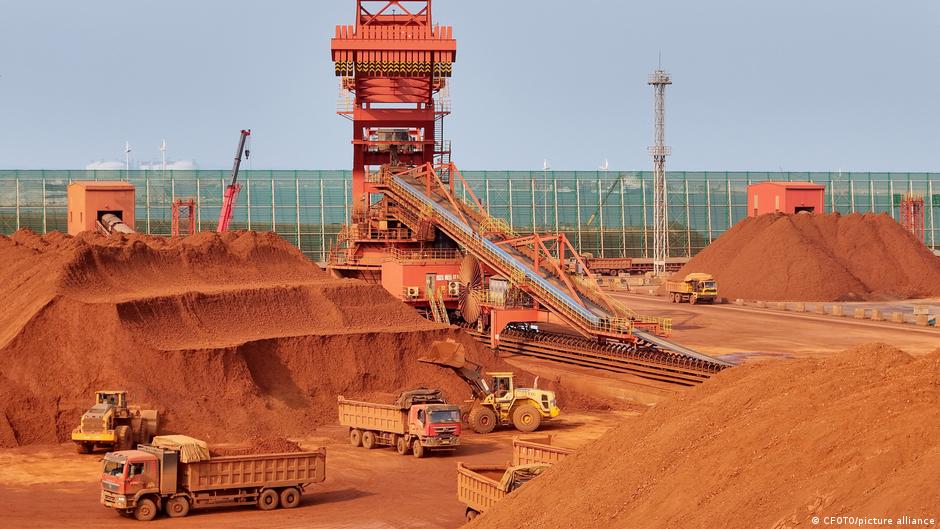
The EU executive on Wednesday announced new policies to coordinate the procurement and storage of raw materials such as rare earth minerals critical for the automotive, electronics and defense industries.
The European Commission also said it would implement tougher economic policies with trading partners to better secure supplies of rare earths.
“The EU will also be more strategic in leveraging its economic weight and access to its single market.” The commission said,
Existing measures that the Commission plans to use independently of their original objective to strengthen economic security could include anti-dumping duties, measures against takeovers of European companies from abroad or excluding companies from third countries from public contracts.
China tightened its grip!
China, the world’s main supplier of rare earths, accounting for more than two-thirds of production by 2023, announced new controls on exports in October.
That sent markets into turmoil and disrupted supply chains, until Beijing later said it would suspend the measures for a year. It had imposed strict export licenses for some materials in April itself.
The European-Chinese dispute over chip maker Nexperia also raised concerns in German industry, as it affected the country’s key automobile sector.
“Europe is responding to the new global geopolitical reality,” said EU industry chief Stephan Sjörn, aimed at countering plans he likens to the raw earth “racket” run by Beijing.
America ensured supply, other options limited
The Trump administration – pushing to secure its supply with a series of bilateral trade deals that has demand far exceeding production despite the US being the second-largest producer worldwide – has put further pressure on European acquisitions.
Other major producers such as Myanmar, Australia, India, Russia, Brazil and Vietnam are far from Europe, leading to difficult relations with the EU or both.
EU Foreign Policy Commissioner Kaja Kallas said, “Economic security is fundamental to Europe’s security. When access to vital raw materials needed for our defense is cut off, overdependence becomes physically dangerous.” “Today we adopt a new strategy to reduce these dependencies by diversifying our supply chains while remaining open for trade with partners.”
The EU is also considering exploring reserves and increasing its production
The European Commission said the strategic fund of about €3 billion (about $3.5 billion) will also help finance strategic projects in the mining, refining and recycling of critical minerals and metals. , Both within Europe and in partner countries.
The fund is separate from money spent by individual member states, for example Germany has earmarked €1 billion for rare earth projects between 2024 and 2028.
Rare earth reserves, or at least promising sites for exploration, have been identified in many parts of Europe, not least in remote and sparsely populated Scandinavia, for example around the giant iron ore mine at Kiruna in Sweden.
Edited by Shawn Sinico