

The IMF says the inefficiency of the traditional system is pushing for greater adoption of stablecoins.
Venezuela is the key example of how stablecoins can replace fiat money.
For years, the International Monetary Fund (IMF) warned about the risks of cryptocurrencies. But now, in a twist that seems more like an admission than a revelation, it recognizes what millions of users in Latin America, Africa and the Middle East already knew from experience. This is that stablecoins can replace fiat money with unexpected ease. In other words: the IMF has just discovered warm water.
The adoption of stablecoins is not a mysterious phenomenon. Its advance responds, indeed, to the enormous inefficiency of traditional financial systems. This is something that the IMF itself admits in its most recent reportin which they recognize that sending money through traditional means takes days, as well as that sending it abroad costs an absurd percentage.
The fund recognizes stablecoins are globally transferable, operate 24/7, and settle almost instantly at a potentially low cost.
The entity also admits that if these digital currencies facilitate domestic payments or cross-border payments, “the replacement of local currencies can be accelerated.”
The latter, “making it difficult for local alternatives (such as CBDCs or stablecoins denominated in local currency) to compete, unless they offer similar utility and integration,” the fund warns.
Therefore, stablecoins, especially those denominated in foreign currencies (such as USDT and USDC), “represent a threat to the monetary sovereignty” of countries, argues the IMF.
It is not a stablecoin problem
And when you look at it, they could be right. When citizens decide to migrate their economic activity towards digital instruments backed by dollars, central banks certainly lose control over internal liquidity and the transmission of monetary policy is weakened. Furthermore, seigniorage—that silent profit from issuing money—is reduced.
Now, This is not a problem caused by stablecoins. Rather, it is a consequence of weak monetary frameworks, chronic inflation, fragile institutions and, in many cases, governments that have deliberately destroyed confidence in their own currencies.
It must be made clear: stablecoins do not erode monetary sovereignty. They simply state that that sovereignty was already compromised.
That is why the case of Venezuela is so illustrative. In a country where informal dollarization was already entrenched and where the bolivar lost its basic function as a store of value, stablecoins did nothing more than accelerate an inevitable process.
What did these coins do? They offered something that neither the bolivar nor the physical dollar could guarantee. This is liquid stability and accessible from a mobile phone. For an average citizen, the decision was not ideological, but a matter of economic survival.
At CriptoNoticias we have widely reported the penetration of USDT in Venezuela. The digital currency has already reached different strata of the economy, such as transportation and commerce. Independent figures indicate that 47% of cryptocurrency transactions in Venezuela are made with USDT. And that 30% of businesses already operate with cryptocurrencies.
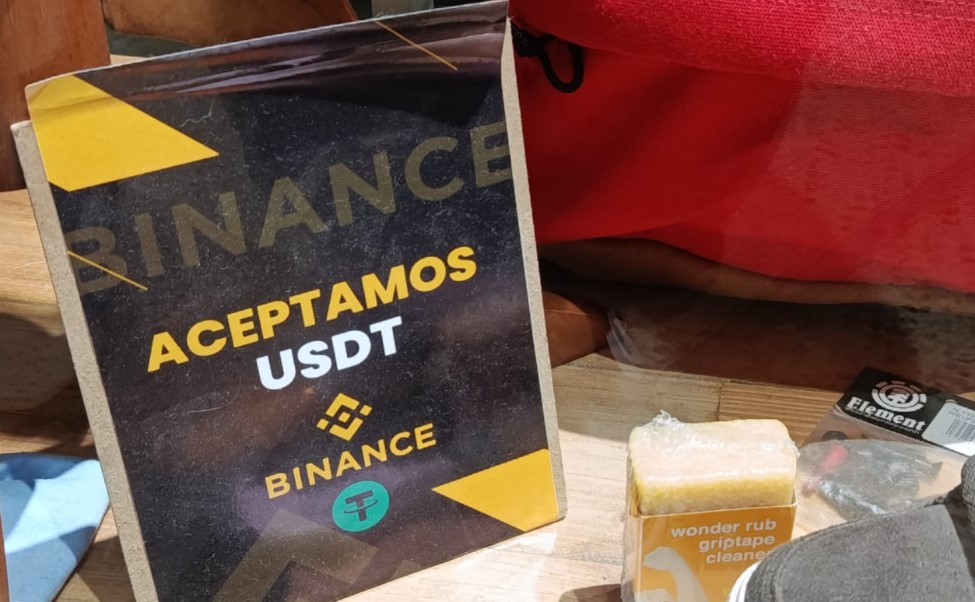
The thing is that, unlike traditional dollarization, which requires physical bills or bank accounts that are difficult to open, stablecoins bypass political and logistical barriers.
These are capable of penetrating an economy through something as common as a telephone and an internet connection. There are no banking requirements, forms or intermediaries. Their penetration speed is precisely what makes them so difficult to stop.
Stablecoin Holdings Remain Small
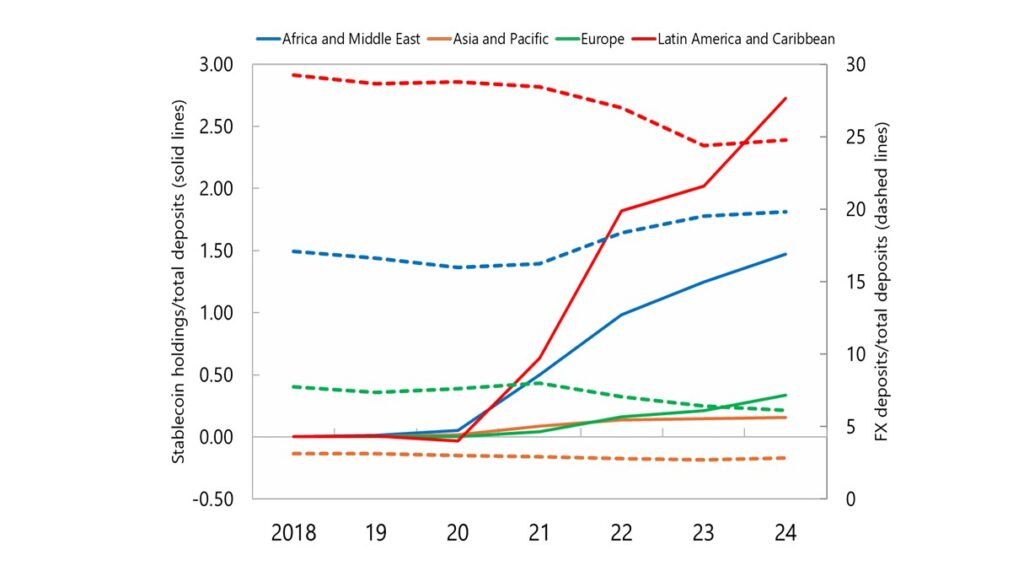
According to the IMF, stablecoin holdings in different regions of the world remain small compared to bank deposits in foreign currency.
Despite this, they admit that their growth has been explosive in recent years. This is because they went from almost zero in 2020 to represent between 1.5% and 2.7% of total deposits in 2024. This is shown in the following graph from the multilateral institution:
And the striking thing is that That happened without institutional support.without major educational campaigns and, in many cases, without clear regulatory frameworks.
The IMF, therefore, finds itself in an awkward position. You cannot deny the usefulness of stablecoins, because millions of people already depend on them to protect themselves. But it can’t celebrate them either, because they clearly represent a direct threat to the traditional financial system it has always sought to preserve.
Ultimately, the IMF is not revealing anything new. He is simply putting into technical language what any merchant in Caracas or Lagos could explain without the need for a report: stablecoins replace fiat money because they work better.
Disclaimer: The views and opinions expressed in this article belong to its author and do not necessarily reflect those of CriptoNoticias. The author’s opinion is for informational purposes and under no circumstances constitutes an investment recommendation or financial advice.