

Tax ambiguity generates insecurity for startups and merchants.
Exchanges like Binance operate without local registration, but need alliances to formalize.
Bolivia has established itself as one of the Latin American countries that is advancing the fastest in the adoption of cryptocurrencies, to the point of being among the 20 markets with the highest global growth according to recent reports from Chainalysis.
This silent but sustained rise has sparked curiosity: What is really happening in the highlands? To understand the current state of the Bolivian ecosystem, CriptoNoticias spoke with Mauro Alejandro Chirinos, president of the Bolivian Blockchain Association (Asoblockchain) and a leader in the local community.
Chirinos explained that the path of cryptocurrencies in Bolivia has been long and tortuous, marked by comings and goings. In 2010, the Central Bank of Bolivia (BCB) expressly prohibited – a measure reinforced in 2020 through Resolution 144 – the use of payment gateways with cryptoassets with the aim of preventing fraud.
However, in June 2024, through Board Resolution 082, that prohibition was lifted. This 180-degree turn, motivated by the profound exchange crisis and the chronic shortage of dollars, enabled electronic transactions with virtual assets. The result was immediate, since between July 2024 and May 2025 the trading volume skyrocketed by 630%, reaching $294 million in the first half of 2025 alone.

Under the government of Luis Arce, Supreme Decrees 5348 and 5384 (issued in January and May 2025, respectively) transferred the responsibility of regulating virtual asset and fintech service providers to the Financial System Supervision Authority (ASFI), culminating in ASFI Resolution 540/2025 in July.
“With this supreme decree, what becomes the issue of regulation by them, specifically virtual asset service providers, but also financial technology companies,” Chirinos explained during the interview, highlighting how this regulation describes key concepts such as digital assets, tokens, stablecoins, but without closing all regulatory loopholes, such as tax.
Does Binance need a local partner in Bolivia?
One of the main ambiguities, according to Chirinos, is that foreign companies or foreign cryptocurrency exchanges must form some type of alliance with a local entity to formally establish themselves.
However, under certain circumstances they may remain accessible to Bolivian users without local registration. This leaves citizens in a vulnerable position. This is because, since they are not supervised by the ASFI, the platforms do not offer the same guarantees or protection mechanisms as a local regulated entity. A fact that exposes users to risks in the event of fraud, hacking or bankruptcy.
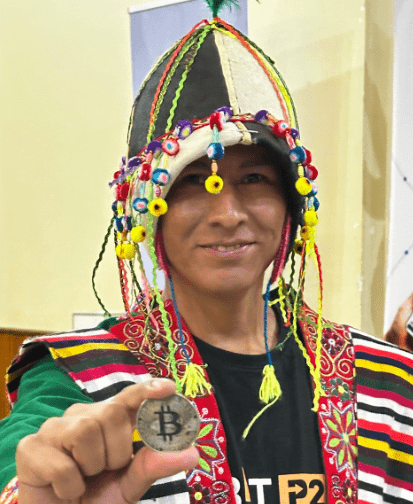
A key ambiguity of the regulation is that foreign companies such as Binance or BitGate must form alliances with local entities to formally establish themselves; They cannot operate independently. Fintech startups, for their part, enter a regulatory sandbox—a controlled testing environment—where they are registered and evaluated, although the process is not entirely clear.
Mauro Alejandro Chirinos, president of Asoblockchain Bolivia.
However, foreign platforms are not required to form or form alliances if they do not maintain alliances with local entities. They can operate freely accessible to Bolivian users (for example, via apps or web), as long as they do not offer joint services with local ETFs or violate anti-money laundering regulations.
According to Chirinos, this explains why exchanges like Binance remains available in Bolivia without local registration, but if they wanted a branch or a formal collaboration agreement, they would fall into the realm of mandatory alliances.
Other ecosystem analysts such as Alison Berbetty, from the Bolivian Chamber of BlockchainCablock, criticize the lack of transparency in the evaluation criteria. «What happens if the regulator does not have trained teams? What are the exact thresholds for passing a test? Berbetty asks.
This ambiguity is seen as an element that could become a “discretionary filter” that slows down innovation, especially for small foreign startups interested in alliances.
Taxes, a pending issue for cryptocurrencies in Bolivia
Additionally, Chirinos puts his finger on a key sore point by pointing out that the ASFI regulations (Resolution 540/2025) does not address taxes for crypto assets or fintechleaving this aspect in limbo. This is deliberate in the sandbox, designed as a “testing environment” to experiment under Bolivian legislation without immediate tax burdens, encouraging innovation.
As he implies, the questions remain as to how do startups declare profits during testing? Do general taxes (such as VAT or Financial Transaction Tax) apply to P2P transactions with stablecoins like USDT, which dominate 86% of cryptocurrency operations in Bolivia? Without a specific tax framework, informality persists, and that is why warns of a “problematic gap” in accounting and finance.
For the new government of Rodrigo Paz Pereira (taken office in November 2025), closing these gaps—with fiscal guides and transparent criteria—could transform the gray area into a solid bridge. To achieve this, Chirinos promotes mass education by 2026. He says that without attention to these elements, “working legally” remains half done, exposing users and entrepreneurs to unnecessary risks.