
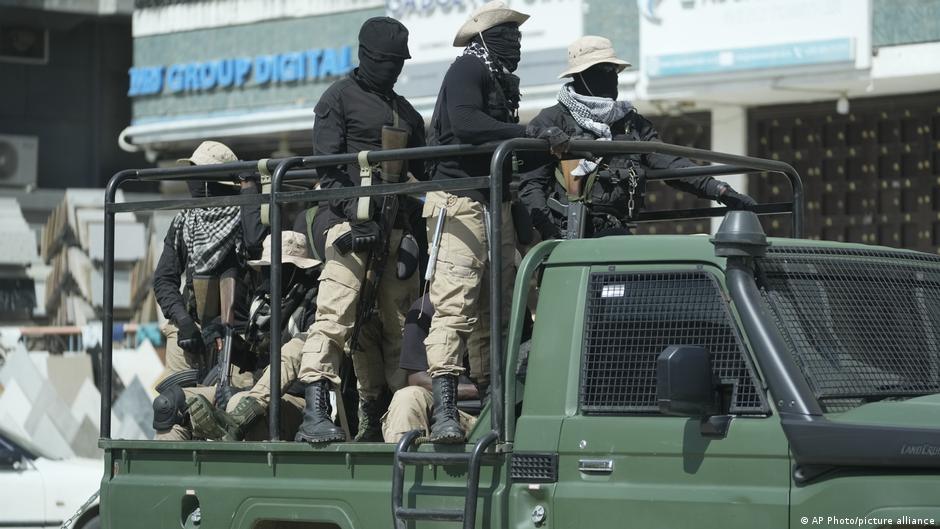
The streets of Tanzania’s largest city, Dar es Salaam, were largely deserted on Tuesday after police and soldiers were deployed to quell anti-government protests on the country’s Independence Day.
Presidential and parliamentary elections on 29 October led to the worst political violence in Tanzania’s post-independence history, when President Samia Suluhu Hassan was re-elected in a vote that barred major opposition candidates from running.
Hassan’s government was accused of rigging the elections and overseeing a campaign of killings and kidnappings, sparking riots across the country.
UN human rights experts estimated last week that at least 700 people were extrajudicially killed in the violence, while Tanzanian opposition figures have spoken of more than 1,000 victims of the so-called “shoot to kill” policy.
Since then, authorities have continued to suppress dissent, arresting hundreds of people and charging them with treason, which carries the death penalty, and banning normal Independence Day celebrations on Tuesday after it had been scheduled for protests.
Prime Minister Mwigulu Nchemba urged citizens to stay at home and “use the day to relax”.
Police in Dar es Salaam are investigating
Police were checking IDs on the streets of Dar es Salaam, Tanzania’s financial capital, while shops in the city center were closed.
A reporter for the French AFP news agency said he was stopped and searched seven times in just over 30 minutes while walking through the city.
And a local bus conductor told Reuters news agency that his company was not operating its normal “essential service” because “we can’t afford to go out” for fear of violence.
Police spokesman David Msime said the security situation across Tanzania was calm and that footage of Tuesday’s demonstrations on social media was actually from earlier protests.
“We continue to encourage Tanzanians to ignore such images as they are intended to deceive them into thinking that protests are taking place there,” he said.
Tanzania gained independence from the United Kingdom in 1961. Earlier, from 1885–1919, the region was conquered by the German Empire and incorporated into German East Africa.