
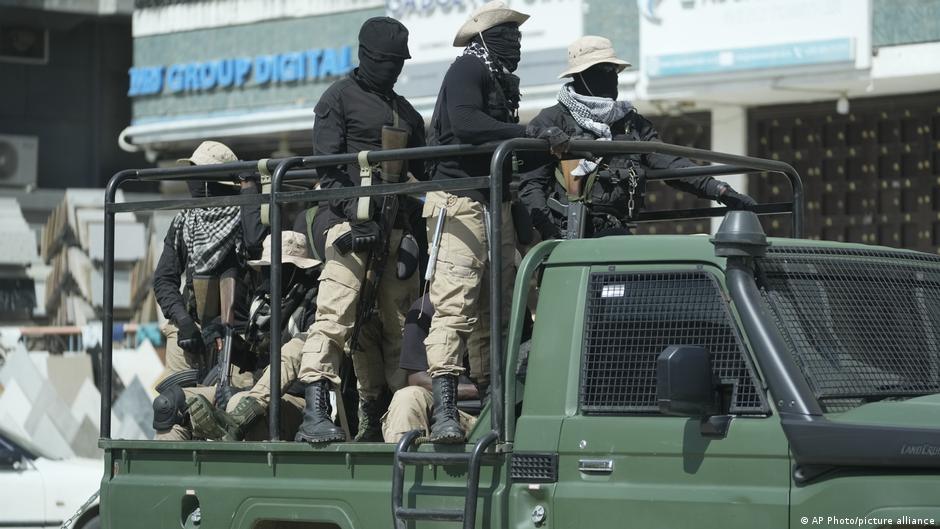
It is an unusual moment for Tanzanians who cannot celebrate the country’s Independence Day on December 9 after the government canceled celebrations.
Citizens were warned against coming out to protest after calls for demonstrations were made by the opposition and activists.
“Those protests are not permitted and they are illegal… This is not a protest, this is a coup,” Home Affairs Minister George Simbachawane told media in Tanzania’s commercial capital Dar es Salaam. “Our security forces will handle them.”
There and in other cities, many streets were deserted following the deployment of police and soldiers in full force on Tuesday.
The government justified the move, saying it did not want a repeat of the post-election riots in October, in which thousands of protesters were killed.
The Office of the United Nations High Commissioner for Human Rights urged Tanzanian authorities to respect the fundamental rights of citizens ahead of the planned demonstrations.
It had called for a nationwide ban on protests to be lifted and warned against the use of excessive force.
“Security forces should allow Tanzanians to exercise their rights of peaceful assembly and expression and refrain from using force to disperse non-violent gatherings,” UN office spokesman Seif Magango said in a statement on Friday.
But the government said allowing the protests would amount to an attempted coup. On Monday, Prime Minister Mwigulu Nchemba posted a video on Instagram, urging people to stay at home.
“The government advises all citizens, for whom there is no emergency on December 9, to use the day for rest and celebrate it at home, except those whose work duties require them to remain at their work centres,” he said.
Is the government scaring the citizens?
Some activists say the Tanzanian government, led by President Samia Suluhu Hassan, is isolating itself from other democracies by intimidating its own citizens.
Kivutha Kibwana, a Nairobi-based academic and human rights defender, told journalists, “We don’t understand why the Tanzanian state, the government, haven’t realized that the world is against them. And the best thing to do is step back and listen to Tanzanians.”
Kibwana also described the move as unusual and absurd. “I don’t recall any country in Africa that has canceled its Independence Day celebrations.”
Last week, Tanzanian police said they were arresting people committing “online crimes” as they closely monitor social media calls for protests.
Oryem Nyeko, senior Africa researcher at Human Rights Watch, said in a statement that the government was creating a climate of fear among citizens.
“The Tanzanian government is acting to address the dangerous climate of fear that exists ahead of the elections to prevent further protests,” Nyeko said. “The authorities must cease their actions and respect the right of Tanzanians to peacefully express their views.”
The United States said last week it was also reviewing its relationship with Tanzania over concerns about violence against civilians, which President Suluhu Hassan has condemned.
Nyeko said Tanzanian authorities should not ignore the call to ensure justice and accountability. “It is extremely important for Tanzanian authorities to remain focused on ensuring justice and accountability for the many serious post-election rights violations at this critical time,” he said.
“Anything less than this would be an insult to the fundamental rights of the many victims and all Tanzanians.”
Bob Njagi of the Free Kenyan Movement told reporters that Tanzanians needed the help of other Africans to liberate themselves from the current government.
“We are also calling on all Africans and global citizens across Africa to visit Tanzanian embassies around the world to put pressure on the Tanzanian government,” he said.
Edited by: Crispin Mavakideau