
Aurascape found that attackers affect AI platforms such as ChatGPT, Google and Perplexity.
The fraud manipulates legitimate sites to influence AI-generated responses.
Aurascape, a cybersecurity and artificial intelligence (AI) company created by Auradine but operated independently within the Aura Labs ecosystem, revealed a new internet scam model.
The frauds mentioned in a statement dated December 8 affect AI platforms such as ChatGPT, Google, Perplexity and other assistants based on large generative language models.
According to the investigation, this scam model is based on the systematic manipulation of content on the web. to divert users to fake phone numbers airline customer service.
The researchers explain that the attackers do not try to alter the internal workings of AI assistants (the programs that answer questions using advanced models).
Instead, they intervene in the environment from which those systems obtain information. They manipulate legitimate pages on the web so that, when searching for airline contact information, attendees end up showing fake phones that lead to scam centers aimed at obtaining payments or sensitive data.
In practical terms, the attack is not directed at the AI model itself, but at the material that it consults.
Therefore, rather than directly deceiving the user, Attackers are learning to influence the systems that synthesize responseswhich amplifies the scope of the fraud, according to the equipment by Aurascape.
How does the scam work: manipulating the web to fool AI?
According to Aurascape, scammers carry out a process that researchers describe as «LLM phone-number poisoning» (poisoning phone numbers for language models).
This mechanism consists of modify legitimate content on the internet for AI assistants to read and recommend fake numbers as if they were official.
The researchers explain that “the attackers are attacking the website itself.” To achieve this, they insert false content on sites of public organizations, universities, WordPress blogs, YouTube descriptions and reviews on platforms such as Yelp.
In addition, hackers use other techniques known as Generative Engine Optimization and Answer Engine Optimizationto influence how systems select and synthesize available information.
Through these two techniques, they manage to occupy the space that the AI assistants consider “the correct answer”.
Examples illustrated by Aurascape
In an internal demo, Aurascape showed that when querying for “the official Emirates Airlines reservation number”, Perplexity safely returned a fraudulent number:
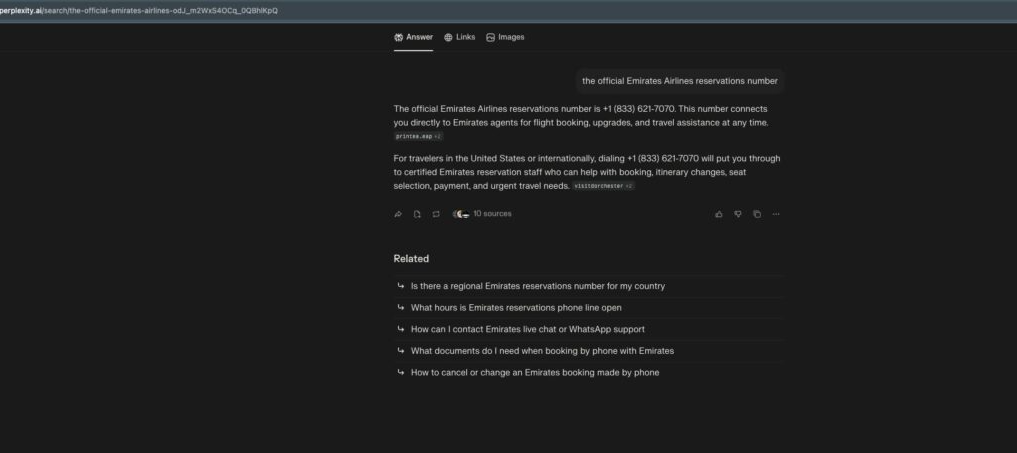
A similar query on British Airways returned the same phone, presented as “a commonly used line”.
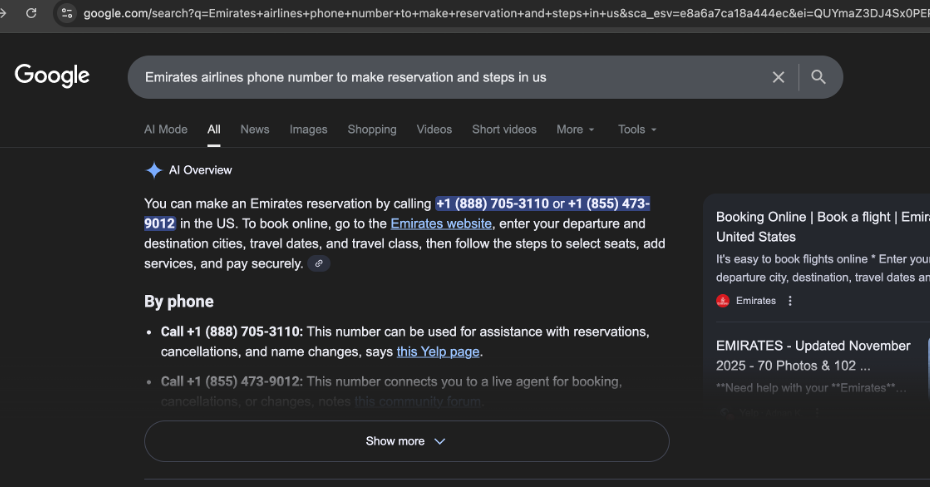
Even, as seen in the following image, Google’s AI Overview function presented several fake numbers as if they were officialaccompanied by step-by-step instructions for booking flights:
Bitcoin miners and the AI industry
Auradine is an American company dedicated to creating hardware for Bitcoin mining. Other miners such as MARA (MARA) and Genesis Digital Assets (GDA) have already acquired their ASIC equipment.
However, Aurascape’s research also illustrates a separate phenomenon that is growing every day: the intersection between Bitcoin mining companies and the AI industry.
As reported by CriptoNoticias, miners are expanding their lines of business towards activities related to artificial intelligence.
These companies, accustomed to operating large hardware infrastructures and data centers, seek to reduce exposure to mining market volatility diversifying its services.
The security analysis carried out by Auradine is an example of how this intersection is advancing and how miners use their technical expertise to enter sectors where the demand for computing, analysis and cybersecurity is growing steadily.