
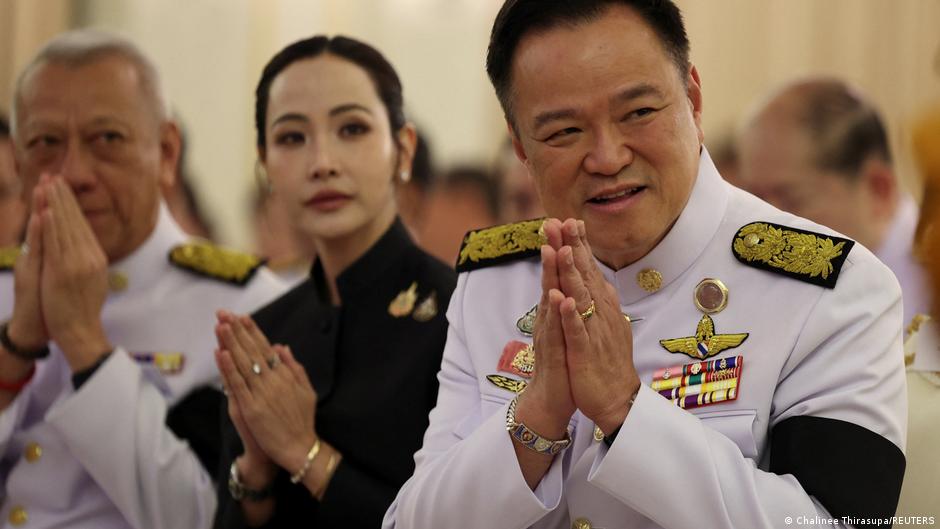
Thailand’s Election Commission confirmed on Monday that early national elections will be held on February 8.
Thai Prime Minister Anutin Charnvirakul opened the vote last week amid a decades-old territorial dispute with neighboring Cambodia that has once again turned deadly. Dozens of people, including soldiers and civilians, have been killed on both sides in heavy fighting along the disputed borders for the second week.
The country’s Parliament was dissolved on Friday after getting approval from King Maha Vajiralongkorn. Anutin claimed Thursday that he wants to “return power to the people.”
By obtaining royal support to dissolve Parliament, Anutin avoided a no-confidence vote that could have rapidly ended his tenure. Some analysts say that the Prime Minister is taking advantage of the nationalist wave arising from the border conflict with Cambodia.
Border clashes shape election strategy
“With the rising nationalist sentiment in the country, it really works for him because people are quite supportive of his actions when compared to the previous government.” [which] was not using strong or aggressive actions against Cambodia,” said Titipol Phakdivanich, a political science professor at Thailand’s Ubon Ratchathani University.
Prime Minister Anutin has taken a tougher stance on the border conflict than his predecessor Patongtarn Shinawatra.
Thailand’s constitutional court removed Patongtarn from office in June over a leaked phone call with veteran Cambodian leader Hun Sen.
In the call, Patongtarn called the elderly former dictator “uncle”, expressed love and respect for him, and criticized his own military commanders – considered a red line in a country where the military has significant clout.
The memory of that call will make it difficult for Patongtarn’s Phu Thai party, even under new leadership, to campaign effectively in the current environment, said Napon Jatusripitak, a visiting fellow at the Singapore-based ISEAS-Yosof Ishak Institute.
Napon said Thailand’s largest party, the People’s Party, may struggle because of its reputation for reining in the military, which young Thais in particular see as exerting undue political influence.
The People’s Party is the reincarnation of Move Forward, a pro-reform party that was dissolved last year after courts ruled that its efforts to soften the country’s le majesté law – which shields the Thai royal family from criticism – violated the constitution.
Napon, who is also managing director of the Thailand Future Institute, a local think tank, said Move Forward’s call for military reform worked well in the 2023 national elections, when it won the most House seats of any party.
Reforming the Constitution of Thailand
But amid ongoing clashes with Cambodia, Napon said, “The military is seen as the real protector of national sovereignty, so the People’s Party’s stance … may not go over well with some of these more nationalist supporters, of whom there are certainly quite large numbers now.”
Anutin, a tycoon-turned-politician who leads the Bhumjaithai Party, was to dissolve parliament by the end of January in any case as part of an agreement struck with the People’s Party in September. In return, the People’s Party agreed to support his bid for Prime Minister.
The same deal committed Bhumjaithai to begin the process of rewriting the constitution and putting it to referendum, another major goal of the People’s Party.
A day before Anutin secured the king’s approval last week to dissolve Parliament, however, the two parties argued over the Senate’s role in the amendment process.
Officially, senators have no party affiliation. But Bhumjaithai has been accused of rigging last year’s Senate elections to get some of her favored candidates elected, which she denies.
When Bhumjaithai insisted last week that any constitutional amendment must be approved by at least one-third of the members of the Senate, the People’s Party protested and began planning a no-confidence vote.
Verapat Pariawong, a policy fellow at the University of London SOAS, said the conservative Bhumjaithai and the reformist People’s Party are bound to butt heads over the Senate and the Constitution.
By insisting that the Senate veto any proposed amendments, Anutin had likely anticipated the People’s Party’s reaction, he said.
“It was never his intention to allow the amendment to the Constitution to proceed in that manner [People’s] The party was expected. “So, they basically created an excuse to hold a new election,” Weerapat said, “and at a time that was most convenient for them.”
Since taking power following the fall of the previous administration, Anutin has convinced several MPs to join Bhumjaithai and appointed several provincial governors who may be able to rally more voters to his party.
To opinion poll Published on Saturday in Bangkok Post This shows that most of the voters are undecided about their choice of PM candidate and political party.
In any case, the party with the most seats will not necessarily take power. Post-election coalition talks could lead to any number of parties heading the next administration.
Analysts say the outcome of the February election is likely to impact the government’s handling of the Thailand-Cambodia border dispute.
“If you take Anutin’s position, he would be very willing to side with the military leaders, while [People’s Party] Quite the opposite will happen, so pho Thai may end up being a slightly more moderate option,” Weerapat said.
But the military has long had a reputation for remaining separate from civilian governments and pledging its loyalty first and foremost to the monarchy. It has staged at least a dozen coups in the last century.
“It’s Thailand’s military culture… even when we talk about other things, they almost behave as if they are independent, no matter what the border issues are,” Titipol said.
As for any administration that emerges from the February 8 vote, he said the major party will need to score a big victory if it really hopes to have more influence over how the military conducts itself at the border.
Since no party is likely to get an absolute majority, Napon sees little chance of this happening.
“The civilian government has to demonstrate strong leadership and control over the military before it can effectively manage the conflict, and certainly I don’t think that’s in the picture,” he said.
Edited by: Keith Walker