
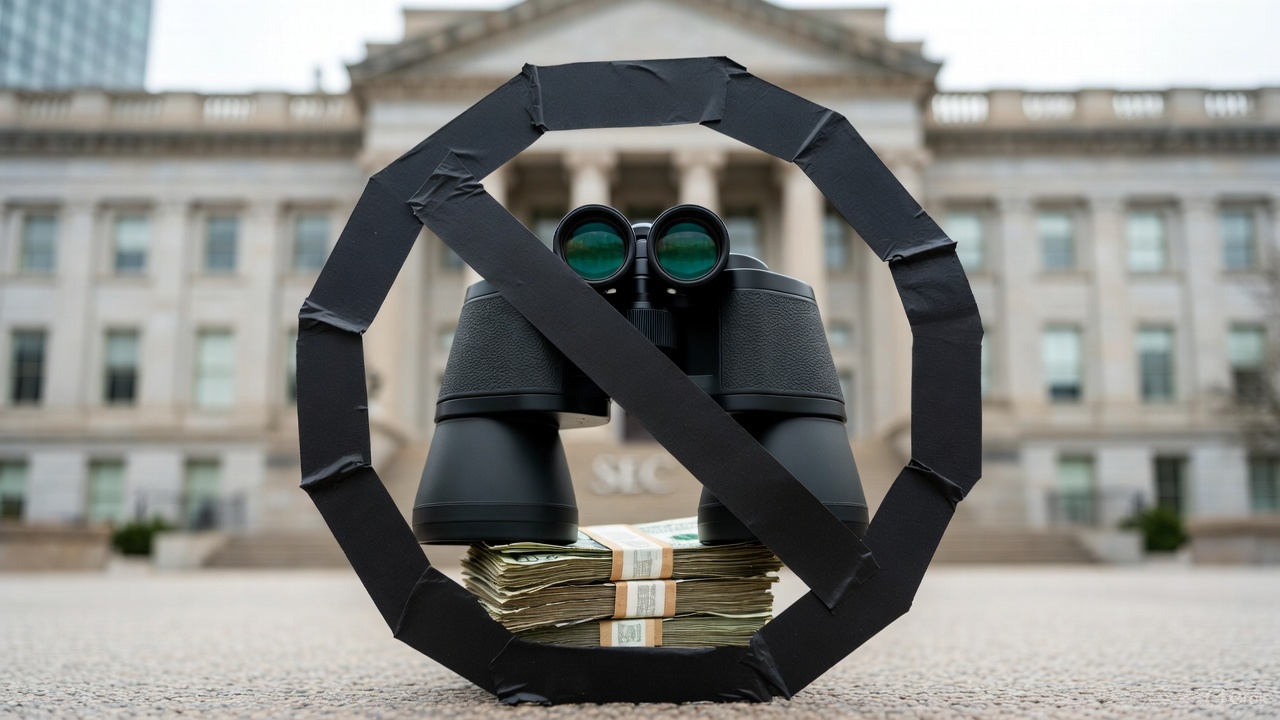
There is massive surveillance in the financial system, criticized an SEC commissioner.
The story reflects skepticism about government intrusion into private life, Uyeda said.
The Securities and Exchange Commission (SEC), the body that regulates financial markets in the United States, solidifies its transformation in line with the crypherpunk values promoted by bitcoin (BTC) enthusiasts. This was made clear by the round table held on December 15.
The event focused on “financial surveillance and privacy,” which captures the interest of bitcoiners in the world who urge less state control. This was the sixth round table of the working group on cryptocurrencies that, as CriptoNoticias reported, created by President Donald Trump.
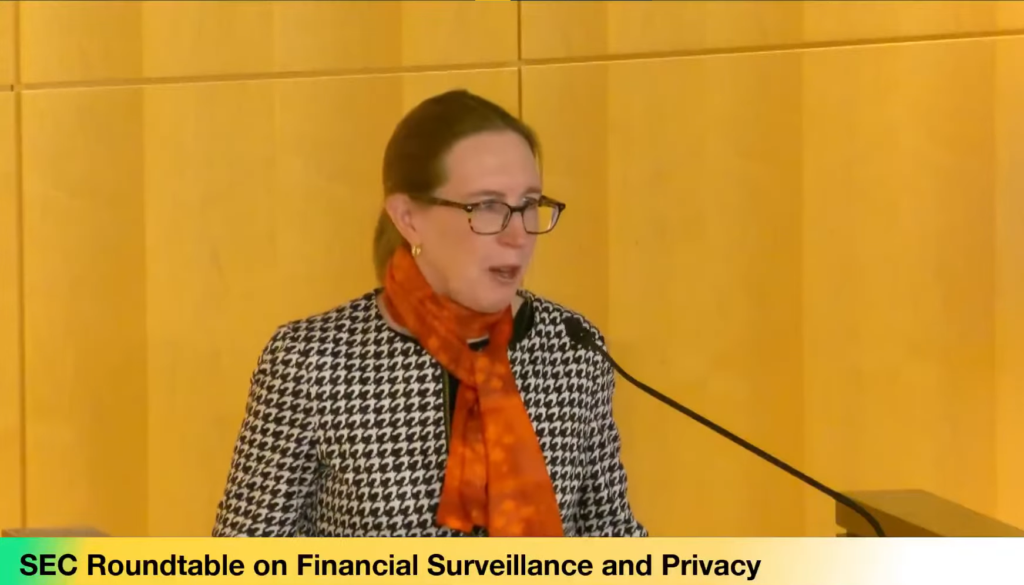
Among the speakers, Commissioner Hester M. Peirce spoke. the same stood out that, just as there is privacy in the home, people want to have it in their finances without government interference.
In this country, people expect privacy in their homes; The law establishes barriers to prevent government surveillance of people suspected of having committed no crime. There are no similar expectations or privacy protections for our financial lives.
Hester M. Peirce, Commissioner of the SEC.
For the official, lack of financial privacy is disconcerting. “Anti-financial privacy ethics embedded for decades in our national consciousness have made mass surveillance routine when it comes to the financial system.”
Financial surveillance should not be there even if you have nothing to hide
He stressed that people assume, often rightly, that the government monitors their financial transactions and ignores it because “they have nothing to hide”. However, he does not consider this collective acceptance to be okay.
“Our national degradation of financial privacy and the regulations that protect it need a change, and cryptocurrencies are prompting a reassessment,” Peirce emphasized.
On the one hand, cryptocurrencies open up new possibilities for conducting transactions without the financial intermediaries central to existing financial surveillance programs. As our personal transactions become increasingly disintermediated, the government will receive less information about them through traditional channels. On the other hand, public blockchain networks, where many cryptocurrency transactions take place, are visible to everyone, creating a demand for tools that protect privacy.
Hester M. Peirce, SEC member attorney.
As the use of bitcoin and cryptocurrencies increases, the public and relevant government agencies They must rethink when and how financial transactions are monitoredhe pointed out. In this way, the server sows seeds for a regulatory framework that emphasizes privacy:
“The government should not assume bad intentions when people take steps to protect their privacy. Protecting privacy should be the norm, not an indicator of criminal intent.”
As he listed, what the government should do is: resist the temptation to force intermediation to facilitate financial surveillance, avoid imposing regulatory obligations (such as the Bank Secrecy Act on a software developer who does not have custody of users’ assets or the ability to override their decisions) and pursue malicious actors who use privacy protection tools for “nefarious purposes.”
Technological advances broaden the debate on financial privacy
Peirce also noted that technological advances, such as cryptocurrency mixers and zero-knowledge proofs, are broadening the debate over financial surveillance and privacy issues.
“The SEC does not endorse any particular product, but understanding how these technologies work will inform policymakers to address the threats facing this nation without undermining our civil liberties,” he said.
For his part, Commissioner Mark T. Uyeda classified the topic of the round table as “of fundamental concern to Americans.” “The history of the United States reflects a deep skepticism regarding government intrusion into people’s private lives,” said. This is despite the fact that the founders of the country, he indicated, sought to protect this right to freedom through the promulgation of the Fourth Amendment to the Constitution.

“We must be aware of not allowing a regulatory framework that creates an omnipotent financial surveillance system that instills in all Americans the fear of constant surveillance,” he highlighted in line with the ideals of bitcoiners. Nevertheless, highlighted the challenge that this entails.
As part of this challenge, Uyeda specified that the rise of new financial technologies means that they must continually evaluate how to protect privacy and individual freedom. He stressed that surveillance, both by government and private entities, raises fundamental questions about the nature of individual privacy.
Still, he considered that the indiscriminate collection of large amounts of personal data is incompatible with a framework that values privacy and financial independence. Therefore, he sees it necessary to work against it.
The commissioners’ words resonate and please cypherpunks, who defend the widespread use of cryptography and privacy-enhancing technologies as a path to social and political change. But, as the saying goes, “from word to deed there is a long way.”
It remains to be seen whether the wishes expressed in favor of financial privacy and against surveillance will be put into practice.. For now, what happened at the event seems to be going in the right direction, setting a reference point for the world that closely follows the United States.