
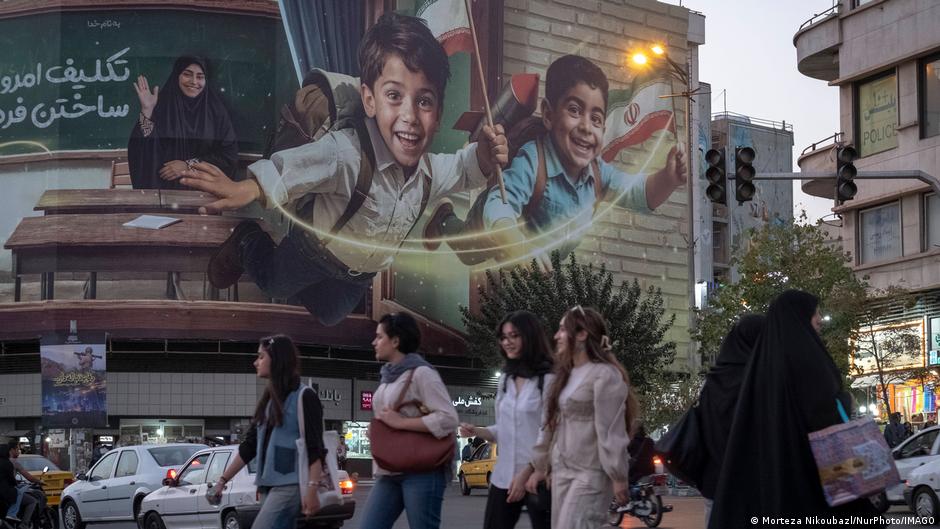
The Iranian parliament has adopted changes to the dowry law, with parliamentarians calling them “urgently necessary”.
The rapid passage of the proposal stands in sharp contrast to other legislative measures, such as the draft bill to better protect women against domestic violence, which has been under discussion for 14 years.
In Iran, a groom or his family usually gives a dowry, or “mehrih”, to his wife. This often takes the form of gold coins, but can also include cash, property, and other items. Dowry, which is negotiated before marriage and is legally treated as a debt, can be claimed by the wife at any time during the marriage or when seeking divorce.
The new, more liberal policy sharply reduces the limit on the amount a man must pay his wife to avoid imprisonment in the event of divorce – from 110 gold coins to just 14.
Dowry, which is voluntarily agreed upon before marriage, is the only legal tool to provide a modicum of financial security for women in Iran in the event of divorce and inheritance law.
‘Deeply misogynistic system’
In the event of divorce, unlike the West, Iranian law does not provide for the division of property. If the husband dies, the wife gets only one-eighth of his movable property.
Immovable property such as a house or land passes to the children or, if there are none, to the deceased’s parents. If there are neither children nor parents, the wife receives one-fourth of the property, with the remainder taken by the state.
“We are dealing with a system that is deeply misogynistic in its ideology,” women’s rights activist Mahdieh Golru told DW.
The 40-year-old, who has been living abroad since 2019, has been arrested several times in Iran for campaigning in favor of women’s rights and democracy.
Golru outlined how Iranian women have been resisting Islamic theocratic rule and fighting for self-determination since the death in police custody of 22-year-old Zina Mahsa Amini and nationwide protests under the slogan “Women, Life, Freedom” in 2022.
Women who refuse to wear the mandatory headscarf in public have had a major impact on the image of women in Iranian society.
“Their struggle and civil resistance is far from over, as the system is always finding new ways to weaken women’s rights, such as through reforms in dowry laws,” Golru said. “Women’s desire for greater rights is in fundamental conflict with the ideology and identity of the Islamic Republic’s political system, which does not recognize women as equal citizens.”
Iranian women lack protection from domestic violence
The draft bill on domestic violence is an example. For 14 years, Iranian lawmakers have been debating a bill designed to protect women from violence in the family.
The draft was revised and amended several times, but has still not been passed.
A tragic case is that of journalist Mansoureh Ghadiri Javid, who was brutally murdered by her lawyer husband in November 2024.
Ghadiri Javid was known for her well-researched articles on women’s rights.
Her family says she had been a victim of domestic violence for years.
Had she taken legal action, she would have lost custody of her only child, as custody of children in Iran is usually awarded to the father.
Due to lack of state support, many victims do not even report incidents to authorities, making it difficult to compile reliable statistics on domestic violence.
“There is surprisingly quick consensus within the political system when it comes to the oppression of women,” Nasrin Sotoudeh, a human rights lawyer and Sakharov Prize winner, told DW. “The women’s issue is one of the few points on which all political camps agree and is a means by which the government seeks to consolidate its authority,” she said.
The lawyer, who lives in Tehran and has long not worn a headscarf in public, said Iran’s clerical regime has repeatedly shown how it wields its power in times of crisis. “When the government faces insoluble problems, it turns to issues it considers controllable. The oppression of women has become a central means of demonstrating state power.”
Resisting patriarchal norms
The change in dowry law should also be seen as a signal to conservatives who support the religious system for religious and traditional reasons.
Iranian women have been protesting these norms for years, which is also reflected in the rising divorce rates in the country.
According to ISNA news agency, approximately 42% of marriages in Iran currently end in divorce. In the capital Tehran this rate is more than 50%. By comparison, the divorce rate in Germany is about 35%.
In the event of divorce, many women use the agreed dowry as a bargaining tool, for example to obtain custody of children.
At the same time, according to Iranian sources, the proportion of women who actually receive dowry is very low, about 3%. And the number of men currently jailed for non-payment of dowry is less than 3,000.
Nevertheless, Iranian lawmakers considered it necessary to change the dowry law and lower the threshold of criminal enforcement in case of non-payment of 14 gold coins.
Although the husband still owed his wife the full dowry, he would no longer face imprisonment for non-payment above this level.
However, in practice, it is no longer clear how and when these debts will be settled.
Mitra Shodjai contributed to this report.
This article was originally written in German.