
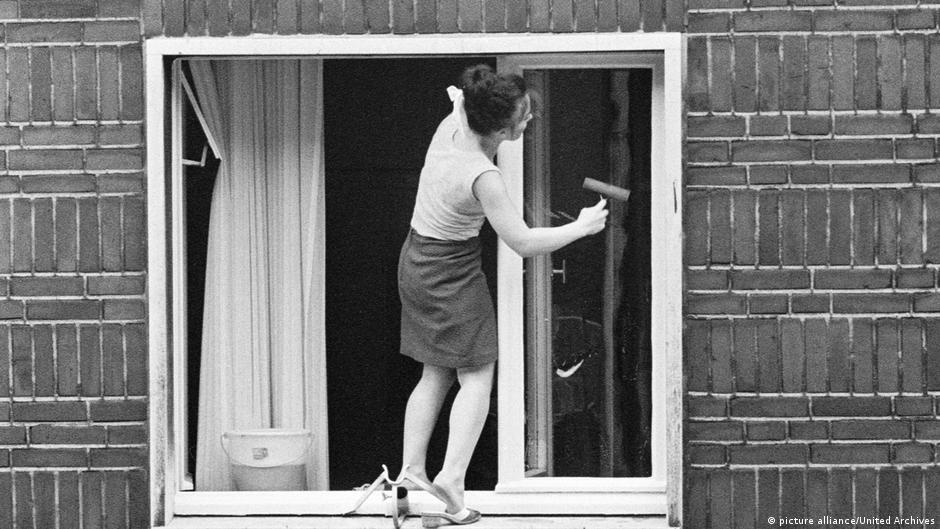
We’ve heard it all before: Women do more work at home. They spend more time cooking, cleaning, planning, and taking care of children.
Science shows that it’s not just about women being overly sensitive or tired. In fact, more than 20 years of research shows that women’s disproportionate share of domestic and mental labor has measurable effects on their health and well-being.
Marriage (for the purposes of this article: between a woman and a man) is often seen as a source of stability and health.
Yet studies show that its benefits are conditional – shaped by relationship quality, fairness, emotional support, and the mental and emotional burden it places on each partner.
“It’s important to talk about how much ‘invisible’ and emotional labor women do in domestic tasks and caregiving roles,” said Annie, a 40-year-old woman living in Thailand. “This ‘mental load’ often goes overlooked.”
Psychiatrist Ben Yalom, who has written about the complexities of human relationships and whose father, Irwin Yalom, is a psychiatrist who has written extensively about the subject, emphasizes that the greater share of domestic tasks falls to women for cultural reasons rather than personal failings.
“Most imbalance in the roles of men and women [comes from] How we have grown up. “With men, there is a certain kind of manhood training that we are generally unaware of,” Ben Yalom said.
Women are trained to be caring and emotionally prepared, Yalom said. “And as a result, men don’t take on that role, don’t learn it, and that’s a problem.”
mental burden of household tasks
Even when both partners work, women bear most of the mental load. Researchers describe it as the ‘invisible cognitive and emotional labor’ that goes into running the household – managing schedules, planning meals, and organizing tasks.
Population-based study in SwedenInvolving 14,184 adults, it found that women spent almost twice as much time on unpaid household work as men: approximately 1 in 10 women versus 1 in 20 men reported doing more than 30 hours of household work per week.
The women in the study were significantly more likely to experience depressive symptoms or be diagnosed with depression. The stress of managing this workload is considered a strong predictor of depression.
Remi, a full-time working mother in Germany, said the imbalance begins almost unconsciously. “It was the standard for me – working and taking care of the house,” she said.
After long workdays, Remy said she often cooked by default: “I love to cook, but sometimes it takes a toll on me [when] “I haven’t had a very good day.”
Several women interviewed by DW said they have noticed a pattern: Their husbands often help only when asked.
Early in their marriage, Remy said she constantly reminded her husband: “This needs to be done, can you please do it?” This so-called ‘mental tracking’, as he called it, “is also part of the stress we carry.”
Motherhood intensified Remi’s sense of imbalance. “You get up, get ready, the baby depends on you – not the father,” she said, noting that her husband took action only after she explained his needs.
Other data from 2005 also got. Researchers studied 128 first-time parents before and six months after the birth of their child. Their study showed that after childbirth, women’s household workload increased sharply, while men’s workload remained largely unchanged. Mothers reduced the time they spent on paid work in order to provide more child care, and reported less satisfaction as a result.
Making ‘invisible’ domestic labor visible
Ishita Pateria, a counseling psychologist based in India, works with couples to create this ‘hidden’ embodied burden – what she calls it.
Patria often asks men to handle all the household work for a month. “It helps them develop empathy,” he said. “At the end of the month, many male partners begin to contribute more once they see the workload.”
a discussion paper Published in 2025, it underlined the need for a Patria-like approach to create empathy regarding domestic labor among men.
Across the United States and Europe, including Italy, where the researchers were based, women were found to consistently perform the majority of mental labor in the home.
That mental labor was associated with higher levels of stress, lower feelings of satisfaction, and a greater impact on women’s careers than men.
Yalom said that many men lack an understanding of the mental labor that women do: “Often, a man, to varying degrees, may not even be aware of the things that are being done.”
Even in households where both partners work, women often work invisible, second shifts, and this can have real consequences on their well-being, stress, and long-term health.
“Women make a lot of extra effort to take care of not only their male partner, but also the children and the home. It’s more overload, more stress. But stress adversely affects women’s health,” Yalom said.
balancing modern relationships
Economic roles in relationships have changed over the past 20 years, with women increasingly becoming equal or primary breadwinners. But cultural expectations were not fulfilled.
For women, the cost of this imbalance is measurable and severe, affecting mental health, stress levels, and long-term well-being, as the studies we mentioned have shown.
“Patriarchal Expectations of ‘Self-Elimination’ […]”We are often taught to love through self-elimination,” said Annie. But he added, love is a choice, not an obligation.
Realizing this, Annie said, “helped me resist emotional exhaustion and redefine caregiving beyond patriarchal expectations. I’ve been very clear that I hate doing laundry – I would like to hire someone to delegate that task.”
Combining clear boundaries with practices like Patria’s empathy-building approach, offers a model for modern relationships: couples can consciously share both emotional and domestic responsibilities to improve fairness, communication, and support.
Edited by: Zulfikar Abbani