
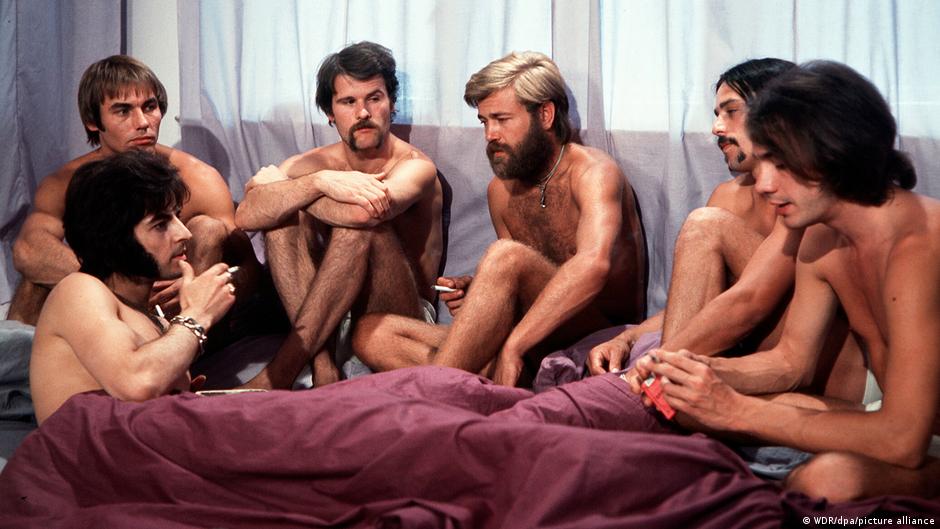
He was rarely silent. For more than five decades, he transformed German cinema, directing more than 150 short and feature films and influencing the LGBTQ+ movement. His work was often uncomfortable, colorful, angry, sometimes aggressive, but always thought-provoking.
Rosa von Praunheim, who died in Berlin on December 17 aged 83, left her mark as a leading figure of queer cinema.
Born Holger Radtke, von Praunheim emerged early in his career as one of the most vocal activists in the gay movement in Germany. They fought for visibility and demanded change, sometimes using forceful methods to achieve their goals.
A notable incident was his 1991 live broadcast, in which he publicly outed German television stars Heppe Kerkeling and Alfred Biollek without their consent. This radical act generated significant scandal at the time and caused considerable distress to the entertainers involved; This remains controversial to this day.
This incident shows how stubborn von Prahnheim could be and highlights his belief that openness is necessary for progress. While his critics accused him of crossing limits, his supporters praised his courage. Throughout his career, von Praunheim navigated the complex terrain between these two viewpoints.
His farewell film: ‘Satanic Sleep’
He remained artistically involved throughout his life, making films, writing books and directing plays. His final work, “Satanic Sleep” (2025), became a legacy film: autobiographical and experimental, serving as both a reflection on and farewell to his life. Von Praunheim described the film as “a poem – and a very experimental one at that”. When asked why he made it, he simply replied, “I make movies and dramas all the time, so there’s no particular reason. I just do it to be creative.”
In an interview with DW in December 2025, filmmaker Rosa von Praunheim spoke openly about her impending death: “This is the end of my life, and I will die soon. I have a brain tumor and I don’t have much time left.”
He said, “I’m waiting to die. It’s a wonderful feeling to rest, rather than constantly running around and shooting one film after another. I’ll be happy when I get peace.”
A prominent figure in the LGBTQ+ movement
Von Praunheim was known as a man full of contradictions. Lofty in his art, calm in his personal life. When asked what he likes about filmmaking, he replied dryly, “Nothing really. It’s always full of tension and fear of doing something wrong.”
Behind this extremely fearsome filmmaker was someone full of doubts, who continued to press forward regardless.
With his drama film “It’s Not the Homosexual Who Is Perverse, But the Society in Which He Lives” (1971), von Praunheim became an important voice in the LGBTQ+ movement, shedding light on gay life and sparking meaningful discussions.
A liberating call for gay men to organize and fight for their freedom, it inspired the formation of several gay activism groups in West Germany and Switzerland.
His films challenged social norms, broke taboos and made audiences grapple with various issues. In his later years he adopted a calm nature. “When I was younger, I was radical. For a long time, I wasn’t that actively involved in the gay and political scene. I make my art, and that’s it.”
For von Praunheim, art does not need to be experimental: “I think queer cinema can be like any other cinema, completely individual. There are hundreds of ways to go about it. But queer cinema also needs to be radical and give society the middle finger.”
This attitude shaped his work and that of many who followed him. He hopes for “peace and justice” for the future of the LGBTQ+ community. He knew this task would remain challenging even in the 21st century: “Many people are not very progressive and want everything to stay the same. Change drives them crazy, so they hate anything that doesn’t conform to the ‘norm’.”
expressing one’s weirdness
She believed there was only one way to promote tolerance in society: “Expressing your queerness and supporting the feminist movement. It’s good to have a group of people who support each other.”
He did not expect that his last film, “Satanic Sleep”, would attract so much attention. “I thought people wouldn’t understand it, and I’m glad some people liked it.”
Just a few days before his death, Rosa von Praunheim and her longtime partner Oliver Schechting married.
It’s a quiet farewell to a loud life. Von Praunheim provoked, inspired, hurt and healed. They opened doors where others would see none and showed that art could serve as a tool for freedom, visibility, and change.
The DW interview with Rosa von Prahnheim was conducted by Dima Elagin.
This article was originally written in German.