
Uganda is a country that is defined by its youth. Most of its population is under 35, yet political power is concentrated among leaders who have ruled for decades.
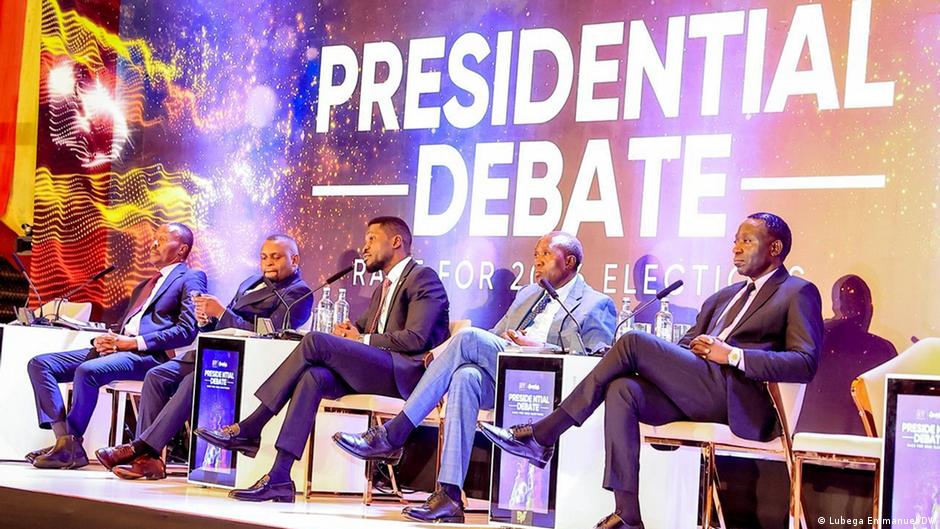
During this time that contradiction came into focus 77 percent street debateWhere youth politicians, activists and analysts questioned whether Uganda’s political system allows for meaningful youth participation.
Uganda’s parliament has more than 550 members, but only five seats are reserved for youth representatives, with panelists saying the share does not reflect the country’s demographics.
While the Constitution recognizes youth as a “special interest group”, critics argue that this acknowledgment limits rather than expands their influence.
One participant said, “We are under a military regime that has deliberately boxed young people into a corner.”
Uganda’s January elections face systemic obstacles
Uganda is a constitutional republic that holds elections regularly and the next general election is scheduled for January 15, 2026. President Yoweri Museveni, who has been in power since 1986, is running for re-election.
Lawyer and former presidential candidate Yvonne Mpambara described her unsuccessful attempt to run for president as an example of the systemic obstacles faced by young leaders without deep financial or political networks.
“We feel the system was not transparent in terms of clear criteria to determine who is nominated,” Mpambara said. He said his campaign struggled to meet nomination requirements, including collecting signatures from supporters across the country amid a heavy security presence.
“There was too much security on the ground which was hurting the efforts in terms of theft of supporting forms, theft of files,” Mpambara said. He said the Election Commission rejected his complaint after thousands of signatures were lost.
“They still let us down and did not give us any clear criteria as to why they are not supporting us.”
Youth need more than political ambition
Youth leader Churchill Santamu said ambition alone is not enough to survive in Uganda’s political process. “You have the ambition, you have the ambition, you have the knowledge, you have the support, but you don’t have the technical help to continue,” Santamu said.
Political researcher and commentator Joseph Serunkuma argued that Uganda’s system of governance prioritizes political continuity over openness.
“We live under a modern tyranny,” he said. “What you’re seeing are efforts toward maintaining the status quo, not opening doors for young people.”
Serunkuma said election laws, including expensive nomination procedures and organizational requirements, favor long-established politicians. “The criteria is designed for those who have been active for the last five years,” he said.
The role of money and violence
Many speakers said that money and violence further narrow the political space. They argue that campaigns are expensive and that young people are often mobilized during elections without gaining real decision-making power.
“Youth have been weaponized in this political scenario,” said one participant.
Widely rejecting the claim that youth lack the maturity to rule, Santamu argued that leadership ability does not depend on age. “Maturity is entirely given to the individual,” he said. “The system itself is paralyzed in its own mandate.”
Young women face additional challenges. Despite affirmative action for women’s seats in parliament, panelists said young women rarely reach national prominence. One speaker said, “When they see a gap at the top and try to climb up, the system is set up in such a way that they can never break through.”
President Museveni’s dominance in Uganda
Panelists also discussed how decades of leadership under President Museveni have shaped public perceptions about power.
“If you ask any particular Ugandan you meet on the street and you ask them who our leader is,” Mpambara said, “you will be convinced that the majority are describing Museveni.
As the debate moved towards a solution, opinions diverged. Some called for funding campaigns, stronger institutions, and improvements in civic education. Others argue that major political change is needed.
“Our problems are not technical,” Serunkuma said. “Our problems are political.”
A lingering question reflected the uncertainty facing Uganda’s next generation. “Why should slightly older people be the guardians of that power?” one speaker asked. “What will happen when they die? Who will lead them when they are gone?”
This article is taken from DW 77 Cent Street Debate. You may find more such debates Here