
Serbia’s President Aleksandar Vucic has long been accused of exerting complete control over the Western Balkan country. Now, he has announced that he will personally file criminal charges against all those he accuses of “economic sabotage of Serbia.”
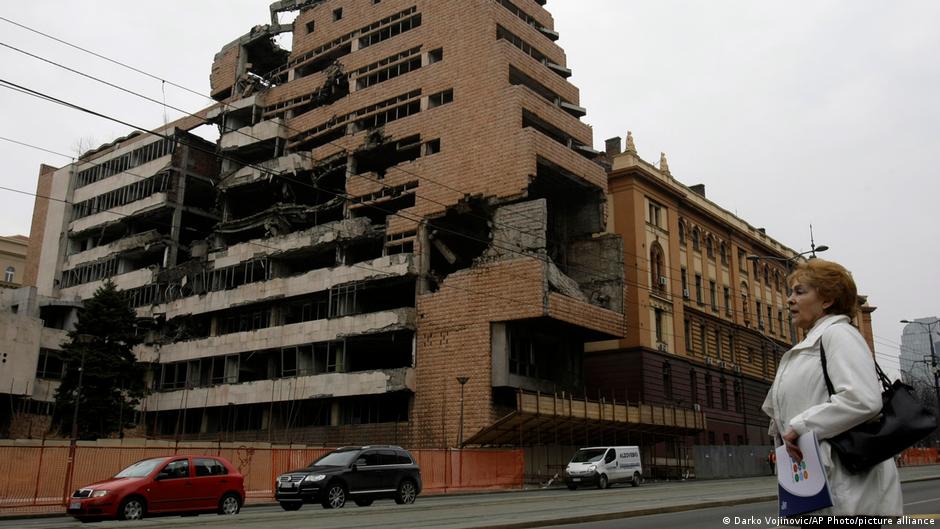
This was prompted by news from the United States that Jared Kushner, son-in-law and close confidant of US President Donald Trump, has canceled a huge, much-anticipated planned investment in Belgrade. Kushner proposed redeveloping the site of the former Yugoslavian Army General Staff building and building luxury apartments, a hotel, and a casino in its place. The Government of Serbia supported the project and offered them a 99-year lease.
The building, which was Yugoslavia’s military and defense headquarters, was badly damaged by NATO air strikes during the Kosovo War in 1999. The General Staff Building is a monument of Yugoslavian modernist architecture; Many in Serbia also consider it a symbolic monument in the administrative center of Belgrade. As a result, there were massive protests over the planned redevelopment. Critics of the project also raised suspicions of corruption.
A representative of Kushner’s company Affinity Partners said on Monday (December 15, 2025), “Because worthwhile projects should unite rather than divide, and out of respect for the people of Serbia and the city of Belgrade, we are withdrawing our application and stepping aside at this time.”
Vucic threatened judicial officials
The same day, Serbia’s public prosecutor’s office for organized crime filed an indictment against the Minister of Culture, Nikola Selakovic, and three other officials. He is accused of illegally removing the cultural heritage status of the General Staff Building. President Vucic, who has ruled Serbia with an iron fist for 13 years and essentially controls the media, police and judiciary, reacted with anger.
The President announced that he would personally file criminal charges against “all those who participated in the witch hunt and destruction of the investment”, notably including public prosecutors. Vucic told journalists, “Now we will be left with a destroyed building, and it is only a matter of time before bricks and other parts start falling off, because no one will ever touch it again.”
The pro-government media became even more silent. Instead of Serbia, Kushner will now invest in a project off the coast of neighboring Albania, it said. tabloid newspaper informer The idea is that “blockades” – a derogatory term for protesters opposing plans to redevelop the General Staff Building – should be held accountable. But there is more at stake than the investment, which is reported to be worth €750 million ($880 million).
Public authorities are showing backbone
Serbia has been rocked by massive popular protests for more than a year. These began in early November 2024 after the concrete canopy of a newly renovated railway station in Novi Sad collapsed, killing 16 people. Serbian students have been at the forefront of protests and at times blockaded all universities in the country.
Thousands of people are protesting. The students have demanded elections and have prepared their own list of candidates. Opinion polls give the list a good chance of defeating Vucic’s Serbian Progressive Party (SNS). Vucic has tried to discredit the protests as a “colorful revolution” directed by the West, but has provided no evidence of this.
Meanwhile, the Public Prosecutor’s Office for Organized Crime is investigating not only the renovation of the main station in Novi Sad, but also the case of the General Staff building in Belgrade.
Nenad Lajbensperger and several of his colleagues at Serbia’s Institute for the Protection of Cultural Monuments refused to remove the building from the register of cultural artefacts.
“Every instance of destroying cultural heritage is a crime and is punishable. If someone does this to one’s own country, it is clearly an act of treason,” Lajbensperger told the Independent weekly magazine. Season,
Foreign policy disaster for Serbia
Many observers believe that as part of Serbia’s balancing act between the EU, Russia and China, Belgrade was trying to woo Donald Trump with the Kushner deal. A Serbian pro-government newspaper also paid for billboards to congratulate Trump after his election victory.
Political scientist Milan Krstic comments, “Kushner’s company’s reluctance to take any risks suggests that the project was never important to him.” “This is despite all efforts by the government in Belgrade to suggest otherwise.”
Actually, tensions with Washington are increasing. US sanctions are affecting Serbian oil and gas giant NIS, which is majority owned by Russia’s Gazprom. Moscow refused to sell its stake in the company, and Washington refused to make an exception. Serbia’s only refinery, in the town of Pančevo near Belgrade, has already closed. “Instead of a renaissance of relations with the United States, we are seeing the opposite,” Krstic told DW.
Cautious optimism in Serbia
Government critics reacted to Jared Kushner’s return with muted celebration. He also questioned what would happen to the area around the General Staff Building now that Parliament has passed a special law to remove the protected historical monument status.
A new investor will come, students of the Belgrade School of Electrical Engineering posted on the social media platform X. “But he will also know what awaits him if he tries to destroy our cultural heritage.” The Serbian public, he wrote, was “united, strong and determined to defend the General Staff – even when it seemed impossible.”
The dismantling of public institutions in Serbia, which students and citizens are protesting against, has begun to attract the attention of the European Union. Brussels views neighboring Montenegro as almost ready to join the union. Meanwhile, EU candidate country Serbia is still the problem child of the Western Balkans.
This article has been translated from German.