
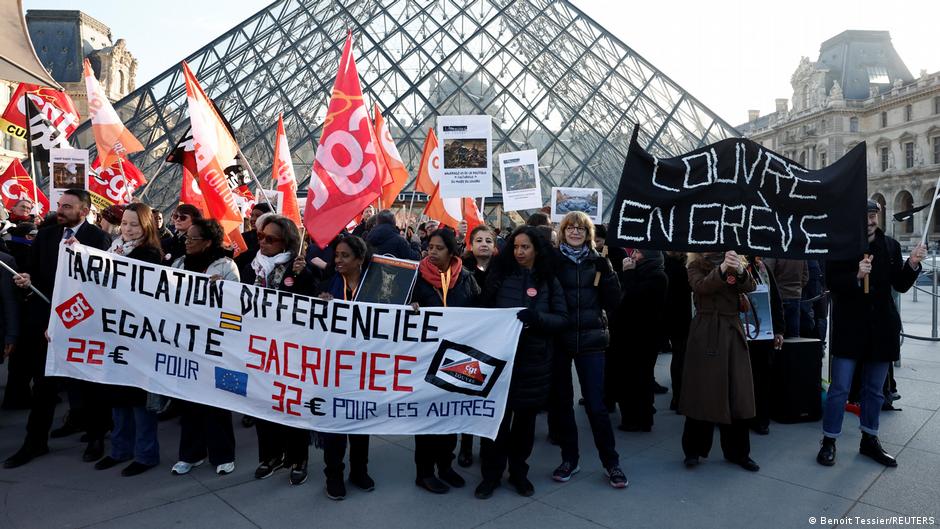
France’s Louvre museum partially reopened on Wednesday, despite staff voting to proceed with a strike that has disrupted operations at the world’s most visited museum.
A spokesperson said, “The museum is open, but access to some areas is not possible due to industrial action.”
The Louvre was forced to close on Monday due to a worker strike and protests, disappointing thousands of potential visitors.
Why are Louvre workers striking?
The CGT and CFDT unions say the recent high-profile robbery at the museum has highlighted long-running staff discontent. Issues include staff shortages, aging infrastructure and a planned increase in ticket prices for non-European visitors.
Culture ministry officials held crisis talks with unions on Monday and proposed scrapping plans to cut $6.7 million (€5.7 million) in 2026 funding, opening up new recruitment for gallery guards and visitor services and increasing staff compensation.
On Wednesday, the CGT union said the measures were “inadequate and unacceptable”.
What will happen next to resolve the Louvre dispute?
Louvre president Laurence des Cars is set to testify before the French Senate’s culture committee later on Wednesday as lawmakers continue to investigate security lapses at the museum.
Des Cars has admitted “institutional failure” in the wake of the robbery and is facing fresh criticism after revealing it only became aware of a major security audit in 2019 after the robbery.
Despite the ongoing strike, tourists lined up outside the Louvre in hopes of being allowed to see iconic masterpieces such as Leonardo da Vinci’s “Mona Lisa.”
As union leaders spoke to reporters after the vote on Wednesday, one man shouted, “What about tourists’ rights? This is shameful.”
Others had more understanding.
“It’s frustrating, well, because we came from Canada, and we came early, you try to make sure you’re doing everything correctly,” Jesse Henry, a mechanic visiting the French capital with his wife and children, told French news agency AFP.
“But I also understand that this is a performance.”
Edited by: Elisabeth Schumacher