
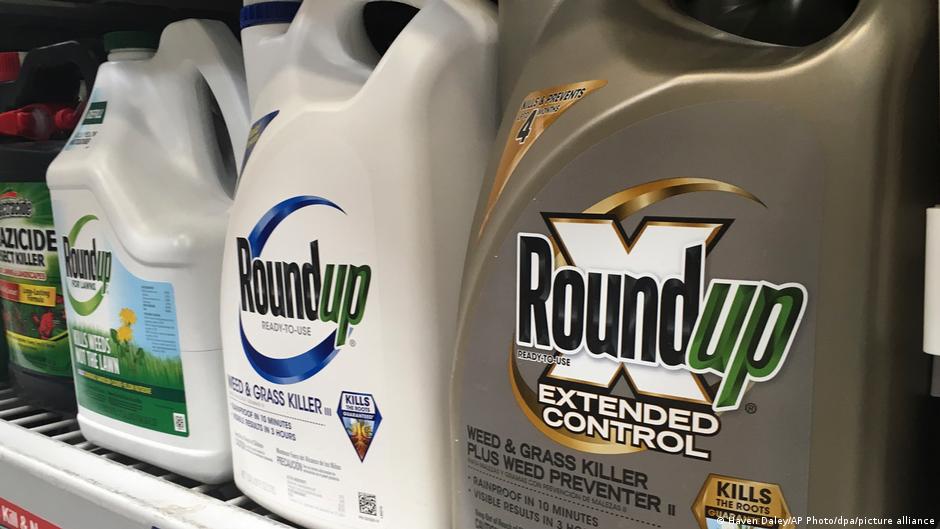
The long-running legal battle over Bayer’s weedkiller Roundup has seen nearly 200,000 cancer claims filed in US courts over the past seven years and has now turned into a political tug-of-war.
In prior Roundup lawsuits, the U.S. Justice Department under former President Joe Biden had argued that consumers should be allowed to pursue damages against the German chemical giant, with most of the claims linked to non-Hodgkin’s lymphoma after long-term exposure to the pesticide.
However, earlier this month, President Donald Trump’s administration reversed course. After the U.S. Supreme Court heard the Solicitor General’s opinion, the Justice Department sided with Bayer and raised the limit on thousands of outstanding claims.
Bayer has already paid about $10 billion (€8.53 billion) to settle disputed cancer claims in the US. In July, the company said it would set aside an additional €1.2 billion ($1.41 billion) for compensation.
Bayer acquired Roundup in 2018 as part of its $63 billion purchase of Monsanto, the US agribusiness giant known for genetically modified seeds and controversial agrochemicals.
Policy change leads to state versus federal battle
Biden’s Justice Department had argued that federal pesticide laws do not protect Bayer from state-court lawsuits, because liability and consumer protection are traditionally matters for individual states.
The plaintiffs – ranging from farmers to home gardeners – filed claims under their state’s regulations, alleging that Roundup’s active ingredient, glyphosate, causes cancer and that Bayer failed to provide adequate warnings.
US federal law sets national standards for pesticide approval, but does not overrule the public-safety powers of states. So despite glyphosate being approved by the federal regulator, the Environmental Protection Agency (EPA), people can still sue if they feel Bayer’s labeling was misleading.
Lawsuits termed a costly strain on the industry
In contrast, the Trump administration has now urged the Supreme Court to accept Bayer’s argument that federal law preempts such lawsuits, effectively narrowing the scope for the remaining 65,000 plaintiffs.
Supporters of the federal exemption say it creates consistent national rules for pesticide labels, avoids confusion from differing state requirements and supports EPA’s central role in regulating safety.
Trump’s team has also reframed the Roundup litigation as an unnecessary burden on business, because it exposes Bayer to massive, unexpected liabilities, even if the EPA had approved its products.
Critics denounced Trump’s position as advancing a corporate agenda at the expense of justice for the large number of claimants, many of whom report terminal or severely disabling conditions.
“This trend of far-right governments restricting citizens’ rights [like Trump’s] “It’s appalling,” Martin Dermin, executive director of Pan Europe, a network of NGOs working to eliminate dangerous pesticides and promote sustainable agriculture, told DW.
Other opponents of Trump’s latest move argue that the reversal reflects a failure to protect public health and weakens state-level authority, stripping local courts of the power to hold corporations accountable.
Bayer urges early end to dispute
Bayer has lobbied US legislators on large-scale lawsuits and petitioned Supreme Court justices to review a Missouri court decision that upheld a $1.25 million jury award to John Darnell, who claimed his non-Hodgkin’s lymphoma was caused by exposure to weed killer.
The German pharmaceutical and biotechnology giant has cited decades of studies showing Roundup is safe for human use. However, this argument weakened when a major 2000 review paper, often cited in defense of glyphosate’s safety, was retracted by Monsanto earlier this month due to unknown ghost-writing and other ethical issues.
Nevertheless, the vast majority of regulatory bodies around the world still classify glyphosate as non-carcinogenic when used as directed.
Bayer’s CEO, Bill Anderson, warned that the company could stop selling Roundup in the US if the lawsuits were not resolved soon. Anderson told an event on US news site Axios in May that herbicides were “table stakes”. [indispensable] In the fight against global food insecurity.
He recently welcomed Trump’s policy change, saying: “The stakes could not be higher as misuse of federal law jeopardizes the availability of innovative equipment to farmers and investment in the broader American economy.”
Supreme Court decision could limit future claims
The judges of the US Supreme Court will now have to decide whether to hear Bayer’s petition or not. If accepted, a decision by mid-2026 would determine whether the German company wins broader legal protection.
Mary J., Dean of the Rosenberg College of Law at the University of Kentucky. Davis explained that the court was considering its decision from 20 years ago on US federal pesticide law.
In that 2005 decision, the justices said federal regulations control what warnings must appear on pesticide labels and that states cannot demand different or additional warnings. However, this does not automatically stop all state-level lawsuits against companies like Bayer for failing to warn about the risks.
“The Federal Insecticide, Fungicide and Rodenticide Act (FIFRA) is not particularly clear on the scope of state law,” Davis told DW. “There’s a very good chance that the court will want to clarify how that law works.”
A favorable judgment could potentially save the company billions of rupees from outstanding claims. This could make it harder for consumers to file lawsuits over harmful products and sharply limit compensation claims.
Davis, a leading products-liability scholar whose career has included decades of research on federal supremacy in legal cases, laid out the stakes for Bayer clearly:
“If the case is not heard in the Supreme Court and the verdict is not in the company’s favor, the litigation will take years,” he told DW.
Whatever the outcome, Chris Hilson, a professor of law and climate change at the UK’s University of Reading, warned that the Roundup lawsuits could prove to be “just the beginning” of a broader wave of litigation against the agri-food sector.
“Climate litigation so far has primarily targeted the energy transition, with fossil fuel companies also in the crosshairs,” Hilson told DW. “WHe can expect to see more court cases brought by the environmental movement on both climate and biodiversity and human health grounds.”
Bayer’s case is being closely watched in Europe, where the EU has extended the approval of glyphosate until 2033 despite strong opposition from environmental groups. Some EU member states, including France and Austria, continue to push for tighter limits or outright bans.
Edited by: Uwe Hessler