
The Tu Voto Decide app added more than 3,500 users and its next goal is the March 2026 elections.
They propose using the same technology to combat government corruption.
Bolivia took a significant turn in the adoption of bitcoin (BTC) and cryptocurrencies, going from a total ban to a regulated opening in 2024-2025. This openness coincides with a growing demand for citizen and government transparency, especially in processes as sensitive as elections.
In this environment of change, The “Your Vote Decides” application emergedpowered by Asoblockchain Bolivia. This platform allows citizens to upload public documents to the Ethereum network, creating a parallel avenue for electoral verification.
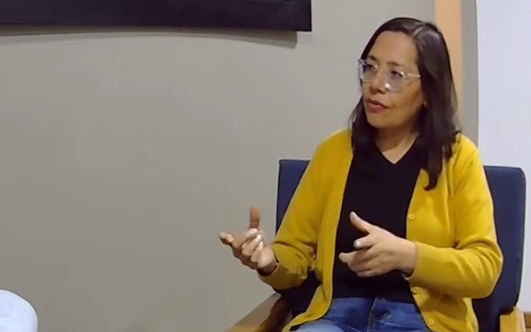
“They are real people who participate and become electoral witnesses,” Cecilia Contreras, representative of the project, explained to CriptoNoticias, underlining the human essence behind the technology.
The app integrates a sovereign digital identity. Users control their encrypted data from their devices. A verification with facial scanning and artificial intelligence confirms the authenticity of the participants. During the elections, Users photograph minutes, sign them digitally and upload them as non-fungible tokens (NFT) with metadata. Other citizens validate this information, generating parallel results that are compared with the official counts of the Supreme Electoral Tribunal.
The project It was designed for the 2025 elections and is now preparing for the subnational elections in March 2026. Contreras highlights the maturity of the platform. «Hard technical aspects have already been resolved; the tool is ready to scale,” he said.

From 100 to 3,500 users, the surprise
For the recent presidential elections that ended in October, our expectation was to recruit, let’s say, the first 100 users. However, by also going to the national press and talking about this very openly with different influencers and very active programs, we reached more than 3,500 downloads. Something that surprised us a lot for a first round.
Cecilia Contreras, project manager of Tu Voto Decide.
The project representative adds that there was a clear need to have a tool capable of offering, at least, certainty about what was observed by the population at the polling stations during the elections.
“The only way to achieve this was through an open source protocol, completely traceable and auditable by anyone,” he explains. In this way, citizens can use the application to directly exercise their right to electoral control, without delegating it or depending solely on trust in third parties.

Ethereum as an ingredient of transparency in Bolivia
Beyond monitoring the electoral vote, Contreras envisions broad applications for the technology that they have in their hands. It proposes fuel tracking, tokenizing vehicles to detect deviations. Suggests similar uses in property records or citizen identification.
The solution proposed by Contreras seeks to put a stop to the diversion of fuel that affects the country in the midst of a deep shortage. The Minister of Hydrocarbons and Energy, Mauricio Medinaceli, warned about this situation by pointing out that between 30 and 40 of every 100 tankers destined for domestic supply never reach their final destination.
This practice, which he described as “bad Bolivians,” not only aggravates the shortage of gasoline and diesel, but also exposes a complex network of irregularities. It involves both private actors and, in some cases, institutions that facilitate these illicit operations.
Medinaceli pointed out that this situation directly hits the population, which already faces increasing difficulties in filling its tanks, making the search for innovative solutions, such as those offered by Tu Voto Decide, even more pressing.
It should be noted that, during his campaign, current President Rodrigo Paz proposed the use of Distributed Ledger Technology (DLT), with blockchain, in public procurement processes.
This measure contrasts with the previous model, criticized for high discretion and risks of corruption in acquisitions that handle nearly 2 billion dollars a year. Through smart contracts, Paz proposed to automate and make these operations transparent, eliminating vulnerable points to bribes and generating greater confidence among business sectors and investors attracted by fiscal stability and renewed governance.
However, its implementation faces challenges such as the training of officials, the required infrastructure and the possible resistance of groups benefited by the current system.
After assuming the presidency of Bolivia, following his electoral victory, Rodrigo Paz has not publicly mentioned details about how he will fulfill his campaign promise to integrate DLT into public procurement processes to increase transparency.
The 50/50 Agenda, which included this key commitment, remains without concrete updates since his inauguration on November 8, 2025.
“The government must support existing initiatives”
Despite this context, even the most brilliant innovation encounters human and technical challenges. Your Vote Decides depends on massive voluntary participation. Limited coverage would reduce its ability to detect large-scale irregularities. Furthermore, the digital divide persists in Bolivia, excluding rural areas with limited access to the internet or smartphones, which leaves valuable voices outside the process.
Technology also brings with it its own considerations. Although it relies on the Ethereum network, scalability for massive processing implies transaction costs that must be considered. For Contreras this has a solution, he believes that The government should support existing initiatives of civil society, such as the Tu Voto Decide app, instead of building new platforms from scratch.

And while the potential for legal recognition for uploaded tallies is immense, it is crucial to remember that they do not replace the official count. Rather, they complement it with an additional layer of citizen verification. Security, for its part, lies in the protection that each user gives to their own devices, and any failure in the verification artificial intelligence could introduce biases.
Curiously, we can find an echo of this search for transparency in another corner of Latin America. It happened in Guatemala when the Supreme Electoral Tribunal of that country used in 2023 OpenTimestamps. They anchored hashes in Bitcoin, a different strategy, to time-stamp records and thus dismiss accusations of time fraud.
Both projects share the desire for immutability, but their paths are different. Your Vote Decide flourishes from citizenship, with the active participation of verified identities on Ethereumwhile the Guatemalan initiative was an institutional effort, focused on temporal integrity and anchored in Bitcoin hashes, without the same identity verification. It is a reminder of how technology can be shaped by the hands of people and their contexts.