
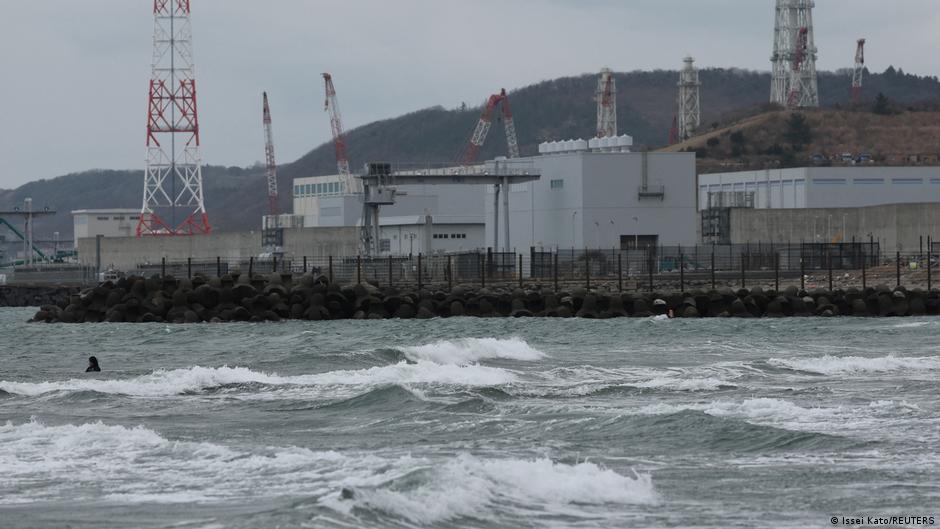
Lawmakers in Japan’s Niigata Prefecture have approved a request by the operator of the world’s largest nuclear power plant to restart operations, ignoring concerns from local residents and anti-nuclear campaigners.
The prefectural assembly voted on Monday to allow Tokyo Electric Power Co (TEPCO) to restart the Kashiwazaki-Kariwa plant on Japan’s northern coast and about 220 kilometers (136 miles) northwest of the capital Tokyo.
TEPCO has indicated it will restart one of the plant’s seven reactors as early as January 20.
Immediately after the disaster at the Fukushima Daiichi plant in March 2011, Japan ordered the closure of all 54 nuclear power stations across the country. Three of the plant’s six reactors suffered catastrophic cracks after being hit by a powerful earthquake and tsunami at the time, releasing massive amounts of radiation into the atmosphere.
Since then, Japan has restarted 14 of the country’s 33 reactors that are operationally viable, while 21 older units are being shut down.
However, the Kashiwazaki-Kariwa plant will be the first TEPCO facility to restart.
Has TEPCO learned a lesson?
The company has stressed in statements that it has “learned lessons from Fukushima” and that safety upgrades have been verified in multiple inspections. Those upgrades include new marine protection, watertight interior doors, improved filtration systems and a larger emergency response team.
Yet many people remain concerned, and not just because Japan is one of the most seismically active and earthquake-prone countries in the world.
“For me, today is the day before Fukushima déjà vu,” said Eileen Miyoko Smith, an environmental campaigner for Kyoto-based Green Action Japan.
Although the Kashiwazaki-Kariwa plant was not affected by the magnitude 9 earthquake and tsunami that caused so much destruction in Fukushima, he pointed out that Kashiwazaki-Kariwa has been badly shaken in previous natural disasters.
“In July 2007, when the Chuetsu-oki earthquake shook the Kashiwazaki-Kariwa plant and the image of black smoke rising from the world’s largest nuclear power plant shocked the world, locals who had opposed construction of the plant since the 1970s because of serious seismic concerns warned of impending disaster elsewhere in Japan,” Smith told DW.
“Media reporting on the incident ignored warnings from local people and led to an earthquake and tsunami at the Fukushima plant three and a half years later,” he said. “Will the people’s warnings be ignored once again?”
Technical, environmental challenges
Critics also point to a survey conducted by the prefecture that found 60% of local residents said “conditions are not right to restart the reactors”.
Takeshi Sakagami of the Citizens Association for Monitoring Nuclear Regulation said, “There is a deep distrust among the prefecture’s residents and the Japanese public in general toward TEPCO, which they hold responsible for the Fukushima disaster.”
Despite assurances from the operator and the local government, Sakagami has a number of concerns, ranging from lax internal security to fears that any disaster management plan would be inadequate in the event of another major earthquake.
He said problems had been detected in control rods in Unit 6 at the plant, and no explanation for the malfunction had emerged.
“In addition, the Kashiwazaki-Kariwa area experiences heavy snowfall, raising fears that snow could prevent evacuation in the event of a disaster,” he said. “If a nuclear accident occurs accompanied by heavy snowfall, residents could face serious radiation exposure. I believe the countermeasures are inadequate.”
Nuclear energy a necessary evil?
Before the Fukushima disaster, nuclear reactors were providing about 30% of Japan’s electricity. With the closure of the reactors in 2011, there was no option but to return to fossil fuel imports, primarily coal and gas, which now provide up to 70% of the country’s energy needs.
After the initial shock of the Fukushima incidents, where vast areas of land are off limits, the government has returned to promoting nuclear power.
Prime Minister Sanae Takachi is a strong supporter of restarting reactors more widely to reduce the amount spent on energy imports and meet commitments on carbon emissions. The government aims to increase the share of nuclear energy in total electricity supply from the current 10% to 20% by 2040.
Restarting the Kashiwazaki-Kariwa plant is critical to TEPCO’s fortunes, and the company estimates that restarting production would earn it about 100 billion yen (€544.6 million) per year, most of which would be spent on closing the Fukushima plant and continuing the cleanup of surrounding areas.
And while there is undoubtedly opposition to restarting the plant, others see it as a necessary evil.
“It’s really a sensitive issue because the plant is important to the local economy,” said Kenichi Yasuda, an academic who lives in neighboring Nagano Prefecture. “It is often very difficult for people from these communities to find jobs, so their choices are to go to Tokyo, work for the local government, or find jobs in plants,” he stressed.
“Local people are concerned about the dangers, especially after seeing what happened in Fukushima, but we can’t say they are completely opposed to Kashiwazaki-Kariwa,” Yasuda said. “Personally, I’m a little surprised that the Assembly passed the resolution, because I expected more resistance from local people and anti-nuclear organizations, so maybe attitudes are really changing almost 15 years after Fukushima.”
‘Inappropriate circumstances’
While public opinion is changing, nuclear experts warn that the seismic situation around the plant has not changed.
“The Kashiwazaki-Kariwa nuclear plant site is one of the most sensitive sites in Japan due to seismic fault lines and as a result of the 2007 Niigata earthquake, the prefecture’s population has long lacked confidence in TEPCO’s assurances on safety,” said Shawn Burney, a Greenpeace nuclear expert.
Before construction began at the site in 1980, officials knew that ground conditions were unsuitable for a nuclear installation, he claimed, insisting that TEPCO failed to investigate the possibility of active offshore fault lines and later, when it learned that the faults were active, “chose not to reveal them.”
He said, “I worked in Niigata from 1990 to 2019, and the reason for the public opposition is based on a fundamental lack of trust in TEPCO and the cover-up that has been exposed for decades.” “The risk of earthquakes and the lack of any reliable evacuation plan are major issues that remain unresolved,” the expert said.
“The worst-case scenario would be a serious disaster caused by a major earthquake, followed by a mass release, but instead of the Pacific Ocean being the location of the fall, it would hit central Japan.”
Edited by: Srinivas Majumdaru