
Do you enjoy solving puzzles? What would you do if you were given a foreign code to decipher but had no guide to grammar and no dictionary?
This is the problem archaeologists and linguists face regarding many ancient writing systems, which remain a mystery even today despite technological advances. They tell about advanced civilizations whose script we cannot understand.
Svenja Bonemann is a specialist in historical-comparative linguistics at the University of Cologne in Western Germany. His research involves attempting to understand ancient languages and reconstruct their structures.
He said, “I find it fascinating to be faced with an intellectual puzzle that is so challenging that even the most brilliant minds have failed to solve it.” “Such written records give us access to a culture that has long been lost.” She further says that it was as if these writing systems were a time machine, allowing them to interact with the foreign culture, at least passively.
There is not enough text to work
Bonneman’s current research focuses on the Epi-Olmec writing system that was once used on the southern coast of Mexico. Although some inscriptions and symbols indicate an early writing system, the corpus of texts is so small and the context so uncertain that it is very difficult to decipher.
The script of the Indus Valley Civilization, also known as the Harappan Civilization, in what is now northwest India and Pakistan is equally mysterious. It appears on hundreds of seals and pottery shards, but almost always in extremely short sequences – whether it represents a fully developed language or a system of symbols is still debated.
The Rongorongo script, discovered on Easter Island in Chile, is also very abstract. It includes inscriptions, or glyphs, that depict birds, people, or decorative figures. Only a few wooden tablets, some of which are damaged, bear inscriptions.
More information is available about the Minoan civilization, centered on the Greek island of Crete. But of its three writing systems, only Linear B, an early form of Greek, has been deciphered. Cretan hieroglyphic and Linear A remains a mystery.
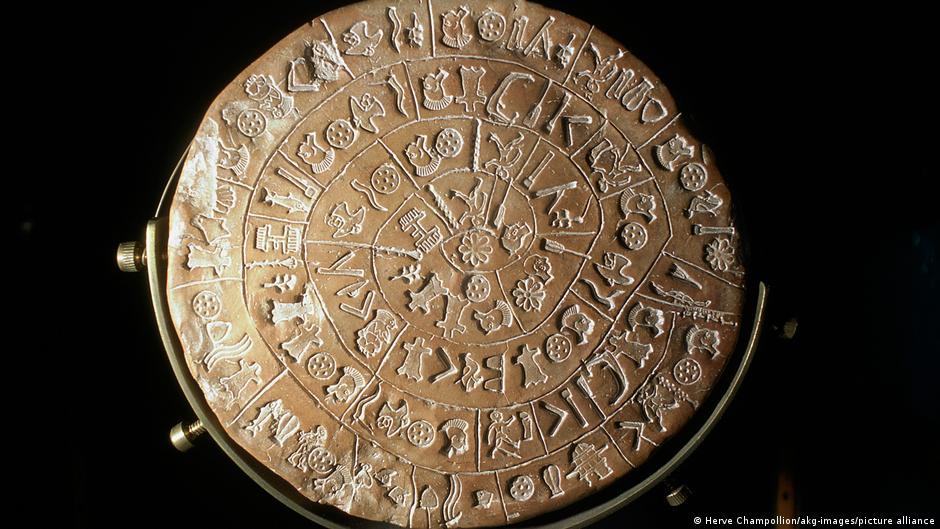
The famous Phaistos Disc, a clay object with spiral-shaped symbols, probably hammered into the clay before firing, was discovered on Crete in the early 20th century. This script, dating from around 1700 BC, is magnificent but difficult to decipher because the piece is unique.
Etruscan, the ancient language spoken in central Italy, also remains a mystery. Although the alphabet is legible because it is derived from Greek, the language has hardly any recognizable relatives. This makes it difficult to understand what is written on the inscriptions.
Proto-Elamite is the earliest known writing and administrative tradition from the region that later became Elam, now Iran. The indications are well listed, but the tablets are often fragmentary, with their contents resembling administrative notes. It does not fit into any known language family.
Need for Rosetta Stone
All of these scripts have one fundamental problem: They have no counterpart in the Rosetta Stone, a famous artifact on which the same text appears in three different scripts, which enabled scholars reading ancient Greek to decipher Egyptian hieroglyphs. Without such a key, it remains difficult to assign characters to sounds, syllables or words.
But this is not impossible, Bonneman said, as the interpretation of Linear B showed. “You don’t necessarily need bilingual texts, but you do need some kind of continuity with historical time. For example, keep names or names of rulers or gods. Then you can certainly do that.”
But this is difficult when only a few very brief texts are available, as it is difficult to identify patterns and test hypotheses. The same applies when the sites where objects containing a language have been found have been destroyed or are poorly documented. “You’re always working with pieces or scraps of the past,” Boneman said. He said that fortunately there was a comparatively large amount of evidence in Europe but that much had been lost in places like Central America. Here, he explained, researchers had to make do with the little “that the conquistadors had left behind.”
He explained that an important factor in understanding a language is whether it can be assigned to a known language family. If not, there were no sound systems, word structures, or specific grammatical patterns to test the hypotheses.
How can artificial intelligence help?
Artificial intelligence (AI) is being used more and more to try to break codes. It can check character strings for patterns, distinguish between variants, complement damaged sections, and calculate frequencies.
But Baughman said that so far, AI has reached its limits when dealing with very small amounts of text. Artificial intelligence requires large amounts of data for pattern recognition. “In my opinion, it is relatively unlikely that programs will be developed in the near future that can work with so little data.”
Furthermore, the AI mainly combined already known information rather than actually “thinking up” something new, he said. “AI simply changes some phrases and words, giving the appearance of intelligence. But in reality, it is only a simulation of intelligence. The program does not actually think.”
This sometimes results in explanations that sound beautiful but are scientifically unfounded. And there is a danger that computing systems will reflect researchers’ unconscious expectations. For example, if they “discover” relationships between language families that occur particularly frequently in the material used to train AI, Bonneman warns.
Perhaps that’s what makes these writing systems so fascinating: They show that even in an age of advanced technology, some voices of the past are silenced – at least for now.
“As far as we know, humans are the only species that has a sense of history. We think about where we came from and where we’re going,” Bonneman said. For them, reflecting on past societies, how they functioned and why they disappeared, is at the core of being human.
This article was originally published in German.