
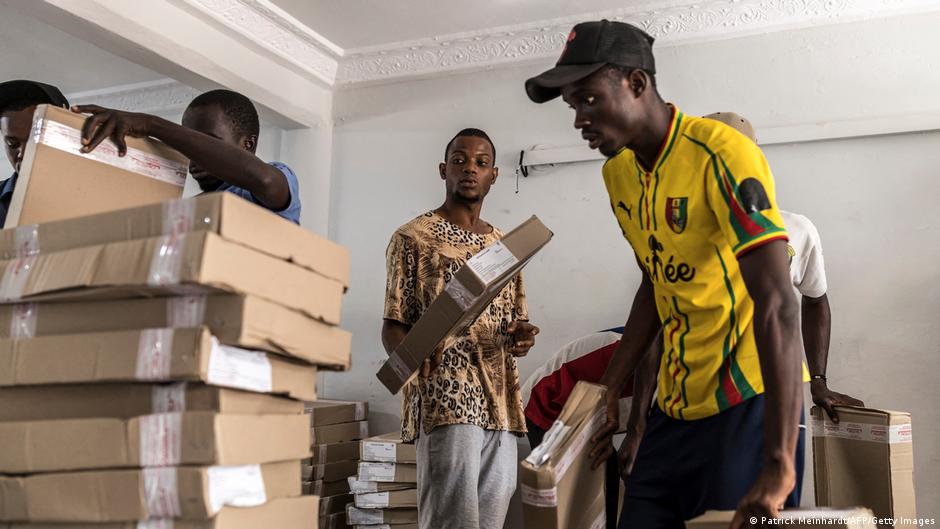
Guinea votes in a presidential election on Sunday that is widely expected to give junta leader Mamadi Doumbouya a seven-year mandate.
Doumbouya, a former special forces commander, seized power in a 2021 coup and led a field of nine candidates, with no strong challengers.
The United Nations says the election process was disrupted by intimidation and restrictions on civil liberties.
Main opposition figures excluded
About 6.7 million people are registered to vote. Provisional results are expected within 48 to 72 hours after voting ends.
Doumbouya ousted President Alpha Conde four years ago.
He initially declined to run, but a new constitution passed in September removed restrictions on junta members seeking office and extended the presidential term to seven years.
Condé and longtime opposition leader Cellou Delin Diallo are in exile, while other contenders were disqualified. Eight challengers remain, but analysts say none pose a serious threat.
“Let’s not delude ourselves: there can be no other rival who can challenge him,” Guinean political analyst Bella Bah told Reuters news agency earlier this week.
UN says election campaign is ‘intimidating’
The UN rights chief, Volker Turk, warned that sanctions risked undermining the credibility of the vote.
“Ahead of Sunday’s presidential elections in Guinea, civil and political space has been severely restricted, leading to intimidation by opposition actors, apparently politically motivated disappearances and constraints on media freedom,” Turki said in a statement on Friday.
He said the timely and seemingly targeted incidents were intimidating opposition figures, disrupting campaigns and discouraging voter mobilization.
“They create a climate of fear among political actors and the population at large and risk undermining the credibility of the electoral process,” he said.
Editing: Kalika Mehta