
Jens Spahn was called as a witness, but he must have felt like a defendant during his interrogation by the parliamentary fact-finding commission.
Spahn, Health Minister of Germany from 2018 to 2021, played a key role in the beginning of the coronavirus pandemic in 2020.
Spahn was summoned by the “enquiry-commission”, a committee appointed by the Bundestag consisting of 14 members of parliament from all parliamentary groups as well as external experts, which is currently investigating how the German state acted during the COVID-19 pandemic.
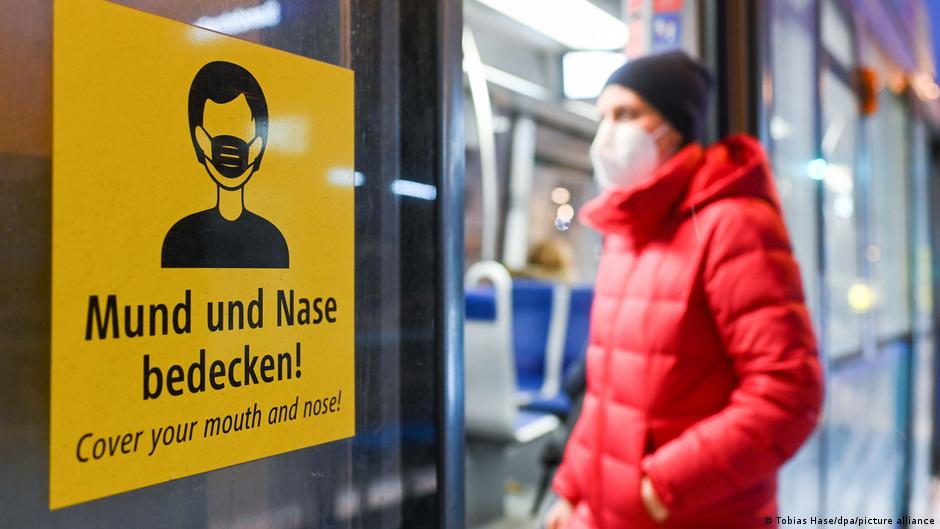
Spahn, now leader of the parliamentary group of Chancellor Friedrich Merz’s conservative Christian Democratic Union (CDU), apparently bought huge quantities of protective face masks at very high prices.
An employee of the federal audit office, which tracks government spending, said Spain’s ministry bought about 5.8 billion masks at a unit price of about one euro ($1.20). More than half of them were never delivered and later had to be destroyed. “We view this as massive overbuying,” said the expert with the federal audit office, which tracks the use of taxpayer money.
The Health Minister ultimately failed to accept or pay for the large number of masks ordered. Germany’s government could face a payout of about €2.3 billion ($2.7 billion) to health product makers if courts rule against it in dozens of lawsuits filed over the issue.
In Parliament, Spahn defended his decisions. The primary goal, he said, was to contain the spread of the virus to avoid overwhelming the health care system. Regarding mask procurement, he said, “The whole world wanted the same thing at the same time. It was a matter of life and death.”
In the past, he has admitted that he should have done things differently.
Virologist praised Germany’s epidemic control
In early December, prominent virologist Christian Drosten, who was one of the government’s key advisers during the pandemic, also faced questions from the Commission. “The danger of a pandemic arises from the dynamic transmissibility of the virus,” said the virologist at Berlin’s renowned Charite hospital. He emphasized that the efficiency of epidemic control in Germany was recognized internationally early on.
The scientist warned that it is impossible to follow a ready-made plan of action in an unexpected crisis like the COVID-19 pandemic.
“Epidemic control will always follow the principle: We are building the ship on which we have to sail in advance,” he said. Action is only possible based on new data and new research results every day, Drosten said. “This requires well-funded infection research and strong public health institutions.”
Close schools or businesses?
Drosten also commented on the highly controversial school closure. During the first wave of the pandemic, this was a precautionary measure to protect children. However, as time went on, many federal states reevaluated these measures to make political decisions based on which sectors of society would be affected.
This highlights the difficulties in coordination between the federal and state levels of government. During the pandemic, leaders of Germany’s 16 states met with the federal government to agree on measures such as imposing a complete lockdown. However, the Bundestag was often relegated to a more limited role, as the states had a greater say.
Drosten emphasized that decisions to close schools or companies were made by politicians, not scientists. However he refused to blame the decision makers. “I don’t want to say that politicians at that time only had the interests of employers in mind,” he said.
Manufacturing industries where work from home is not possible cannot afford to remain closed for long. According to Drosten, Germany lags behind other countries in digitalization and this has also played a role in preventing workers and students from working from home.
Drosten pointed out that while Germany has a large manufacturing industry, the Swedish capital Stockholm has a very large services sector, so it was possible for 40% of its population to work from home. “Viability is not the same in all countries,” the virologist said.
In addition to Drosten, other doctors on the commission advised on how to deal with future pandemics. Johannes Niessen, who heads Germany’s largest public health department in the western city of Cologne until 2024, addressed the high infection rates in socially deprived neighborhoods.
“On the one hand, there are precarious working conditions that are difficult to manage in terms of hygiene,” Nissen said. But living conditions also played a major role: “Living with five people in a 50 square meter apartment is quite different from living with two people in more than 200 square metres. If one of them is infected, they have more space to stay out of the way of the other person.”
Niessen also pointed to the connection between precarious social conditions and health risks such as heart disease and often cancer. “These are pre-existing conditions that will affect some people more than others.”
young people at risk
Cologne health officials worked with the fire department to set up COVID-19 testing sites “in places where no private provider offered testing.” Nissen concluded that in the future, the focus should be on all vulnerable groups from the beginning. In their view, this includes not only older adults, but also young people with pre-existing health conditions, people with disabilities, and other disadvantaged groups.
The Bundestag’s investigative commission has now completed three months of public hearings. When it was founded, parliamentary chairwoman Julia Klöckner (CDU) formulated her expectations as follows: “The pandemic has left wounds – visible and invisible – and it has also alienated people from politics.” This makes it all the more important for the Commission to conduct a thorough, constructive and self-critical examination of the political decisions taken at that time and their social impact.
“It’s about listening, understanding, learning and documenting, and using that knowledge to respond to any future pandemics,” Klockner explained.
Klöckner said the COVID-19 pandemic was an unprecedented turning point for Germany, for the health care system, the education sector and the economy, but above all for the daily lives of citizens. “Many people have lost relatives and friends or are still struggling with the health and social consequences. We have paid too little attention to the psychological impacts, particularly on children and young people.”
All this is to be critically analyzed by the Commission in public hearings during 2026 after which it should present well-founded recommendations for the future. The final report is due in June 2027.
This article has been translated from German.
While you’re here: Every Tuesday, DW editors provide insight into what’s happening in German politics and society. You can sign up for the weekly email newsletter, Berlin Briefing, here.