The exchange rate dynamics in Bolivia has experienced a structural transformation where the digital asset market has taken center stage. The price of the USDT stablecoin, issued by Tether Limited, has established itself in recent months as the main reference and driver of the price of the parallel dollar in the Bolivian informal market.
This trend, driven by the increasing difficulty of accessing physical currencies in the traditional banking system, has made person-to-person (P2P) exchange platforms the financial thermometer that dictates exchange value on the streets of the country’s main cities.
Pedro Rey, founder of Ethereum Bolivia and sector analyst, stands out the relevance of these platforms in the current price configuration.
«USDT in P2P has a lot of influence in the formation of the parallel dollar in Bolivia. After the subnational elections it rose to 9.4. Due to the increase in liquidity, panic has less effect since volatility is reducing,” said the specialist, highlighting how the volume of operations in digital assets It helps stabilize the perception of value in the face of political uncertainty.
something similar they think from the editorial board of the Bolivian newspaper Correo del Sur. They argue that since the international reserves of the Central Bank of Bolivia they fell to historic lows and access to foreign currency in the banking system was restricted, “P2P exchange platforms became the main thermometer of the real value of the Bolivian against the dollar.”
According to that medium, “the price of USDT on these platforms has become, in fact, the reference parallel exchange rate for a large part of the population.”
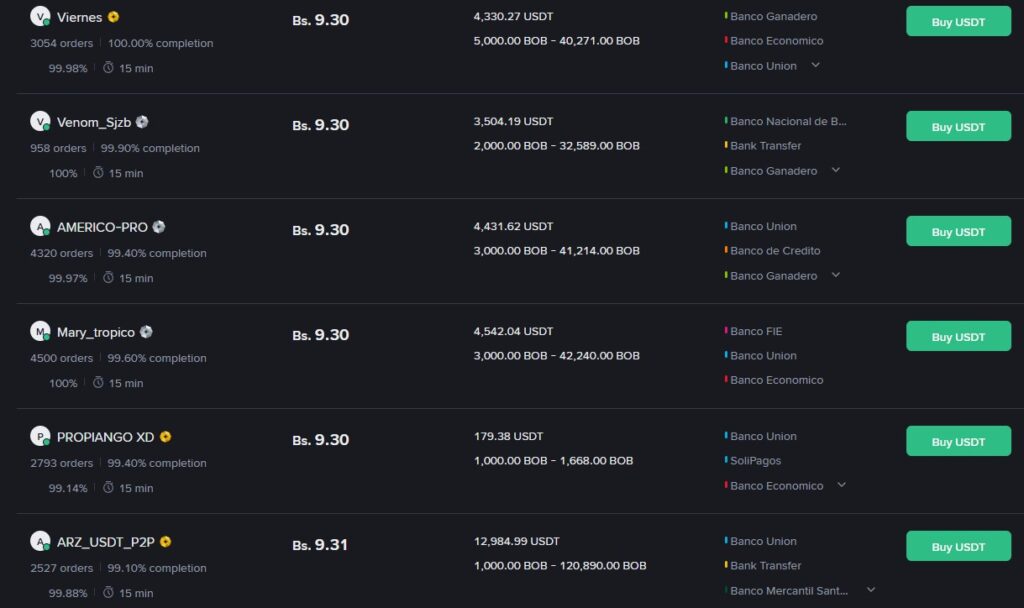
The infrastructure of this informal market in Bolivia is supported by platforms such as Binance, Bitget and Bybit, where users exchange bolivianos for USDT through local bank transfers. An activity that has been allowed since 2024, when that country lifted the ban on the sector and recognized it.
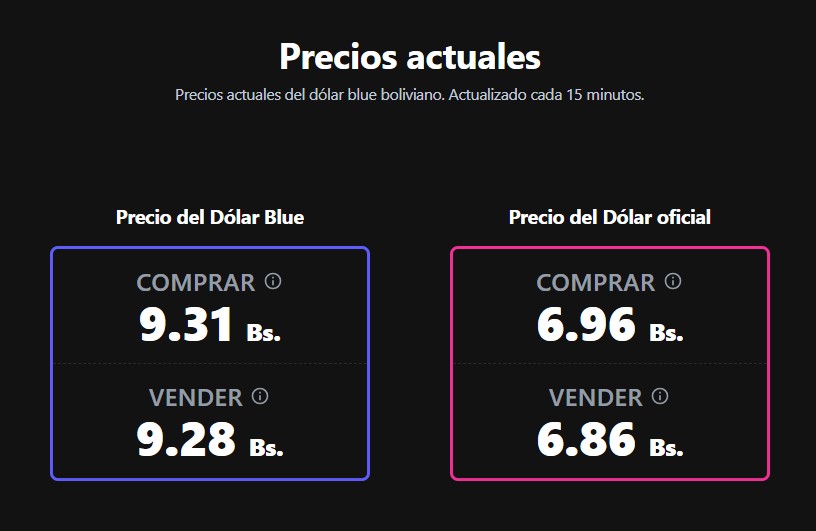
Monitoring and comparison tools have been added to this ecosystem, such as bolivianblue.net or dolarbluebolivia.click, which are web portals that quotes from various platforms are averaged to provide a clear view of the spread exchange.
A 35% gap between USDT and the official dollar in Bolivia
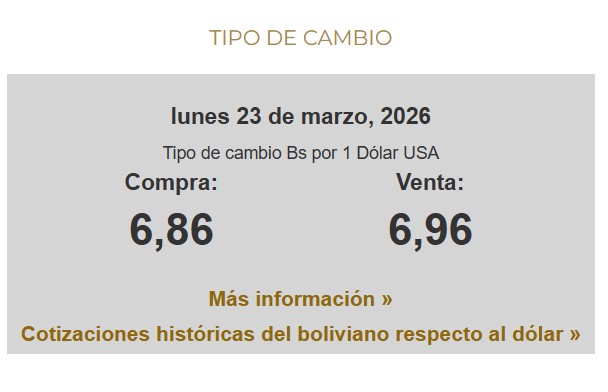
The exchange rate gap in Bolivia responds to a deep disconnection between market reality and official rates. While the exchange rate of the central bank (BCB) remains fixed at 6.96 bolivianos since 2011, real operation for the common citizen has shifted towards the digital environment.
In this scenario, USDT has functioned as a “digital dollar” with 1:1 parity, allowing fast transactions and the sending of remittances without depending on traditional Bolivian banking, which faces liquidity restrictions.
Data from the Binance P2P market, the largest exchange in the world, indicates that USDT is trading at an average price of 9.30 bolivianos this Wednesday, March 25, which represents an increase of 35% compared to the state rate.
This situation bears a close resemblance to the economic trajectory of Venezuela, where the gap between the official dollar and the parallel dollar ended up being dictated by the dynamics of digital currencies and general distrust in the local currency.
In Bolivia, the parallel market for the US currency is no longer a marginal phenomenon to integrate into the economic planning of families and companies.
Bolivia’s dependence on the USDT to set the value of the parallel dollar marks a milestone in the digitalization of its currency crisis. As in other contexts of high inflation or exchange controls in the region, stable cryptocurrencies have ceased to be merely speculative assets and have become the base infrastructure of the Bolivian informal financial system.