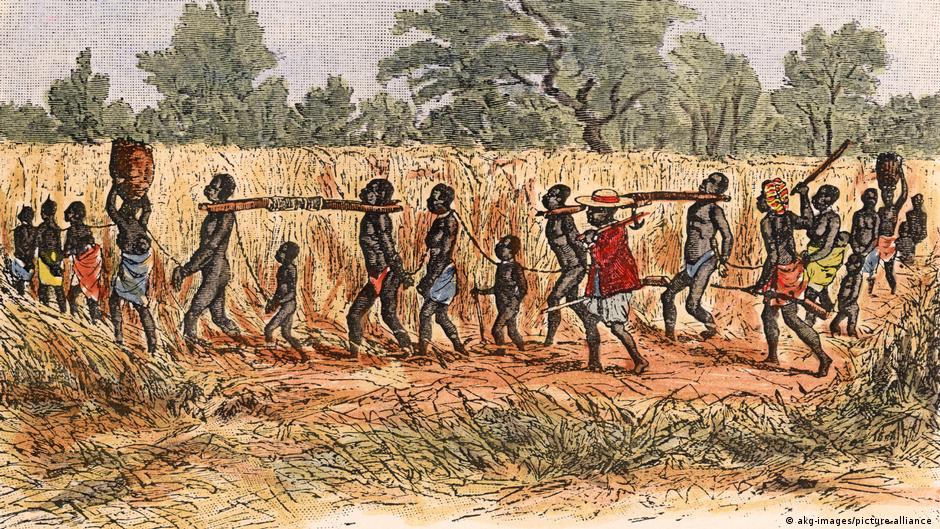
The United Nations General Assembly has adopted a resolution recognizing the trafficking of enslaved Africans as “the most serious crime against humanity”.
123 countries voted in favor of the resolution, which was supported by Ghana and supported by the African Union and the Caribbean.
The United States, Israel and Argentina were the only countries to vote against Wednesday’s non-binding resolution.
The United Kingdom and all 27 members of the European Union were among the 52 countries that abstained.
Ghana said solutions were needed because the consequences of slavery persist today, including racial disparities.
What else did Ghana say about the resolution on slavery?
After the vote, Ghana’s Foreign Minister Samuel Okudjato Ablakwa posted a photo of the results, saying: “We did it for Africa and all people of African descent.”
Speaking on behalf of the African Union, Ghana’s President John Dramani Mahama said before the vote: “Today, we come together in full solidarity to affirm the truth and advance a path of healing and restorative justice.”
“Adopting this resolution serves as protection against forgetting.”
The transatlantic slave trade between the 15th and 19th centuries involved the kidnapping, enslavement, and transportation of at least 12.5 million Africans to the Americas and the Caribbean.
The conditions of the journey were so horrific that only 10.7 million people survived.
What does the resolution say?
The resolution is titled “Declaring Trafficking in Enslaved Africans and Racial Chattel Slavery of Africans as the gravest crimes against humanity.”
It “unequivocally condemns the trafficking of enslaved Africans and the racial chattel slavery of Africans, slavery and the transatlantic slave trade as the most inhumane and enduring injustices against humanity.”
It also calls on UN member states to engage in dialogue on reparative justice “including a full and formal apology, restorative measures, compensation, rehabilitation, satisfaction, guarantees of non-repetition, and changes to laws, programs and services to address racism and systemic discrimination.”
Before the vote, Ghana’s Foreign Minister Ablakwa said that some countries had refused to acknowledge their crimes.
“The perpetrators of the transatlantic slave trade are known, the Europeans, the United States,” he told the French AFP news agency. “We expect him to formally apologize to all Africans and all people of African descent.”
The Netherlands is the only European country to issue a formal apology for its role in slavery.
The main European nations involved in slavery were Portugal, Spain, Britain, France, the Netherlands, Denmark, and Sweden.
Ablakwa also suggested that institutions continue to structurally address racism and that “compensation” could be offered to those affected.
One path toward restorative justice, Ablakwa said, is to return “all looted artifacts to the homeland.”
Why were some countries opposing the resolution on slavery?
Some UN members argued that today’s states and institutions should not be held responsible for historical mistakes.
They also expressed concern that the proposal could indicate a hierarchy among crimes against humanity, with some being considered more serious than others.
Before the vote, Deputy US Ambassador to the UN Dan Negria said that the US “does not recognize the legal right to reparations for historical wrongs that were not illegal under international law at the time they occurred.”
“The United States also strongly objects to any attempt by the proposal to rank crimes against humanity in any kind of hierarchy,” he said.
The EU representative, Gabriela Michelidou, said the bloc would have supported a resolution highlighting “the scale of atrocities”, but raised “legal and factual” concerns, including retroactively applying international law.
Speaking at the United Nations, Ghana’s Foreign Minister Ablakwa said, “History does not disappear if ignored, truth does not weaken if delayed, crime does not fester… and justice does not fade away with time.”
DW has an excellent two-parter Documentary on how the world’s demand for sugar drove the Transatlantic Slave Trade (Available on YouTube).
Edited by: Rana Taha