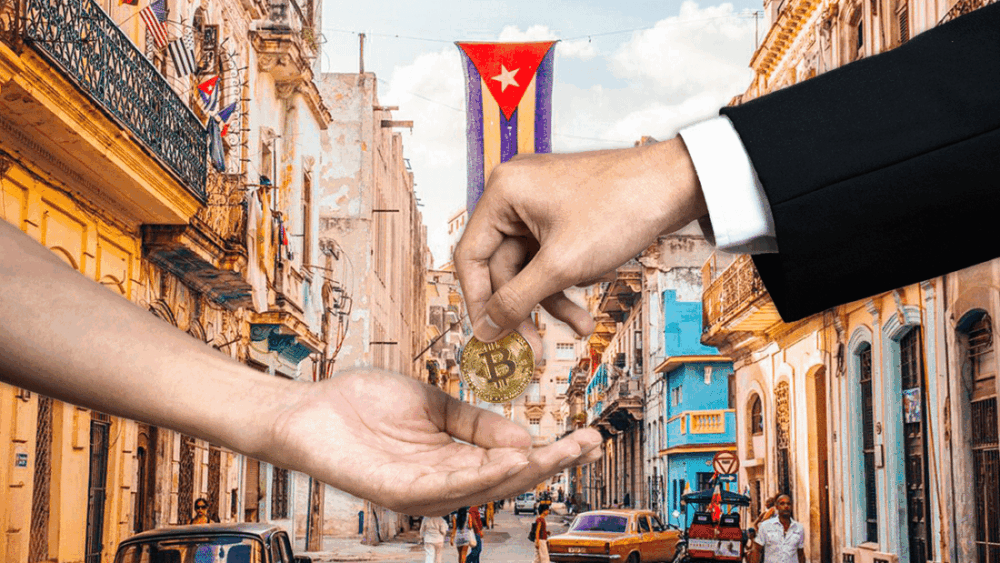
The licenses are temporary and require reporting each cross-border payment to the State.
For Kike, the State uses the private sector to raise dollars in the face of the crisis.
«What they are trying to do is monopolize the cryptocurrency market in Cuba. “They don’t like money moving without asking for permission and without going through the Central Bank.” The speaker is Kike, a leader in the local community, and his words exude a distrust that has become a common feeling among users of bitcoin (BTC) and other digital assets on the island.
Kike knows that talking has a price. Therefore, in this exclusive conversation with CriptoNoticias, your identity remains protected. In an environment where economic criticism of state policies is often interpreted as a political grievance, anonymity is your only guarantee against possible legal or administrative retaliation. His testimony is also a window into the tension experienced by a country where digital code tries to survive to centralized planning.
The trigger for your alert is Resolution 4/2026 of the Central Bank of Cuba (BCC). Published on March 23, the rule authorizes ten companies, nine MSMEs and one mixed firm, to use cryptocurrencies exclusively for cross-border payments.
Names like Ingenius Tecnologías, Dofleini and the health products company PROSA now have state endorsement to operate in this field, but under strict conditions: mandatory reports and a validity of just one year, as reported by CriptoNoticias.
For Kike, this opening is far from being a gesture of modernity, rather it is a response to suffocation. With a chronic shortage of foreign currency and the siege of United States sanctions, the government, from Kike’s perspective, decides to turn to the private sector to capture the flow of capital that today circulates invisibly.
They are desperate and every time they are in deep water what they do is look towards the private sector, the same one they deny for their socialist and communist ideas, but they still try to open up to the private sector to save them.
Kike.
Opening or capture?
They, the State, make the mess, they use the money however they want. They control all the markets in Cuba, then nothing works, there is nothing, there is no supply of anything and then they blame the United States, they blame the embargo, which is not as they paint it. And now they are asking the private sector to invest here in Cuba. They are asking for help from Cubans who fled here, from the regime, from the dictatorship and now they are asking them to invest in Cuba, that is not logical.
Kike.
“They [el Estado] they do not appear directly; They use private companies as intermediaries,” he explains. It is, in essence, an attempt to formalize what until yesterday was an informal survival circuit born of banking paralysis.
Kike’s technical concern is simple, but profound. By forcing companies to operate through licensed providers, anonymity, the appeal that many defend of bitcoin and other digital assets, fades. While stablecoins such as Tether’s USDT allow the freezing of funds at the request of the authorities. In this scenario, Kike defends the neutrality of Bitcoin: “No one can freeze your addresses.”
However, the new legal framework requires “keeping eyes” on each transaction. “For me this is a trap to control money,” he says. It warns that the risk of confiscations or mandatory exchange rates is latent when the State becomes the auditor of the digital wallets of citizens, entrepreneurs and businessmen.
While official media present the measure as a regulated step to facilitate international trade, The silence on the exact reporting mechanisms and user privacy fuels doubts.
Resolution 4/2026 comes into force this week. Meanwhile, according to Kike, the Cuban government’s experiment to tame digital assets is just beginning. However, the clash between the freedom of the code and the control of the State is already a reality in the streets of Havana.