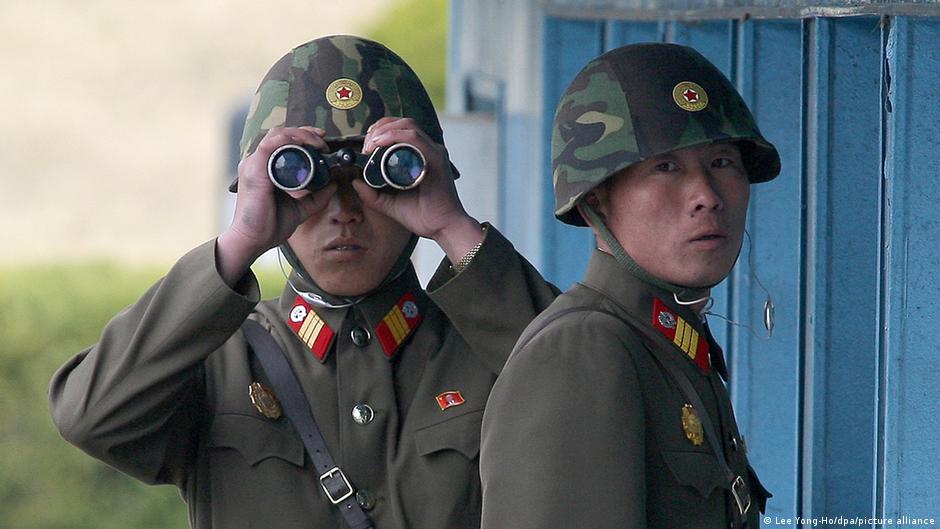
The South Korean government has asked the European Union to act as a mediator in talks with North Korea as it seeks to move beyond the current bilateral “mistrust and hostility” and make a breakthrough in relations with Pyongyang.
“I would appreciate it if the EU would consider facilitating EU-brokered two-plus-one political talks between South and North Korea.” South Korean Unification Minister Chung Dong-young said this during a meeting with a delegation of the European Parliament’s Foreign Affairs Committee in Seoul last week.
Chung said the EU is “an optimal mediator” because it has a “history of resolving centuries-old rivalries and achieving regional integration,” Yonhap News reported.
EU is ‘no alternative’ to America
The meeting took place a day before French President Emmanuel Macron arrived in South Korea on a two-day state visit. During his visit, Macron held talks with President Lee Jae-myung focusing on closer ties on defence, technology, energy and critical minerals.
Analysts say any outreach to Kim Jong Un’s regime is worth exploring for the sake of regional security, but there is little hope that EU involvement will bear fruit.
“I believe the minister saw the EU delegation as a ‘target of opportunity’ and tried to get Europe to agree to play a role,” said Mason Ritchie, professor of politics and international relations at Hankuk University of Foreign Studies in Seoul.
“Macron was also in Seoul and would have tried to bring him along because the ministry wants the support of a nuclear power and a full member of the UN Security Council,” he told DW.
“But I don’t think Kim cares much about Europe,” he said. He said the EU is “no alternative” to the US.
Ritchie stressed that the EU would certainly be willing to play a role in restarting discussions between the North and South, and that it has a certain amount of goodwill in Pyongyang, with several European countries, including Germany and Poland, having embassies in the North.
But the European bloc will be less willing to get involved if it feels too little can be achieved, he said.
Pyongyang refutes Seoul’s view
Seoul’s own efforts to extend an olive branch to the North have been bluntly and repeatedly rejected, says Irwin Tan, a professor of international politics at Hankuk University.
At the same time, the South considers the current US administration “unreliable” and preoccupied with domestic issues and the situation in the Middle East, the expert told DW.
“My understanding is that right now, South Korea’s main concern is the Trump administration’s unpredictability and blatantly separatist moves,” he said.
Tan also said the EU would likely view the Korean invitation “positively”, but would not be too “eager” to join.
“The EU has experience in helping the unification of formerly divided countries because of its previous experience in helping facilitate German unification,” he underlined, “but the Korean Peninsula presents its own set of unique, complex challenges.”
“It’s a very attractive, utopian idea when it comes to political rhetoric, but most commentators are skeptical about the possibility of Korean unification,” Tan told DW.
North’s relations with Russia, China are becoming closer
European countries once provided a limited amount of trade and development assistance to Pyongyang. In the past, this could have served as an incentive for North Korea to return to talks. But now it is not so.
“North Korea is increasingly aligning itself with Russia,” Tan said, pointing to Pyongyang’s commitment of ground troops to the ongoing war in Ukraine and North Korea’s providing Moscow with vast quantities of munitions and military material.
In return, Russia has violated international sanctions to deliver fuel, food and advanced weapons technology.
Realizing that it is losing influence over Pyongyang, China has now moved to increase cross-border trade and ease pressure on Kim’s regime, analysts say.
Kim denies ties with Seoul
And with two adjacent and ideologically aligned major powers courting Kim Jong Un, the North Korean dictator is likely to remain on his radical path.
During the week-long 9th Congress of the Workers’ Party of Korea in February, Kim denied any ties with Seoul, telling delegates that “all relations with South Korea have been completely ended” and describing Seoul as his “most hostile entity”.
The South’s minister has been entrusted with the responsibility of building better relations with the North and ultimately peaceful reunification, but he has a thankless task on his hands, Ritchie said.
“He is trying to pursue contacts with the North and I think he is a true believer in reconciliation,” she said.
With or without the EU, the true challenge is still to persuade Pyongyang to respond.
Edited by: Srinivas Majumdaru