
With low inflation, there is a greater chance that the FED will cut interest rates.
Higher inflation was feared due to the rise in oil prices.
Bitcoin (BTC) exceeded USD 73,000 this Friday, April 10, 2026 after the publication of inflation data in the United States below expectations and in the run-up to key diplomatic talks between Washington and Tehran scheduled for this Saturday.
The annual consumer price index (CPI) was located at 3.3%, below the 3.4% projected by the market. Core inflation (core CPI), for its part, marked 2.6% year-on-year compared to the estimated 2.7%.
Both data reinforce the expectation of a less restrictive monetary policy by the Federal Reserve (FED), a scenario that historically favors assets considered “risk”, including bitcoin.
The following graph shows how the price of bitcoin has moved in the last 7 days:
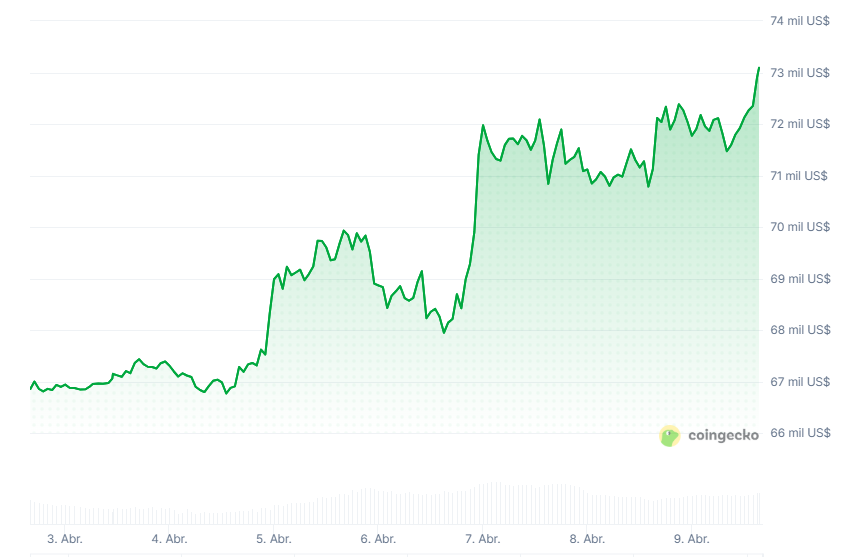
The bullish movement occurs in a context of high market sensitivity to macroeconomic and geopolitical factors. As CriptoNoticias reported this morning, the price of bitcoin remained around USD 71,600 in a cautious posture, awaiting definitions on the meeting between officials from the United States and Iran in Islamabad, Pakistan.
This meeting – the first of a formal nature since the beginning of the armed conflict – is closely followed by the operators. The evolution of the war in the Middle East has direct implications for the global energy market and, by extension, for inflation. An easing of tensions could help moderate oil prices, reducing inflationary pressures and improving the environment for assets like bitcoin.
The key channel in this dynamic is the Strait of Hormuz, through which a significant part of the world’s energy supply transits. Recent disruptions have raised energy costs, putting upward pressure on global inflation and limiting central banks’ room to cut interest rates.
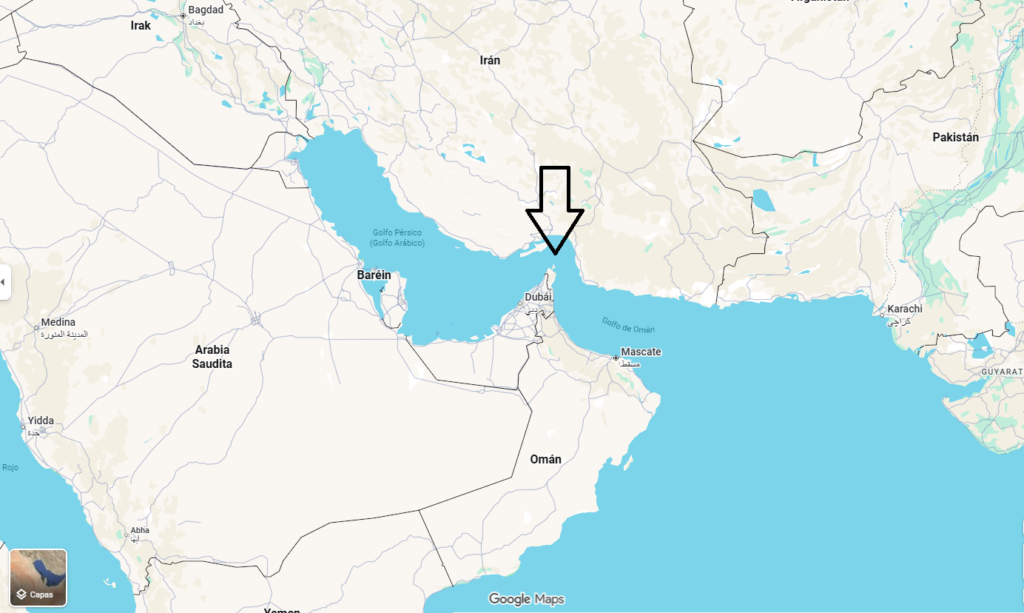
In this framework, any diplomatic advance that implies a standardization of maritime traffic could be interpreted as a positive signal from the markets.
NEWS IN DEVELOPMENT