April 10, 2026
Pakistan says US-Iran talks are ‘make or break’
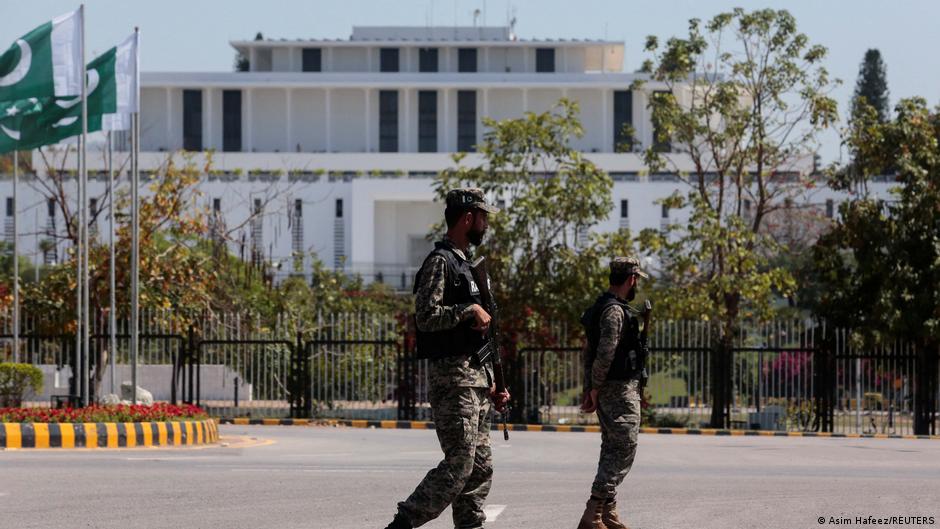
Pakistani Prime Minister Shehbaz Sharif commented on the importance of the talks between the US and Iran taking place in his country, saying they were decisive in whether or not a permanent ceasefire in the weeks-long Middle East conflict is achievable.
Sharif described the current stage as a “make-or-break moment.” He thanked the leadership of Iran and the United States for agreeing to a ceasefire and holding peace talks at his request.
He also pledged that his government would do its best to ensure the success of the peace process.
Sharif urged citizens to pray for the talks to succeed and speaking directly to his people, he annoucned a set of measures to address the energy crisis, saying his government would cut prices of diesel to 385 rupees ($1.38) per liter and gasoline to 366 rupees per liter.
https://p.dw.com/p/5C0ge
Death toll from Wednesday’s Israeli strikes on Lebanon reaches 357
The death toll from the Israeli strikes which occurred in Lebanon on Wednesday has increased to 357, the Lebanese Ministry of Health said on Friday evening. Another 1,223 people were injured in the strikes.
“The toll is still not final, due to the ongoing removal of rubble and the presence of a large amount of human remains,” which necessitate DNA testing, the ministry said.
Israel, meanwhile, has said it killed over 180 Hezbollah militants in Wednesday’s attacks. Israel said it was continuing its attacks against Hezbollah despite the US ceasefire with Iran.
https://p.dw.com/p/5C0fp
READ — Iran war: Islamabad on edge ahead of US–Iran peace talks
All eyes are on Islamabad, where US and Iranian delegations are set to start negotiations. Experts are cautiously optimistic, but also say a failure of the talks would spell more global chaos.
Read more in this analysis from DW’s Haroon Janjua in Islamabad.
https://p.dw.com/p/5C0eG
April 10, 2026
Trump: Iran has ‘no cards’ beyond Strait of Hormuz
US President Donald Trump sought to pressure Iran ahead of talks in Islamabad, pointing out what he saw as Tehran’s weaknesses going into the talks.
He said Iran has “no cards” in upcoming talks, apart from its control over the crucial Strait of Hormuz shipping channel.
“The Iranians don’t seem to realize they have no cards, other than a short-term extortion of the World by using International Waterways. The only reason they are alive today is to negotiate!” Trump wrote on his Truth Social network.
The closure of the Strait of Hormuz sent oil prices soaring and sent shockwaves through global markets, leading to warnings of recession.
An hour before the post, Trump also posted a short message taking a dig at Iran and presumably US media, saying the Iranians were “better at handling the Fake News Media, and “Public Relations,” than they are at fighting!”
https://p.dw.com/p/5C0cu
READ — Rifts in regime bigger threat to ceasefire
Daniel Ameri
As the US and Iran gear up for high-stakes talks, the bigger question is whether Tehran can hold the line amid signs of fractures within the regime.
Read more here in Daniel Ameri’s analysis.
https://p.dw.com/p/5C0bm
April 10, 2026
Trump threatens strikes if Iran talks fail — report
President Donald Trump said in an interview with US newspaper The New York Post that US warships were being reloaded with weaponry to strike Iran, in the event that talks in Pakistan fail to produce a deal.
Vice President JD Vance is on his way to Pakistan’s capital of Islamabad to lead the US delegation in talks with Iran. The Trump administration has warned Tehran not to “play” Washington.
“We have a reset going. We’re loading up the ships with the best ammunition, the best weapons ever made — even better than what we did previously and we blew them apart,” the Post cited Trump as saying.
“And if we don’t have a deal, we will be using them, and we will be using them very effectively,” he added.
Trump told the newspaper that the US was dealing with people with whom it was not certain “whether or not they tell the truth.”
The US president said that in regards to US demands that Iran hand over an estimated 1,000 pounds of deeply buried enriched uranium, it remains to be seen what Iran will do.
“To our face, they’re getting rid of all nuclear weapons, everything’s gone. And then they go out to the press and say, ‘No, we’d like to enrich.’ So we’ll find out,” Trump reportedly said.
https://p.dw.com/p/5C0Yb
Over 100,000 Muslims worship at reopened Al-Aqsa Mosque in Jerusalem
Over 100,000 Muslims worshipped at Al-Aqsa Mosque on Friday in East Jerusalem amid the ongoing US-Iran ceasefire.
The Al-Aqsa Mosque reopened on Thursday following the announcement of the truce, along with other Jerusalem holy sites such as the Western Wall for Jews and the Church of the Holy Sepulchre for Christians. The ceasefire came into effect on Wednesday.
The Jerusalem holy sites had been closed since the beginning of the US-Israeli war against Iran that began on February 28.
According to French news agency AFP, one man stood by the entrance of the Al-Qibli prayer hall at Al-Aqsa and gave out tissues to emotional worshippers.
https://p.dw.com/p/5C0Y3
April 10, 2026
A Lebanon ceasefire and assets release are pre-conditions for talks, Iranian speaker
Iran’s parliament speaker, Mohammad Bagher Ghalibaf, said that a ceasefire in Lebanon and the release of Iran’s blocked assets were two mutually agreed-upon conditions that must be met before any negotiations can begin. He made the remarks in a post on X on Friday.
Ghalibaf’s comments come ahead of planned talks between US and Iranian representatives in Pakistan’s Islamabad.
The question over whether Lebanon is included in the deal or not have cast doubt on the stability of the ceasefire, with Iran threatening to withdraw if Israeli attacks on Lebanon continue.
https://p.dw.com/p/5C0DY
April 10, 2026
Pope Leo: ‘God does not bless any conflict’
Pope Leo XIV has called for “coexistence and dialogue among peoples” ahead of negotiations between the United States and Iran in Pakistan and a potential Orthodox Easter ceasefire between Ukraine and Russia.
“God does not bless any conflict,” the American pontiff wrote on social media. “Anyone who is a disciple of Christ, the Prince of Peace, is never on the side of those who once wielded the sword and today drop bombs.”
Although he didn’t refer specifically to any particular conflict, whether in the Middle East, Ukraine or elsewhere, the head of the Catholic church said: “Military action will not create space for freedom or times of peace.”
https://p.dw.com/p/5C073
April 10, 2026
Food insecurity surging in Lebanon, UN warns
The United Nations (UN) warned Friday that food insecurity was on the rise in Lebanon, with prices surging and supply chains disrupted as Israel continued military strikes against the country – supposedly targeting Hezbollah.
“There are supply chain disruptions and the whole food system has taken a blow,” said Allison Oman, World Food Program (WFP) country director in Lebanon. “In just one month, the price of vegetables has surged by more than 20% and bread prices have increased by 17%.”
Lebanon was drawn into the Middle East war on March 2 when Hezbollah began firing rockets into Israel to avenge the killing of Iranian supreme leader Ayatollah Ali Khamenei in US-Israeli airstrikes.
Since then, Israel has conducted airstrikes against Lebanon and launched ground operations in the south of the country, displacing more than one million people, including farmers who are unable to work their fields.
Before March 2, around 900,000 people in Lebanon were facing food insecurity, according to the WFP a figure which is only set to increase.
“What we’re witnessing is not just a displacement crisis: it is rapidly becoming a food security crisis,” said Oman. “For families who are already struggling, this is deeply concerning.”
https://p.dw.com/p/5C064
April 10, 2026
German Red Cross chief warns of a humanitarian disaster in Lebanon
The humanitarian situation in Lebanon has deteriorated significantly, said the president of the German Red Cross, Hermann Gröhe, on Friday.
He warned that densely populated areas are increasingly coming under attack with little to no warning as the conflict escalates.
“Numerous hospitals are overcrowded because of the many injured, and there is a risk of shortages of certain medicines and materials, particularly if the attacks continue,” Gröhe told the Rheinische Post newspaper. He added that volunteers from aid organizations, including the Lebanese Red Cross, have been killed in the fighting.
Wednesday marked the deadliest day of the ongoing conflict in Lebanon. More than 300 people, including 30 children, were killed, according to the Lebanese Health Ministry.
Gröhe called on all sides to respect international humanitarian law, stressing that hospitals, medical staff, and civilians must be protected.
On Friday, the World Health Organization (WHO) also warned that Lebanon’s health system is at a breaking point due to Israeli strikes. Since the start of the war, 13 hospitals in Lebanon have been damaged and six have been forced to close, the organization said.
https://p.dw.com/p/5C013
April 10, 2026
US consumer inflation surges 3.3% as Iran war impact bites
Year-on-year consumer inflation in United States rose sharply by 3.3% in March, according to government data released on Wednesday, as higher energy prices due to the war in the Middle East hit Americans hard.
By comparison, the consumer price index (CPI) rose only 2.4% year-on-year a month earlier.
Gasoline prices also surged by 21.2% between February and March the largest monthly increase since the US Bureau of Labor Statistics (BLS) began publishing figures in 1967.
The increases show that, despite being the world’s top producer of crude oil, the United States is also not immune from the shocks caused to the global economy by Iran’s closure of the Strait of Hormuz in retaliation for US and Israeli airstrikes.
The Trump administration — elected partly on an anti-inflation ticket — insists that the war’s economic disruptions will be temporary.
https://p.dw.com/p/5Bzyj
April 10, 2026
Netanyahu accuses Spain of ‘hostility’ towards Israel
Israeli Prime Minister Benjamin Netanyahu has accused Spain of “hostility” towards Israel and blocked Spanish personnel from accessing the Civil-Military Coordination Center (CMCC) – set up to monitor the ceasefire between Israel and Hamas in the Gaza Strip.
“Spain has repeatedly chosen to stand against Israel,” Netanyahu said in a video statement. “Those who attack the State of Israel instead of confronting terrorist regimes will not be our partners in shaping the region’s future.”
The US-led CMCC in the Israeli town of Kiryat Gat, just outside Gaza, was established after the ceasefire took effect on October 10, with the goal of monitoring the truce and facilitating the flow of humanitarian aid into the Palestinian territory.
Spanish military personnel and diplomats were involved in the CMCC, along with counterparts from France, the United Kingdom and the United Arab Emirates, but the Spanish government under Prime Minister Pedro Sanchez has been vocal in its criticism of Israel and of the war against Iran.
Earlier on Friday, Spanish Foreign Minister Jose Manuel Albares called Israel’s most recent attacks on Lebanon “a disgrace on the conscience of humanity” (see earlier).
“I am not prepared to tolerate this hypocrisy and hostility,” said Netanyahu. “I will not allow any country to conduct a diplomatic war against us without facing an immediate price.”
Announcing Spain’s ban from CMCC meetings, Israeli Foreign Minister Gideon Saar said: “The Sanchez government’s anti-Israel bias is so egregious that it has lost all capability to serve as a constructive actor in implementing [US] President Trump’s peace plan in the CMCC.”
https://p.dw.com/p/5Bzn7
April 10, 2026
Vance hoping for ‘positive’ talks, warns Iran not to ‘play’ US
US Vice President JD Vance set off for talks with Iranian representatives in Pakistan on Friday, telling reporters he was hoping for a “positive” outcome but warning Tehran not to try and “play” the US delegation.
“We’re going to try to have a positive negotiation,” he said before take-off from Joint Base Andrews in Maryland.
“If the Iranians are willing to negotiate in good faith, we’re certainly willing to extend the open hand. If they’re going to try to play us, then they’re going to find the negotiating team is not that receptive.”
Vance, who has long been skeptical of foreign military interventions and opposed to the prospect of sending US troops into open-ended conflicts, has distanced himself from the US-Israeli war against Iran over the past month. But he’s returned to lead the US delegation in Islamabad this weekend.
He didn’t take any questions from reporters but said US President Donald Trump “gave us some pretty clear guidelines” on how talks should go, without elaborating.
https://p.dw.com/p/5BzQq
April 10, 2026
Israel: Hezbollah claims attack on Ashdod
Hezbollah has acknowledged responsibility for a missile attack on the Israeli naval base in the southern town of Ashdod earlier on Friday.
“In response to the enemy’s violation of the ceasefire and its repeated attacks on Beirut, and after the Resistance adhered to the ceasefire while the enemy did not, the fighters of the Islamic Resistance targeted the naval base in the port of Ashdod with missiles,” the Iran-backed group said in a statement.
Meanwhile, on the ground in southern Lebanon, Hezbollah said its fighters were using light arms, RPG fire and rocket barrages against Israeli troops in the town of Bint Jbeil.
The Times of Israel reported that the chief-of-staff of the Israel Defense Forces (IDF), Lieutenant General Eyal Zamir, visited Israeli troops on the outskirts of the town on Thursday, telling them:
“The objective defined for you is the removal of the direct threat to the residents of the north, which you are carrying out with determination.”
https://p.dw.com/p/5BzOU