Larisa Shevandin has not seen her husband Oleh for 11 years. Oleh, an athlete and president of a local martial arts association in his hometown of Debaltseve in eastern Ukraine, was kidnapped in May 2015. The city was at the time already part of the so-called “Donetsk People’s Republic”, which Kremlin-backed, pro-Russian separatists had named as such a year earlier. The two spoke twice within the first 24 hours of his arrest, and never again.
According to eyewitness accounts collected by Shewandin, masked men with guns stopped her husband on the street, pulled him out of his car, put a sack over his head and drove away in their vehicle.
Shevandin conducted her own research into the circumstances of her husband’s disappearance, during which she also founded the Ukraine advocacy organization, Return Home. She says her husband’s case was a topic of discussion at the UN Committee on Enforced Disappearances.
“Unfortunately, the United Nations has no way to exert direct influence. So despite their efforts, he remains imprisoned,” says Shevandin. “Eleven years in a Russian prison is a long time. They say every day is hell – but then you have to multiply it by 365, and then multiply that by 11.”
The arrest of Oleh Shevandin was one of the first reported incidents in Russian-occupied parts of Ukraine. His name is on a list for a possible prisoner exchange, but he has not been heard, lacks legal representation and is detained without formal charges.
Russia is clearly violating international humanitarian law
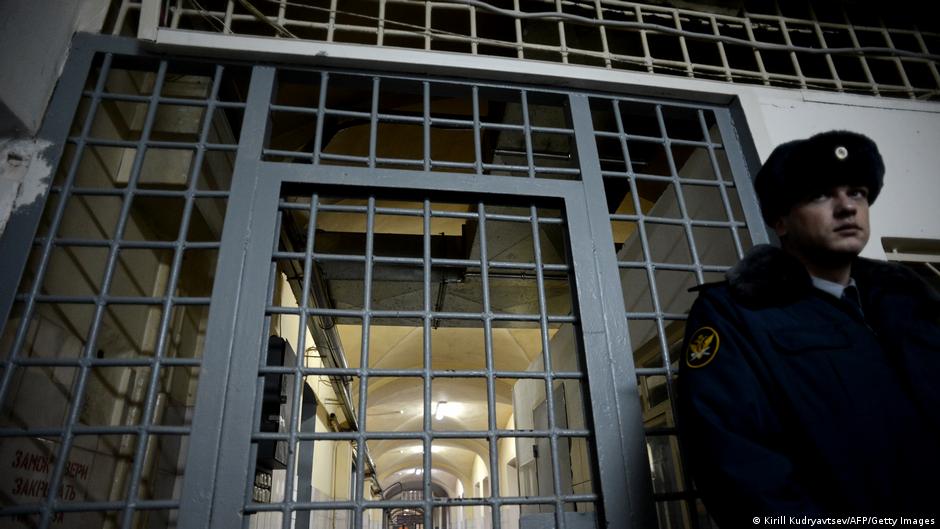
Most Ukrainian citizens currently held captive by Russia – and there are many – share a similar fate. Thousands of people disappeared at the beginning of Russia’s full-scale invasion. Human rights organizations estimate that at least 16,000 Ukrainian non-combatants were held in Russian prisons.
Arbitrary arrests violate international humanitarian law. Civilians are non-combatants and protected under the Fourth Geneva Convention. “Logically, the Geneva Conventions prohibit countries from invading another’s sovereign territory and arbitrarily arresting and imprisoning their citizens,” Yuriy Kovbasa, representative of the Ukrainian parliament’s human rights commissioner, told DW.
Mikhail Savva of the Ukraine-based Center for Civil Liberties says Russia justifies the arrests by claiming that those detained were “resisting a special military operation”. “These people have no legal status. Their imprisonment is not only a violation of international law, it is also a violation of Russian law.”
Kovbasa says there is another category of prisoners in Russia, whose status has been confirmed by the International Committee of the Red Cross. “They are civilians who may have been framed for ‘terrorism’ or other criminal charges,” he says.
Presented and accused of espionage
Activist and journalist Serhiy Tsihipa is one of many who fall into that second category. After going into retirement in 2021, Tsyhipa began writing fairy tales about her hometown, Novaya Kakhovka in the Kherson region of Ukraine. In one of the stories, a water fairy abducts a figure according to the author. The prisoner can be freed only with the help of seven hidden keys.
However, this story will soon become a real-life nightmare. When Russian troops captured Novaya Kakhovka in early 2022, Tsyhipa stayed to organize humanitarian aid and inform the outside world about the situation on the ground there via social media. He was kidnapped on March 12, 2022. According to the Russian human rights organization Memorial, he was detained without charge for months. He was not charged with espionage until December 26, 2022. The memorial says Tsihipa is a political prisoner.
After his arrest, Tsihipa’s wife Olena begins searching for “magic keys” that will free him. Olena Tsihipa describes herself as an “independent human rights activist” and is involved in the Citizens in Captivity initiative. She regularly participates in activities aimed at helping imprisoned civilians. “I know it won’t make his fate any easier if I just sit and cry,” she says.
It has become extremely difficult to stay in touch with my husband. The last letter she received was in February, although she writes every week and sends him papers to answer. She says, “Not receiving letters from him could mean that he is not receiving letters from me.” It is also possible that her husband’s health has deteriorated. “They are kept in cold, damp conditions. That means they are all victims, Ukrainian civilians and soldiers, not just Mary Serhiy.”
Russia’s systematic torture of Ukrainian prisoners
According to the United Nations and human rights activists, Ukrainians held in Russia or in Russian-occupied territories of Ukraine – both prisoners of war and civilians – are systematically abused and tortured by Russian forces.
“Torture and ill-treatment – our defenders… men and women, soldiers and civilians… they all report it when they return from prison. They all say it happens,” says Yuriy Kovbasa of the Ukrainian parliament.
Who goes to Russian prisons?
Mikhail Savva of the Ukrainian Center for Civil Liberties says most of those arrested were involved in civil activities. Those standing up for the rights of imprisoned civilians report that some of those detained had worked as volunteers, as emergency evacuation drivers, or were simply open about their pro-Ukrainian views.
“They pose a threat to the occupiers because they could potentially become centers of organized resistance,” Savva explains, adding that mass arrests also intimidate civilians. “You literally demonstrate that the same thing can happen to anyone, that you can disappear.”
Retired army officer Serhiy Likhomanov disappeared for nearly two months when armed men stormed his apartment in Sevastopol in Russian-occupied Crimea in late 2023 and took him to an undisclosed location. His family later learned that he had been imprisoned. Russia has accused Likhomanov of treason as well as planning a terrorist attack. Rights group Memorial views the case as a serious violation of the law and suspects politically motivated persecution.
Likhomanov’s sister, Tetiana Zelena, said, “I want my brother to have the chance to live a normal life, not in prison. He doesn’t deserve this. He didn’t do anything wrong.” “I think he was arrested because he used to be a Ukrainian soldier.”
Selena quit her job to fight full-time for her brother’s release. She says she will continue fighting for Ukrainian prisoners, even if her brother is released even for a day. “My daughter asks me if I will continue to do this after Serhiy is freed. I always say, ‘I don’t know.’ Then she says she knows me so well that it can’t be believed.” Tatiana Selena laughs and says her daughter is right. She says she will not leave. Not until the loved ones of all the other families she has met over the years are free, too.
This article was translated from German by John Shelton