The results of the investigation into the murder of three girls at a Taylor Swift-themed dance class in 2024 were released on Monday, concluding that the massacre could have been prevented.
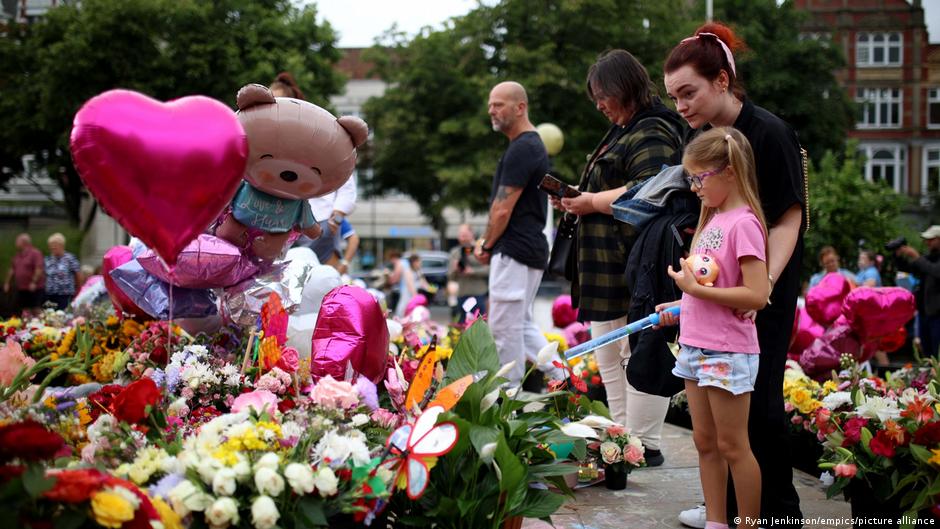
The attack took place in Southport, north-west England, when Axel Rudakubana walked into a morning dance class and killed three girls, aged 9, 7 and 6. He also injured eight other children and two adults.
The tragic incident led to a week of anti-immigrant riots in more than a dozen English and Northern Irish towns and cities, following false reports that the attacker was a Muslim asylum-seeker. In fact, Rudakubana was born in Cardiff to a Rwandan Christian family.
History ‘takes a different path’
The 763-page report confirmed that Rudakubana’s parents and state agencies were aware of his penchant for violence and the investigation revealed that there may have been times when parents or authorities intervened.
Retired judge Adrian Fulford, who led the nine-week investigation, said both the family and authorities could have prevented Rudakubana from carrying out the attack. Fulford described these murders as unprecedented in Britain because of their “extreme and extremely specific wickedness”.
Fulford said upon publishing the report, “History may simply have taken a different direction.”
Last year Rudakubana was sentenced to a minimum of 52 years in prison for the attack.
Parents failed to communicate threat
The new report blamed Rudakabana’s parents for not reporting his behavior and other issues to authorities.
It says he allowed knives and weapons to be delivered to the home and failed to provide vital information in the days before the attack.
The report said the lack of monitoring of the teen’s online activity “would have provided clear indications of his violent engagements.”
Fulford also accused the parents of “creating significant barriers” to various government agencies engaging with the teen, and failing to monitor his behavior and set limits.
Fulford said, “If AR’s parents had done what they morally should have done, AR would not have had the freedom to attack and this would not have happened.”
Rudakubana had several encounters with the police.
The report also hit out at state officials who failed to manage the risk presented by the teen despite being on their radar.
In 2019, he was convicted of attacking another child at school with a hockey stick when he was 13 and was placed under the supervision of a local service for young offenders.
Rudakabana was sent to the government’s counter-extremism program three times between 2019 and 2021 to express interest in school shootings and terrorist attacks.
But the authorities closed the case every time.
Local police were called to his home five times over unspecified concerns about his behaviour.
Although he was provided mental health and educational support, he reportedly stopped engaging with social workers and was expelled after bringing a knife to school.
‘Systemic failures’
Fulford said the failure to “stand up and accept responsibility” at organizational and individual level for managing the risk posed by the killer is “clearly a disappointing – and therefore urgent – matter that requires government attention.”
He lamented, “Too often, the ‘case’ of AR was transferred from one public sector agency to another in an unfair round of referral, assessment, case-closure and ‘hand-off’.”
British Prime Minister Keir Starmer responded to the report by promising changes to fix “the systemic failures that led to this horrific incident”.
“Today’s report is truly sad and deeply troubling,” Starmer said. He said, “Although nothing will bring these three little girls back, I am determined to make the fundamental changes needed to keep the public safe.”
Edited by: Darko Janjevic