
Despite the delays, they aim to launch the first Glamsterdam tests this week.
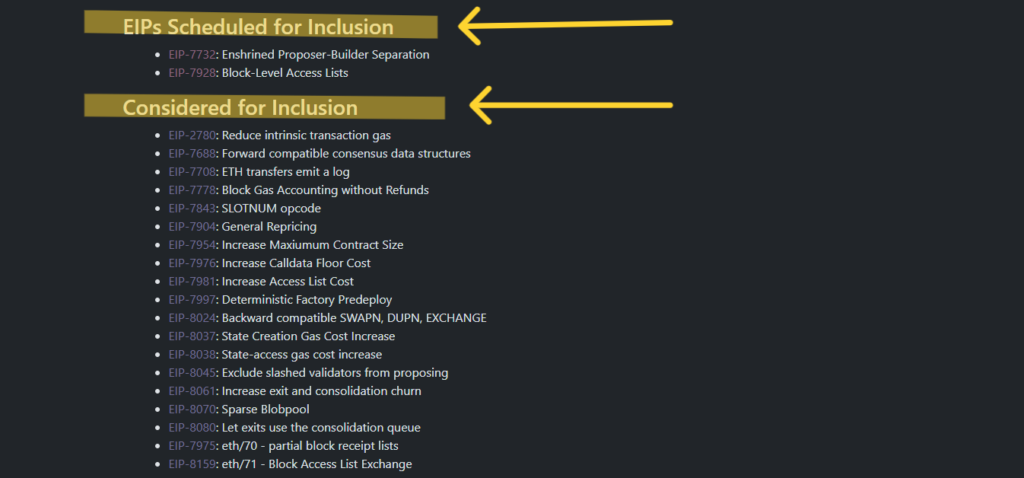
Glamsterdam has two confirmed proposals (EIP-7732 and EIP-7928) and another 19 under discussion.
The Ethereum Foundation (EF) contributor and developer known in X as Nixo posted an update on the status of Glamsterdam, the network’s next update, detailing that progress is being “slow.”
Despite the difficulties, as Nixo pointed out in a post on April 10, the EF development teams are committed to launching the first test network (devnet) widespread Glamsterdam this same week. This date is subject to them being able to stabilize the implementation of EIP-7732 (Enshrined Separation between Proposer and Block Builder or ‘ePBS‘ for its acronym in English), the structural proposal that is at the center of the delay.
Likewise, a statement from the Ethereum Foundation confirmed this objective and added that, once the ePBS proposal is stabilized, teams will advance with several more EIPs in said update.
On the other hand, Ethereum developers, as previously reported by CriptoNoticias, expect Glamsterdam to be operational on the main network during the first half of 2026.
The delay in Glamsterdam, what ePBS is looking for and what else is coming in this update
The cause of the delay in the development of Glamsterdam, according to both cited sources, is the complexity of ePBS (EIP-7732). Nixo lo described as “an incredibly complex structural change.”
According to the technical document of EIP-7732, today the vast majority of Ethereum validators delegate the construction of the block to specialized third parties called buildersthrough trusted intermediaries external to the protocol. EIP-7732 seeks to eliminate that dependency by incorporating that relationship directly into the protocol, so that the exchange between the block proposer and the constructor is reliable without the need for intermediaries.
The problem is that dividing this task into two coordinated parts within the protocol implies that all the software run by the network nodes must be prepared to handle a new possibility: that a block arrives in two stages, and that the second part, the transaction content assembled by the constructor, arrives late or does not arrive at all.
According to the document, it is a change that “touches practically everything” in the network architecture, which would explain the slow pace of development.
The second confirmed proposal for Glamsterdam is EIP-7928called Block Level Access Lists. According to its whitepaper, this proposal records all accounts and storage locations accessed during the execution of a block, along with their subsequent values.
This allows, according to the same document, parallel disk reads, parallel validation of transactions and state updates without the need to reexecute the entire block, which could significantly improve network performance.
Additionally, currently there are others 19 proposals in consideration for Glamsterdamwhich are still under discussion and their inclusion will depend on their complexity and compatibility with the two already confirmed.
Hegotá and the debate on quantum resistance
Contributor Nixo also addressed issues regarding the upcoming Glamsterdam upgrade on Ethereum, called Hegotá. Regarding this, he clarified that its main characteristic has already been chosen: FOCIL (EIP-7805)a Forking Choice Forced Inclusion List mechanism designed to preserve censorship resistance on Ethereum and that aims to guarantee that certain transactions are included in each block.
Account abstraction, which would have allowed greater flexibility in how users manage their wallets, had intense debate but did not reach consensus on implementation detailsaccording to the statement from the Ethereum Foundation. It was downgraded to a secondary feature, with a commitment to find a proposal with broader support.
Finally, on quantum resistance, both nixorokish and the EF statement noted that interest is growing, but that to date no one has submitted an independent EIP proposal on the matter. Nixo pointed out that quantum resistance appears included in some account abstraction proposals, but without its own proposal.