Over the past three years, the world’s most serious humanitarian disaster has been unfolding in Sudan – largely unnoticed by the global community.
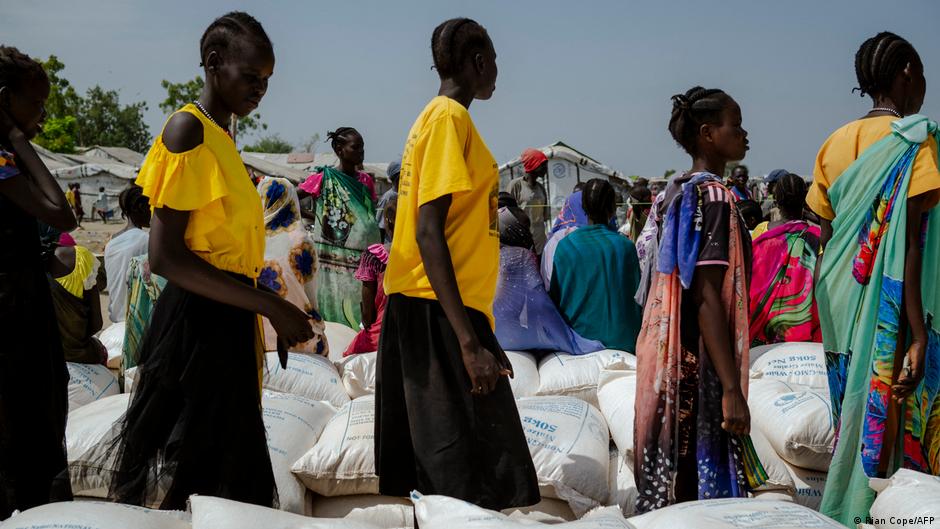
Rival factions of the country’s ruling military are engaged in fierce fighting, with nearly 150,000 people killed in the conflict so far. About 12 million Sudanese people have been forced to flee, about a quarter of the country’s population. Meanwhile, more than 33 million people in the country – nearly two-thirds of the population – are dependent on aid.
The theme of the conference taking place in Berlin this Wednesday is the plight of the people of this East African country. Representatives of the European Union, the United Kingdom, the United States and the African Union – comprising 55 countries on the continent – gathered at the Federal Foreign Office in Berlin. Their main goals were to secure additional funding to support the Sudanese population and ensure that the conflict was not overshadowed by the many other global crises.
Djiboutian diplomat and African Union chair Mahmoud Ali Youssef held a brief meeting with German Chancellor Friedrich Merz on Tuesday to discuss Sudan.
“There are currently more than 20 million people facing hunger there. That’s almost half the country’s population,” Merz said. “Germany is one of the largest providers of humanitarian aid. That’s why we also support all efforts by the US, Saudi Arabia, the UAE and Egypt to ensure a ceasefire there.”
Focus on financial pledges for Sudan
But Meraz is also well aware that the chances of a ceasefire between the Sudanese Armed Forces (SAF) and the paramilitary Rapid Support Force (RSF) are extremely slim. It is noteworthy that representatives of both the opposing parties were not present in Berlin. A year earlier, a similar conference held in London ended without any results, as did the one in Paris in 2024. That is why financial pledges for starving populations have become the main focus of the conference in Berlin.
While Ali Youssef also highlighted the urgent need for a ceasefire in Sudan, he said it is even more important to draw greater global attention to the suffering of the people currently living there.
“When the whole world is focused on Iran and Ukraine and other crises, I think it’s very commendable that Germany puts this agenda on the table, so that we don’t lose sight of the suffering of the people of Sudan,” he said.
Donations from donor countries are declining
In 2024, global donor countries collectively donated $2.07 billion (€1.91 billion) to supply basic needs to the people of Sudan. By 2025, this figure has dropped to just $1.77 billion, which experts estimate covers only 40% of actual needs.
One reason for the sharp decline is significant cuts in aid by US President Donald Trump, as well as a shift by wealthy Western countries toward focusing more on the conflicts in Iran and Ukraine.
At last year’s Sudan conference in London, pledges of almost €1 billion were secured. According to German Foreign Minister Johann Wadeful, similar help can be expected in Berlin this week.
€20 million more support from Germany
German Development Minister Reim Albli Radovan plans to increase German aid to those in need by €20 million, focusing primarily on women.
In a press release issued ahead of the conference, the minister wrote: “While many men are absent due to the war, women are taking care of their families and providing for them. Germany’s development cooperation supports the Sudanese population as well as refugees in host communities in neighboring countries, laying the groundwork for a peaceful future in Sudan.”
In total, all German funding for Sudan now amounts to €232 million.
But Sudan is far from a peaceful future. Experts fear the conflict could soon spread to neighboring countries such as Chad. The conditions inside Sudan are inexplicable.
At the conference, British Foreign Secretary Yvette Cooper pointed out that rape has been repeatedly used as a weapon of war – almost on an industrial scale, she stressed.
Cooper announced that the UK would provide funding to Sudan equivalent to approximately €168 million for 2026.
Drones coming from abroad are increasing the conflict
Three and a half years ago, Volker Turk began working as the United Nations High Commissioner for Human Rights. Speaking to DW at the Berlin conference, the Austrian lawyer said large-scale arms shipments from several countries to the warring parties are worsening the situation in Sudan.
He said, “Not a single weapon is being produced in Sudan. The most modern weapons systems are now coming to Sudan; we have seen this with drones. Since the beginning of the year, my office has documented 700 civilian deaths as a result of drone strikes.”
So why is this brutal conflict so often ignored? Thorsten Close-Zuber, head of the German NGO Help-Hilf zur Selbstilfe, told the Catholic news agency on Wednesday that this is partly because very few refugees have flown from the country to Europe.
According to the UN refugee agency, only 14,000 refugees from Sudan were counted in Europe in 2025. This is much less than, for example, Syria. Despite all the appeals made at conferences such as Berlin, public awareness remains low.
This article was originally written in German.