“This is not a surprise, it is a starting signal,” says the founder of that company, Boris Spiwak.
OFAC License 57 opens the Venezuelan banking system to American fintechs.
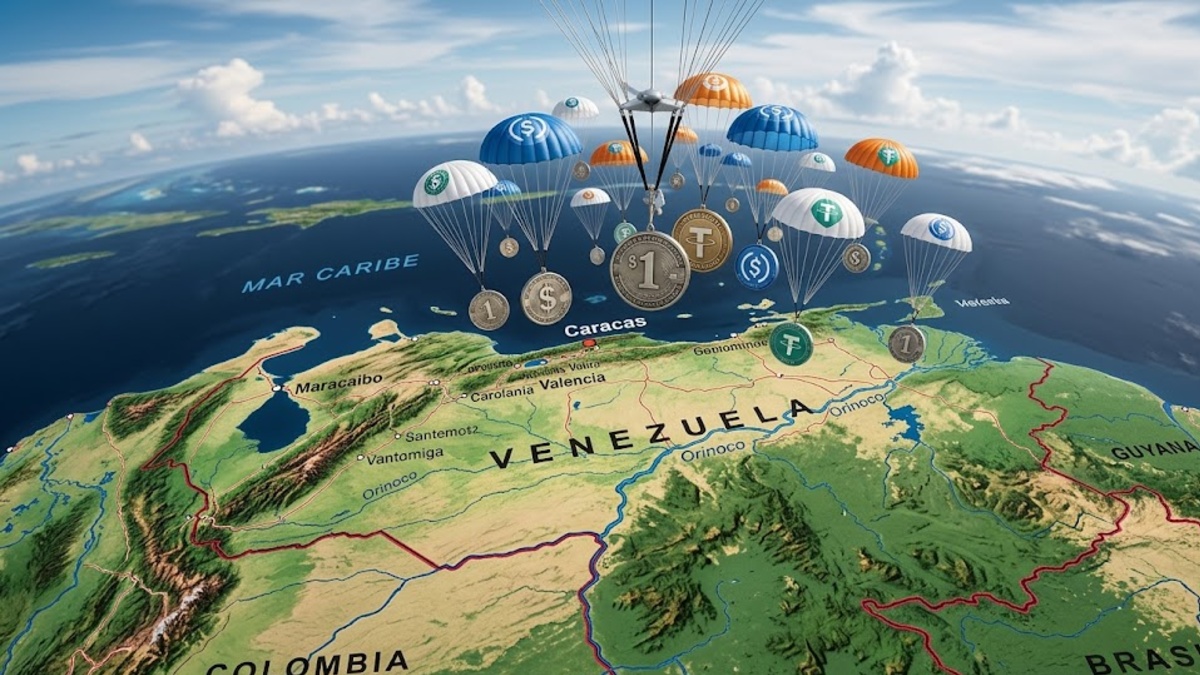
The digital asset landscape in Venezuela is undergoing a structural change following the recent regulatory update by the United States Office of Foreign Assets Control. The Qash neobank, specialized in stablecoin operations, announced the beginning of a strategic expansion in the Caribbean country.
Boris Spiwak, founder of Qash, noted on LinkedIn on Wednesday, April 15, that the company has been preparing in advance for this legal scenario, which now allows for the establishment of a formal broker between US-based stablecoin rails. and the official banking channels of Venezuela.
According to the manager, the measure “is not a surprise, but rather a starting signal” to formalize the flow of capital and cross-border payments that, until now, operated in a restrictive environment. In their opinion, they are ready to “expand aggressively” in the Venezuelan market.
Therefore, Qash’s strategy focuses on offering a fintech infrastructure that streamlines diaspora payments and investor operations through the use of digital assets linked to the dollar. In this sense, Spiwak emphasized that the company seeks to lead the connection between modern financial technology and the local banking system, taking advantage of the fact that General License No. 57 creates a conducive environment for the development of legal and efficient payment solutionsbased on the guidelines required in the US.
Additional details on the rollout of these services and partnerships with local companies will be formally discussed next week during the Startup Venezuela Summit in Miami.
License 57, which came into effect on April 14, authorizes the processing of financial services with the Central Bank of Venezuela (BCV), the Bank of Venezuela, Banco Digital de los Trabajadores and Banco del Tesoro—key institutions of the Venezuelan State—, allowing the integration of technologies based on distributed records with the traditional banking system.
Thus, the legal framework now covers a complete package of services that includes transfers, digital wallets, mobile money and card payment processing. Additionally, the regulations provide safe harbor protections for intermediary financial institutions, reducing risk for international entities who wish to facilitate the sending of remittances or commercial payments to the South American nation.
This change in regulatory policy has already shown immediate effects in other sectors of the ecosystem. Recently, Binance—the largest digital asset exchange on the market—reincorporated Venezuelan public banking as a payment method within its peer-to-peer trading platform, as reported by CriptoNoticias.
With this reopening, Venezuela begins to progressively reintegrate into the international financial system under specific frameworks authorized by the US authorities. The movement of firms like Qash suggests that everything seems to be aligning based on the formalization of the digital economy in that nation.