It was this shelling that drove Syrian man Imad Omar Kashit from his home again. Fourteen years ago he fled Syria for Lebanon. This time, it was the other way around.
“When Israeli missiles destroyed entire houses in my neighborhood in the southern Lebanese city of Tyre, we decided it was time to save our lives again,” the 52-year-old man told DW.
In early March, Lebanon was embroiled in the wider Middle East war when Hezbollah, a local group backed by Iran, fired rockets at Israel in retaliation for the assassination of Iran’s leader in Israel.
On Thursday, a 10-day ceasefire between Israel and Lebanon was struck by the US, but before that, more than 227,549 people had crossed three official border points from Lebanon into Syria, according to the latest data from the UN’s International Organization for Migration (IOM). The vast majority, 95%, were Syrians, while 5% were Lebanese citizens.
Lebanese health officials say the death toll from Israel’s attacks on Hezbollah militia is about 2,196. The ministry does not provide details by nationality and estimates of how many Syrians were among the killed and injured range widely, from 39 to 315. More than 1 million Syrian refugees are still registered in Lebanon, according to the UN refugee agency UNHCR, with hundreds of thousands more believed to be in the country without registration.
long crisis
Once Kashit and his family arrived back in their hometown of Maarat al-Numan near Aleppo, they found that their home had been completely destroyed as a result of the Syrian civil war, which ended in December 2024 after a coalition of rebel groups ousted Syria’s longtime dictator, Bashar Assad, from power.
“There are no houses to rent because the entire city has been destroyed,” Kashit told DW. Currently, they are living with his sister.
Another Syrian, Mohammed Jassem al-Brook, had fled Israeli attacks in Lebanon two weeks earlier. “There was a lot of traffic at the border crossing and it took a whole day to get through,” he told DW.
When he finally reached his family’s home in the town of Qusayr, near Homs, he found only the remains of the house. With no other option, they unpacked their tent from a refugee camp in Lebanon, set it up and are now living in it. Despite the lack of housing, he has no intention of returning to Lebanon.
In early April, a survey by the UN refugee agency, UNHCR, found that nearly half of the Syrians they interviewed also said they intended to stay in Syria permanently, despite economic challenges and limited state services.
“Syrians are returning because Lebanon is no longer livable, rather than because Syria is ready to welcome them,” confirms Nanar Hawach, senior Syria analyst at the International Crisis Group. “The government can manage the border but it has no answer for what will happen after that,” he said. In his view, the return of millions of people should not be read as a sign that the situation inside Syria has improved.
legacy of war
Syria continues to grapple with the legacy of more than a decade of conflict. Despite the lifting of sanctions and Syria’s return to international prominence, sectarian clashes and political instability still add to the country’s problems.
World Bank’s damage assessment Estimate The total reconstruction cost is approximately $216 billion (€200 billion). Basic services including education, health care and infrastructure are limited and humanitarian conditions remain poor for approximately 26 million people Horrible.
According to the United Nations, approximately 15.6 million Syrians are in need of humanitarian assistance and 13.3 million Syrians are food-insecure. The UN 2025 Food Security Assessment report says severe drought could devastate 95% of rain-fed crops by 2025.
“Syria was already in a protracted humanitarian crisis before this new wave of returns,” Hiba Zayedin, senior researcher in the Middle East and North Africa division at Human Rights Watch, told DW. “The infrastructure does not exist to accommodate large numbers of people, many of whom are left with nothing and are returning to the same places.”
Risk of unexploded devices
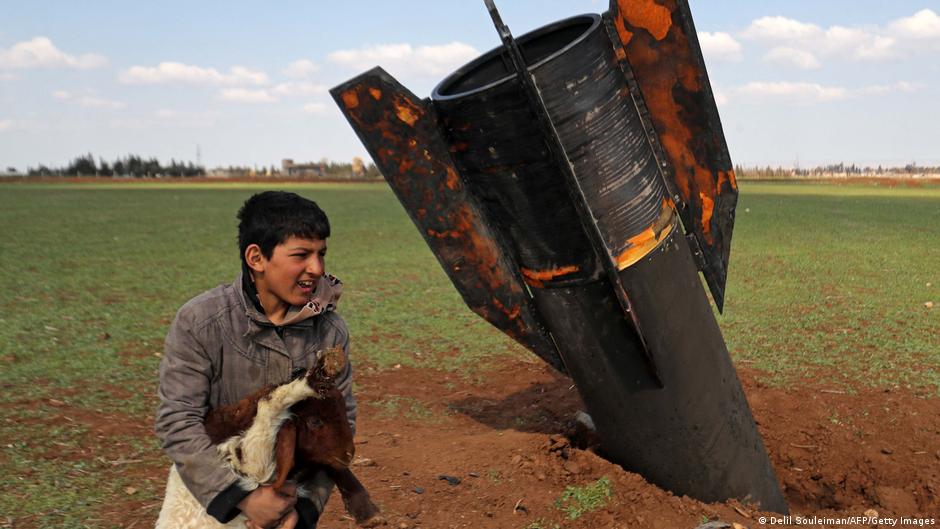
These are not the only issues. Syria is also one of the most polluted countries in the world in terms of explosive residues. Zayedin added, “Years of aerial bombardment, ground fighting and the use of cluster munitions in many governorates have left vast areas filled with unexploded ordnance, or UXO, landmines and improvised explosive devices.”
Ian Overton confirmed, “The threat is very real.” He is the Executive Director of Action on Armed Violence (AOAV), a UK-based organisation, which documents evidence of armed violence against civilians around the world.
They also warned that UXO contamination remains particularly severe in areas that have seen sustained fighting and borderline changes, including Raqqa, Deir al-Zour, Aleppo, Idlib, and parts of rural Homs and Hama. “These are the same areas where many refugees are returning,” he told DW. He said children and returnees unfamiliar with contaminated environments are particularly vulnerable.
“Even in the absence of active hostilities, a legacy of explosive violence continues to kill and injure,” Overton said, adding that the trend is worsening. In 2024, AOAV recorded 238 UXO incidents, causing 508 casualties. Of these, 479 were civilians. By 2025, this rapidly increased to 794 incidents and 1,537 casualties, including 1,424 civilians.
For Kashit and his family, who recently returned from Lebanon, this is yet another point of concern. “When my children are playing outside, they won’t be able to recognize unexploded mines,” he said worriedly.
Edited by: C. Shehar