Iran blocked the Strait of Hormuz again less than 24 hours after announcing its reopening. The announcement reactivated uncertainty about one of the main routes for global energy trade.
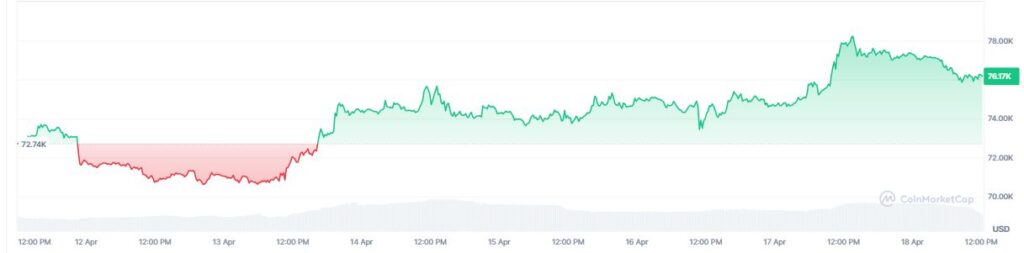
In that context, bitcoin (BTC) remains above $76,000a behavior that suggests greater resistance to geopolitical shocks in the Middle East.
The new closure was confirmed by Iranian authorities, who noted that control of the strait “has returned to its previous state” and that the road remains under military supervision. The decision, according to Tehran, responds to naval blockade imposed by the United States in the area, which he described as an act of “piracy.”
The situation occurs amid contradictory versions between both countries. While Washington maintains that the route remains open, Iran conditions the normalization of transit on the withdrawal of American vessels. The lack of clarity about the real state of the strait reflects the fragility of the scenario and the absence of concrete agreements after the brief attempt at a truce.
It is worth remembering that this scenario dates back to the end of February, when the first US attacks against targets in Iran, which marked the beginning of the current escalation in the region.
As CriptoNoticias has explained, The Strait of Hormuz is a critical point for the global economy. Approximately 20% of the oil and liquefied natural gas traded in the world transit through this maritime corridor. In 2025, nearly 20 million barrels per day circulated through this route, which reflects its strategic weight in the energy supply chain.
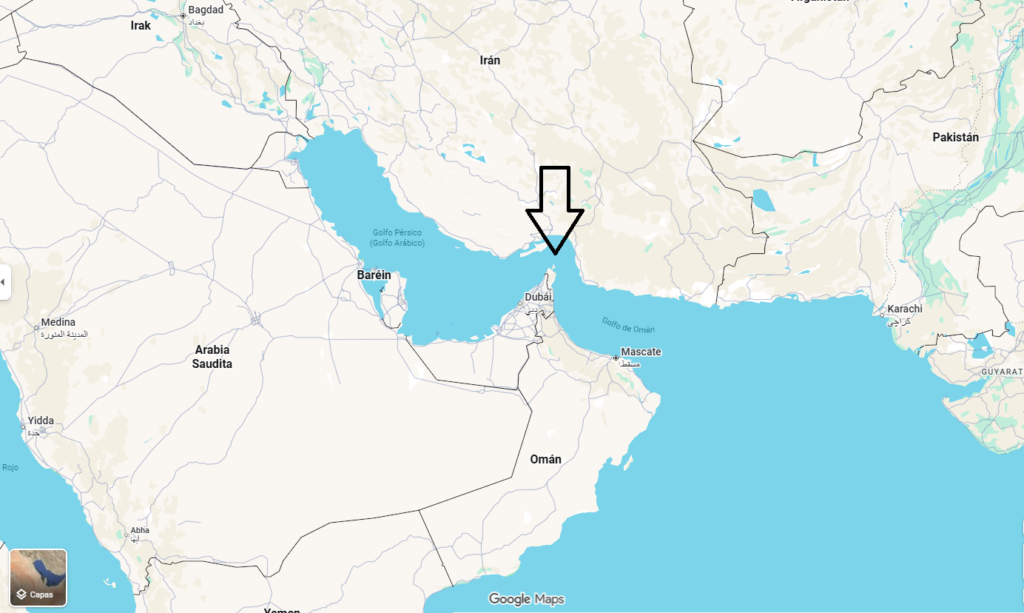
Furthermore, its geography (a narrow channel that connects the Persian Gulf with the Arabian Sea) makes it a pressure tool in conflict contexts. In fact, after the new closure, several ships began to change course and incidents with vessels were recorded in the area, which reinforces the operational risk in maritime traffic.
In macroeconomic terms, a prolonged disruption in Hormuz typically translates into higher oil prices, increased inflationary pressure, and potentially a tightening of global financial conditions. This set of factors usually negatively impacts the assets considered risky.
However, bitcoin’s behavior in this episode does not reflect, for now, that pattern.
This gives a different reading compared to previous events. In similar contexts, BTC tended to react with greater volatility, accompanying global risk aversion. On this occasion, price stability suggests that the market could be incorporating these episodes as part of a recurring geopolitical environment, without immediately adjusting positions.