“Laluns are members of the world’s most ancient profession.”
With that line, written in his 1888 short story “On the City Wall,” English writer Rudyard Kipling helped popularize one of the most enduring euphemisms for sex work – a phrase that is often repeated despite its historical ambiguity. Rather than naming the work directly, the expression reflects the moral climate of the time, when indirect language made the subject easier to accept and shun.
A new exhibition at the Bundeskunsthalle in Bonn, “Sex Work: A Cultural History“It looks at how sex work has been represented, regulated and experienced in different societies and historical periods.
The curator describes the topic as “terrain rife with ethical and highly political discourses”. Bringing together art, archival material, legal documents and contemporary voices, the exhibition shows how sex work has been framed – and sometimes distorted – in public debate.
Without arguing for any particular policy approach, the exhibition invites visitors to reflect on how their own views have been shaped – by media coverage, societal expectations or the language they grew up hearing.
From ‘parasite’ to ‘sex worker’
One section of the exhibition examines language: a glossary traces the words that have been used to describe sex workers over time, and explores what these words made visible or invisible, and how they shaped ideas about gender, morality, and labour.
“Researching the history of sex work is challenging because what we are told is different in every era, and historical documents often rely on vague euphemisms,” says co-curator and sex worker activist Ernestine Pastorello.
“Historical terminology is often vague,” she adds. “In the 19th century, ‘prostitute’ could be used to describe any woman who was ‘too visible’ in the public sphere, whether or not she actually sold sex.”
She points out that this label was applied so broadly – to women living in poverty, struggling with addiction, or otherwise considered socially deviant – that it became unreliable for historical research and burdened with layers of negative connotations that still shape discussions on sex work today.
Similar distortions are visible in other historical contexts also.
In the former Soviet Union and other communist bloc countries, sex workers were prosecuted under laws targeting so-called “social parasites”. The term referred to able-bodied adults who were not considered to be engaging in “socially useful work” while living on income outside the official labor system – a category that also included sex work.
The language reflects how officials used the terms to police behavior and define who counted as legitimate activists.
Placed alongside each other, the terms of the dictionary demonstrate how naming has long held assumptions about class, gender, and social value. Some labels make the marginalization explicit: “Strichter” is a derogatory German colloquial term used primarily for men selling sex, derived from the phrase “auf den Strichgehen” or “walking the beat”.
In the 1990s and early 2000s it became closely associated with street-based male sex work around Berlin’s Bahnhof Zoo, linking the term to a particular form of urban marginalization and social stigma.
In the digital age, terms such as “porn performer” reflect changes in the way sexual labor is organized. From early subscription websites to today’s creator-driven platforms such as OnlyFans, artists can produce and distribute their content directly. Some people identify as sex workers; Not others.
Reclaiming – and contesting – the name
The exhibition also shows how sex workers have shaped the language used to describe them.
The term “sex work” was coined in the late 1970s by American activist Carol Leigh, who wanted a phrase that described an activity rather than a moral label. That change created space for organizing, visibility, and advocacy.
The term “sex work” is preferred because it implies “nothing more and no less than what is actually being discussed”, says co-curator Ernestine Pastorello – the exchange of sexual services for money or other goods as a means of financial support. In his view, this provides a clearer basis for discussion than terminology shaped by outdated moral beliefs.
That change in framing has manifested in behavior as well. In various countries, sex worker movements have reclaimed slang, adopting labels such as “escort” or “stripper” and challenging externally imposed terminology. These choices are ways to establish control over how their work and life is described.
At the same time, critics argue that the term “sex work” may blur important differences. Researchers and advocates focusing on trafficking and exploitation – including organizations like the Global Alliance Against Trafficking in Women and scholars like Swedish policy expert Gunilla Ekberg – say this can make it harder to identify situations in which people sell sex not out of genuine choice, but because of poverty, duress or a lack of real alternatives.
The disagreement highlights how language can make some experiences clearer while making others harder to see.
Language and labor rights
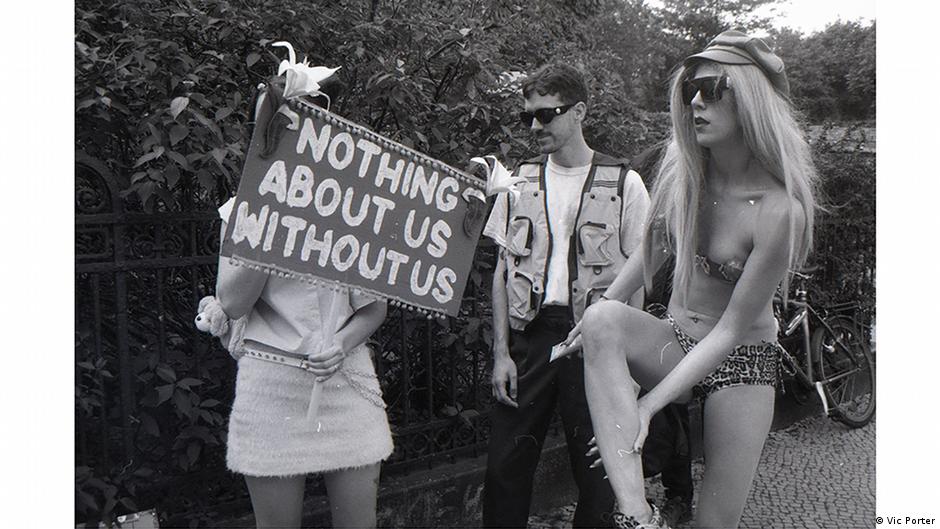
For Pastorello, any discussion of rights requires recognition of sex work as work. Recognizing that not all people enter industry willingly, he argues that designating it as labor makes it possible to talk about safety, protection, and collective organization.
“Characterizing it as work allows us to attack it from a trade-union perspective,” she says. “It is a matter of common respect to acknowledge that we are workers and therefore deserve equal protection and equal rights.”
She says empowerment should not be a prerequisite for recognition: “Our right to do sex work should depend on our labor rights, not on whether it is empowering.”
Talking about sex work through culture, language and lived experience, the exhibition shows that understanding the topic begins by acknowledging its complexity – and by paying attention to the words societies use to describe it, and the people these words often leave out.
The exhibition “Sex Work – A Cultural History” will run at the Bundeskunsthalle in Bonn until October 25, 2026.
Edited by: Elizabeth Grenier