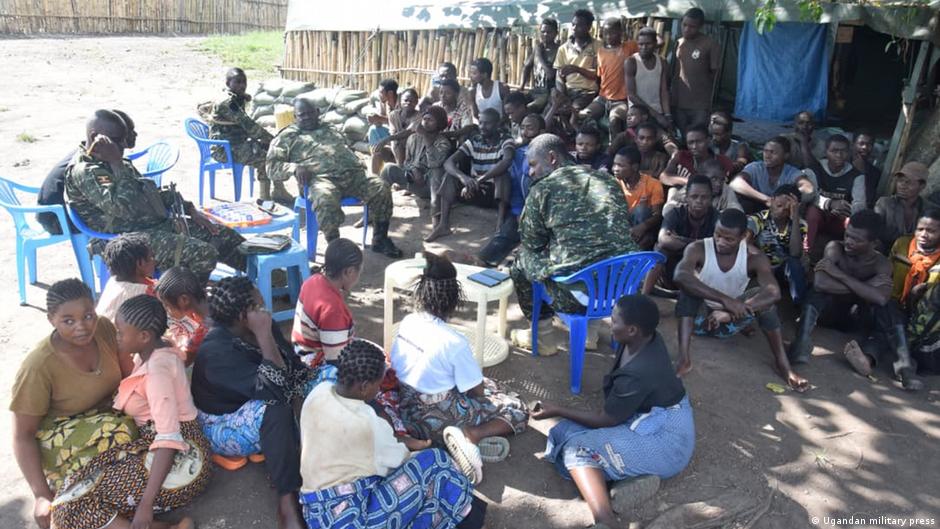
Ugandan and Congolese troops rescued at least 200 civilians in a raid on an Islamic camp in northeastern Democratic Republic of Congo (DRC) last week. Uganda’s military said in a statement.
The Uganda People’s Defense Forces (UPDF) said the raid targeted the Allied Democratic Forces (ADF), a Ugandan group active in eastern Congo that pledged allegiance to the self-styled “Islamic State” decades ago.
What did the UPDF army say about the operation?
The army said the attack targeted a camp along the Epulu River in the east of DRC.
This was part of the joint “Operation Shuja” between the UPDF and the Armed Forces of the Democratic Republic of Congo (FARDC), which had been “intensified” since January this year, making “significant gains,” the army said.
The camp was under the control of what the UPDF said was “the notorious ADF commander, Ssebagala, also known as Mzee Mayor”.
It said several ADF fighters were killed and a cache of weapons was recovered during the raid.
More than 200 civilians were released from captivity, the youngest of whom was a 14-year-old girl.
The overall joint commander of Operation Shuja, Major General Stephen Mugerwa, was quoted as saying that the rescued civilians were told that they were not in detention and urged to cooperate.
“You are not in custody. You are a victim of kidnapping, and we will ensure that you are handed over to the relevant authorities so that you can be reunited with your families,” Mugerwa said.
According to the military, many detainees reported harsh conditions during their captivity, including food shortages, forced labor, and punishment for disobedience.
“Many appeared emaciated, suffering from untreated diseases such as malaria, respiratory infections and physical exhaustion,” the UPDF said.
Uganda reports that conditions have improved in DRC areas once held by the ADF.
The UPDF said other ADF positions were also targeted in last week’s attack, including areas along the Ituri River.
Ugandan and DRC forces have stepped up operations against the ADF in recent months, partly as tensions have eased somewhat along another eastern DRC border in the south – M23 rebels are reportedly supported by neighboring Rwanda. A fragile peace accord to that conflict came into force this year.
The UPDF said that amid recent military advances against the ADF, many former captives were fleeing the group, with “dozens … reporting to joint force locations such as Lolwa, Kindala Kundla and Babungwe.”
“The continued offensive has improved security in parts of eastern DRC, enabling displaced communities to return home, schools to reopen, and cross-border trade between Uganda and the DRC to resume,” the UPDF said.
Operation Shujaa was first launched in November 2021, in response to attacks carried out by the ADF on both sides of the countries’ border.
Recognized as a terrorist group by both governments and the US and subject to UN sanctions, the ADF began to more openly align itself with the Islamic State in 2016, shortly after a change in its leadership. The so-called Islamic State did not begin formally claiming its attacks within its central media until 2019.
Edited by: Rana Taha