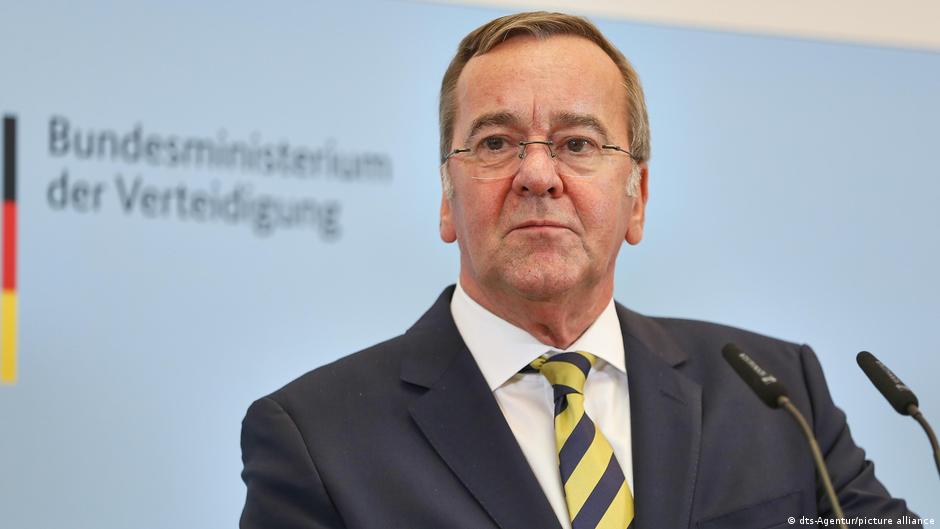
The German Bundeswehr has officially adopted a military strategy for the first time, citing the increasingly dangerous international situation. The strategy defines the future focus of the German armed forces and analyzes how the Bundeswehr can counter potential threats.
“Rarely has any military strategy in this historical period been more urgent,” Defense Minister Boris Pistorius said during the presentation of the new strategy in Berlin.
The world has become more unpredictable and more dangerous since Russia started the war against Ukraine and the international legal order has come under great pressure, the Social Democrat politician said.
Most strategies remain classified
According to the military strategy, Russia represents “the greatest and most immediate threat for the foreseeable future” to Germany and transatlantic security: “Russia is laying the groundwork for a military attack on NATO member states.”
The document then analyzes how the Bundeswehr should respond to potential war scenarios such as a Russian attack on NATO territory, although the details are classified. Pistorius said, “It goes without saying that we cannot make these scenarios public. Otherwise, we might as well add Vladimir Putin to our mailing list.”
Military personnel are seen playing an important role. The military strategy confirms the previously stated goal of significantly expanding the Bundeswehr by the mid-2030s to field a total of 460,000 troops, 200,000 of whom will be in reserve. The stated goal is to develop the Bundeswehr into Europe’s strongest conventional army – with the fastest possible growth by 2029 to increase defense readiness.
These developments follow NATO’s increasing demands on its members regarding alliance defence. At a Bundeswehr conference in November, Pistorius acknowledged that the biggest challenge was recruiting enough personnel.
Bundeswehr hopes military service program will boost recruitment
Due to intensive recruitment efforts, the Bundeswehr is growing, albeit slowly. At the end of March, the force had about 185,400 active-duty soldiers, 3,300 more than in March the previous year.
Apparently Pistorius has high hopes from the new military service scheme introduced at the beginning of the year. Through a combination of incentives and mandatory measures – including mandatory military checks for all youth – the Bundeswehr aims to recruit more voluntary soldiers.
If this effort fails, military conscription, which Germany suspended in 2011, could be reinstated. But this is not currently on the agenda, Secretary of State for Defense Nils Hilmar stressed during the presentation of the military strategy. “We are on track,” he said.
New ‘comprehensive concept’
In addition to military strategy, Pistorius presented several policy documents:
A so-called “capability profile” outlines capabilities considered indispensable for the armed forces – in other words, what is necessary for national defence, but also “for the deterrence and defense of the alliance”, meaning NATO.
Meanwhile, the “reserve strategy” aims to ensure that Germany will have around 200,000 reservists ready by 2033 – who will serve as “a link between the military and civil society”. Their duties will primarily involve homeland security and logistics.
Details of both of these documents are also largely classified.
Hundreds of ways to deal with bureaucracy
The so-called “Bureaucratization and Modernization Plan” aimed to deal with excessive bureaucracy in Bundeswehr structures. Right now, service members have to navigate a lot of detailed rules and paperwork.
The Defense Ministry has reviewed the rules and plans to improve the situation – with some 153 measures and 580 concrete implementation steps.
Pistorius declared, “All internal rules will have a definite expiry date.” If they are deemed no longer necessary after that date, they will be automatically deleted. In the future, a “Bundeswehr Wallet” – a digital wallet – will contain all important personal documents for every member of the Bundeswehr.
more flexibility
For all documents submitted to the Bundeswehr, no fixed targets will be set for specific years; Instead, the documents can be continuously adapted as “living documents” – depending on how the strategic situation evolves.
With this new strategy, the Bundeswehr is committing itself to greater flexibility and a kind of new mentality than ever before. “We want to move away from the traditional silo mentality,” Pistorius said.
As for what the political opposition thinks, Ulrich Thoden, defense spokesman for the Socialist Left Party, called the military strategy “logical and necessary in view of the real threat posed by Russia’s aggressive actions.” In his view, it is not necessary for Germany to “aim to become a major military power”.
This article was originally written in German.