WATCH: Iran seizes two container ships
Tehran said it had intercepted two container ships trying to exit the gulf through the Strait of Hormuz. Both Iran and the US are now using the vitally important shipping lane as leverage.
https://p.dw.com/p/5Ck6Z
24 April 2026
Why is Israel attacking Lebanon as part of its war against Iran?
President Donald Trump announced Thursday that Israel and Lebanon have agreed to extend the ceasefire by three weeks.
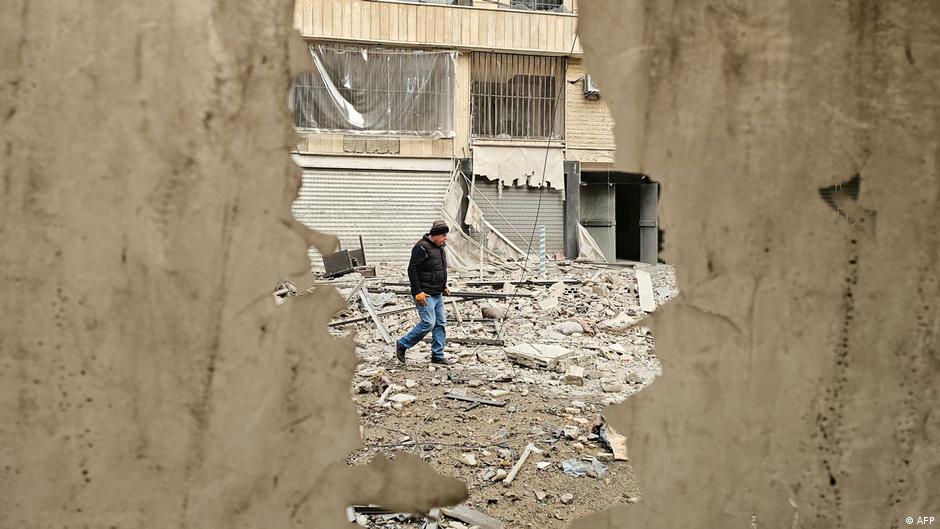
Israel has been carrying out deadly airstrikes on Lebanon, mostly in the south, and the capital Beirut since the start of joint US-Israeli strikes against Iran on February 28.
Israel says it is targeting Hezbollah positions and strongholds in Lebanon.
Here’s what you need to know about Hezbollah and its ties to Tehran:
- Hezbollah (“Party of God” in Arabic) emerged during the Lebanese Civil War (1975–1990) and the Israeli invasion of southern Lebanon in 1982.
- It is a political and militant group inspired by the Shia Islamist ideology that underpinned the 1979 Islamic revolution in Iran.
- Since its establishment, it has been supported, trained and equipped by Iran’s powerful Islamic Revolutionary Guard Corps (IRGC).
- It acts as a proxy for Iran, which is its biggest beneficiary.
- The US government estimated at the end of 2023 that Iran provided about $700 million (€661 million) in funding to Hezbollah annually.
https://p.dw.com/p/5Ck5q
24 April 2026
Trump says Israel, Lebanon agree to extend ceasefire by three weeks
US President Donald Trump said on Thursday that Israel and Lebanon will extend the ceasefire by three weeks.
“The United States is going to work with Lebanon to help protect itself from Hezbollah,” Trump said in a statement on his Truth social platform.
An initial 10-day ceasefire took effect last Friday and was due to expire on Monday.
Trump’s announcement came after a rare meeting with envoys from both countries at the White House.
Trump also said he sees a “big chance” of a peace deal between Israel and Lebanon this year.
“I look forward to hosting Israel’s Prime Minister, Bibi Netanyahu, and Lebanon’s President, Joseph Aoun, in the near future,” he said.
While Lebanon is not an active party in the conflict between Israel and the Lebanon-based, Iran-backed militant group Hezbollah, the government in Beirut has been urging de-escalation after fighting between Israel and the militias flared up again since the outbreak of the Iran-Iran war.
Lebanon and Israel do not have diplomatic relations. The last time they held direct, high-level talks was in 1993.
Despite a 10-day ceasefire, attacks have continued in both directions, including on Wednesday when a Lebanese journalist was killed in an Israeli attack.
On Thursday, Israeli forces attacked targets in southern Lebanon and intercepted Hezbollah missiles targeting northern Israel.
https://p.dw.com/p/5Ck65
In depth: Ceasefire extended: What’s next in Iran war?
With no specific deadline for a ceasefire at present, the US and Iran are looking for ways to protect their interests.
DW’s David Ehl takes a look at the main sticking points and explains some of the key issues.
https://p.dw.com/p/5Ck6T
Welcome to our coverage
Hello and thank you for joining us as we bring you the latest developments regarding the US-Israeli war with Iran and the impacts on the broader Middle East.
Here’s a summary of Thursday’s main developments:
- US President Donald Trump said Israel and Lebanon will extend the ceasefire for three weeks, after ‘high-ranking’ delegations from the two countries met at the White House.
- Trump ruled out using nuclear weapons against Iran and said he would not ‘rush’ a deal with Tehran.
- Earlier this week, Trump extended the temporary ceasefire with Iran without specifying a new deadline
- Despite expansion, the Strait of Hormuz is effectively closed
- Iran said it had seized two tankers, while the US military said it had seized another ship in the Indian Ocean
- Trump orders US Navy to ‘shoot and kill’ mines laying mines in Strait of Hormuz
- Iran’s Mohammad Bagher Qalibaf said a full ceasefire could happen only if Washington lifts its blockade of Iranian ports.
Stay tuned as we bring you the latest headlines and analysis from the US-Israeli war with Iran and the related conflict between Israel and Hezbollah.
https://p.dw.com/p/5Ck5p