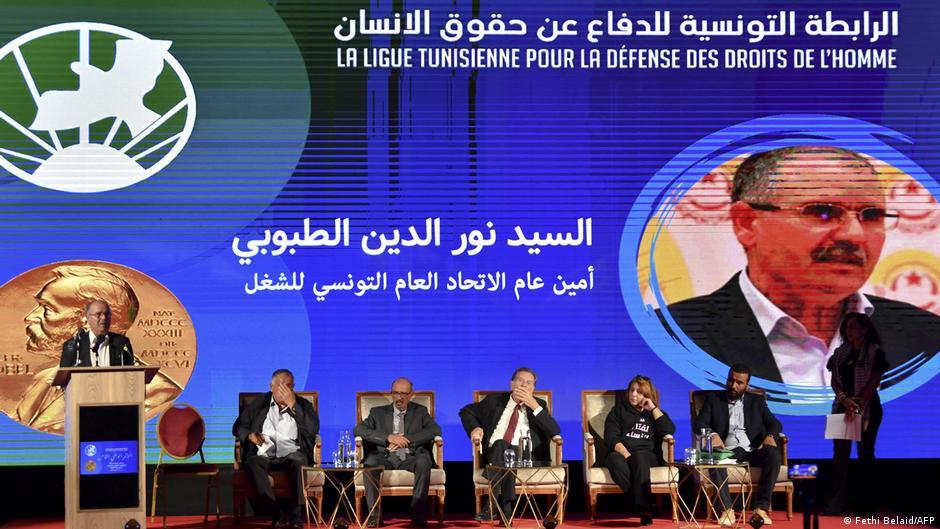
A Tunisian rights group that was a co-winner of the 2015 Nobel Peace Prize has been told by authorities to cease activities for a month.
The suspension of the Human Rights League (LTDH) comes amid warnings from rights organizations that the country is moving closer to authoritarian rule after President Kais Saied seizes additional powers in 2021.
Increasing crackdown on rights groups in Tunisia
LDTH was founded in 1976, making it one of the oldest rights groups in the Arab world and Africa. It has long been seen as an important force in human rights advocacy in Tunisia.
The group, which has been a vocal critic of Saeed, had already been barred for several months from visiting prisons in several cities to inspect conditions.
The organization was one of four Tunisian civil society groups jointly awarded the Nobel Peace Prize in 2025 as the Tunisian National Dialogue Quartet. For their role in supporting the country Democratic change.
The LDTH condemned the suspension, saying the move was part of a “wider pattern of increasing systematic restrictions on civil society and free and independent voices”.
In a sign of what critics see as growing authoritarianism, Tunisia in October suspended several other prominent groups, including the Forum for Democratic Women and the Forum for Economic and Social Rights.
What is the situation under Saeed?
Saied, 68, has ruled by decree since suspending parliament in 2021
He has denied that he wants to become a dictator and says that freedom is guaranteed in Tunisia, but no one is above the law, no matter their name or position.
He has often described foreign funding as a threat to the country, which rights groups sometimes rely on.
Tunisia was hailed as the only democratic success story 15 years ago as a result of the pro-democracy wave of the Arab Spring, but it now faces criticism due to increasing restrictions on the opposition, media and civil society.
Edited by: Shawn Sinico