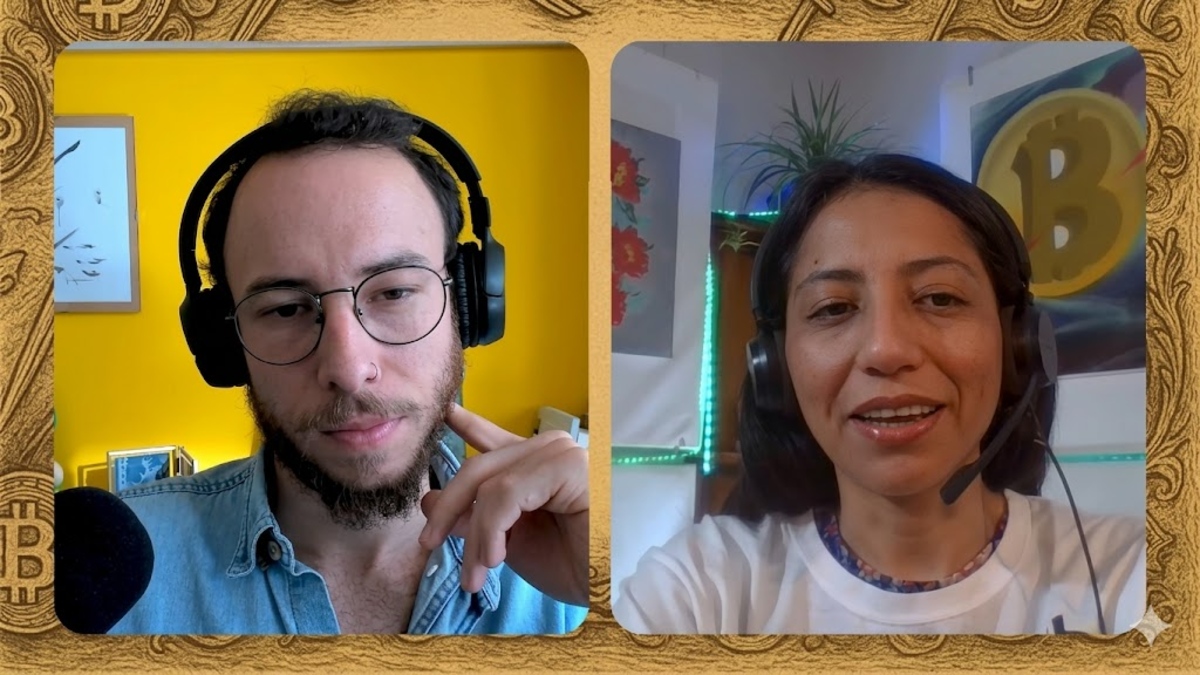
The bitcoiner says that, in addition to local businesses, home services receive payments in BTC.
Lemus assures that bitcoin citadels are creating a contagion effect in El Salvador.
The circular economy of bitcoin (BTC) in the town of Berlin, Usulután, El Salvador, has reached a maturity that makes even its official statistical registration difficult. What began as an educational project has transformed into an ecosystem where between 170 and 200 businesses—or more—accept the digital currency, driven by growing demand and a contagion phenomenon among the inhabitants themselves.
Evelyn Lemus, co-founder and education director of Bitcoin Berlin, explained in episode 25 of the CriptoNoticias podcast, “Separating State Money (SDE),” that Growth has exceeded expectations.
“We don’t really have exact data, we have approximate data from the people that we have either explained to them or that we have already verified that bitcoin is accepted, but we know that it is there,” said the bitcoiner. According to Lemus, The addition of new businesses accepting BTC is constant: “Generally you’re surprised that they accept bitcoin in that place,” he said.
The adoption of digital currency in Berlin is not limited to commercial facades. Lemus explained that it has been integrated into everyday life through professional services that are not always listed in tracking services, such as BTC Maps.
According to the educator, not all the businesses that already accept bitcoin as payment in Berlin appear on that page, “because you cannot put businesses that only do your address, like the electrician or the plumber, for example, which is not a business that you can reach, but rather he comes out to do your address.” He added that there are also people who do cleaning, domestic services, gardening and so on, who are part of the adoption of BTC in that town.
Such depth in the use of the digital asset allows residents and visitors to operate almost exclusively outside the traditional financial system. Lemus herself said that between 95% and 98% of their expenses are in bitcoin.
“I’m not saying 100% because there is always some little thing that I buy in fiat, but really here [en Berlín] “You can pay almost everything with bitcoin,” said Lemus, who also launched a challenge to tourists: “The day you come I challenge you to do that, that is, live only with bitcoin.”
Such a challenge, in fact, was proposed at the beginning of this year with the “Berlin MOE Experience” initiative, which urged those interested to live 3 days only with BTC in that city, as reported by CriptoNoticias.
Commercial “FOMO” and the pressure of tourism
The economic dynamism of the area has been fostered by the arrival of visitors specifically seeking the “bitcoin experience.” According to the specialist, this has generated a fear of being left out (FOMO) among those who have not yet adopted the technology.
“The business that does not accept bitcoin, the business that loses customers. Because you are not going to take the trouble of traveling three hours to get to Berlin and come pay with fiat… people, if they are told in a business that they do not accept bitcoin, they go to the business where they do accept it,” he explained.
This pressure has reversed the membership dynamic. Lemus reported that now businesses are actively seeking the Bitcoin Berlin teamwhich she co-directs.
“It’s no longer you going out to visit the business, it’s the business coming to us. We received a message from someone who was in the United States who just opened a business and wants to start accepting bitcoin,” he said.
And he pointed out that, even, the merchants themselves act as educators. “A merchant has already explained to this other business how to accept bitcoin (…) the other businesses are helping with the onboarding work as well,” he said.
Despite current success, the path had significant obstacles. In the beginning, distrust was the norm. «When we visited businesses, without people knowing us, it was like a wall we put up. “People started with the idea that you are from the government and that you want to sell me,” Lemus recalled.
To overcome this, they changed their tactics: “What we did was try to become customers, buy anything insignificant and when it came to paying we asked if they accepted bitcoin,” he said.
Regarding the volatility of the digital asset, Lemus pointed out that the project uses tools such as the Blink wallet to offer stability to beginners, through that wallet’s StableSats feature.
«Having dollars in their wallet gives them peace of mind. And that’s how they have not been affected by the fluctuation,” Lemus commented. However, they do not neglect the long-term vision: “You already explained the important part that with bitcoin its purchasing power grows over time.”
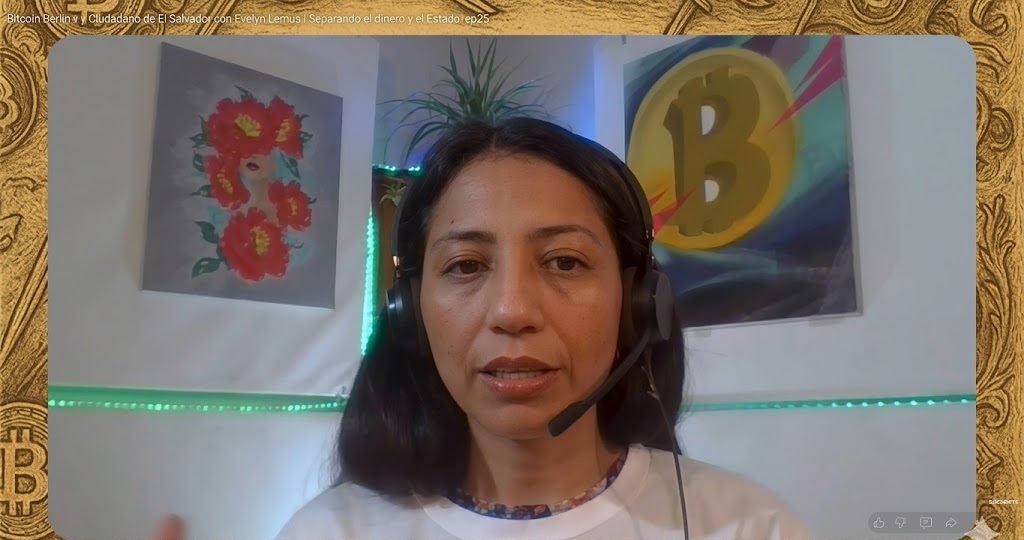
The replication of the Bitcoin Berlin model in El Salvador
Berlin’s success is not an isolated case, but is part of an expanding network of circular economies. Lemus highlighted initiatives in Punta Mango, Suchitoto, Santa Ana and Chalchuapa. He especially mentioned Bitcoin La Pirraya, an island where they focus on the education of children and link the digital currency with beach soccer.
“There is this circular economy on an island and there are several initiatives that I know of that want to create their circular economy and that are working there,” he stated.
For its part, the Berlin team is already replicating its model in the north of the country, in Bitcoin La Laguna, Chalatenango.
“It is a mountain and it is quite small there, there are more or less 2,000 inhabitants and we already have more than 20 businesses accepting bitcoin and people have received it very well,” explained Lemus. For the bitcoiner, The process in this area has been more fluid.
«I feel that La Laguna has been faster. We have arrived there with all the learning, we no longer made the same mistakes that we made in Berlin… the plan is to replicate all the success stories,” he concluded.
The experience in these communities demonstrates that the adoption of digital currency in El Salvador is transcending the legal mandate to become a local economic empowerment toolas long as the population’s learning curve is respected.