Fusaka, Ethereum’s latest upgrade, has been operational on the network since December 3rd. With it, this ecosystem received its second hard fork (hard fork) of the year, after Pectra in May. As reported by CriptoNoticias, the proposal known as PeerDAS ...
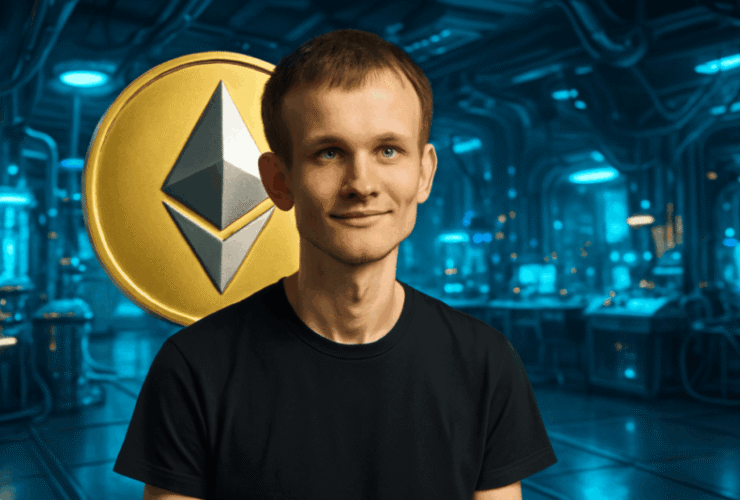
Vitalik highlighted that with PeerDAS blocks are validated without each node reviewing all the data. The co-founder also pointed out the remaining limits on completing sharding and scaling L1. Vitalik Buterin, co-founder of Ethereum, spoke out on December 3, 2025, ...

The most relevant improvement proposal (EIP) is PeerDAS, which expands the data space for L2. Fusaka, by default, will increase the blocks’ gas limit, allowing for more transactions. Finally, the long-awaited Fusaka update has arrived on Ethereum. On December 3, ...

A new update has arrived on Ethereum: Fusaka. In this framework, Jason Chaskin, researcher at the Ethereum Foundation (EF), emphasized that one of the most relevant elements of this hard fork marks a turning point for the network. Chaskin, in ...

With Pectra, EIP-7702 will be implemented, which will optimize account abstraction. Validators would no longer be limited to staking 32 ethers (ETH) per node. The Pectra update, which will be the next hard fork of Ethereum, will be launched on ...

The mere introduction of this opcode would allow covenants, ZK-rollups and native L2 to be added to Bitcoin. OP_CAT was removed after an event known as the value overflow incident, which occurred in 2010. Today, the main development problem of ...