
With the price of bitcoin (BTC) above USD 80,000, unrealized profits from the bitcoins held by the government of El Salvador are estimated at 85%, according to statistics presented on the Nayib Bukele Portfolio Tracker site. .
The data of the tracker They keep a record of all purchases made by the government since the end of 2021, when Bukele announced his plans to acquire bitcoin. The site indicates that, to date, El Salvador has purchased 6,153 bitcoins, currently valued at USD 467.8 million, which already yield unrealized profits of USD 117.7 million.
The purchases of 1 BTC daily that the government has been making since November 2022 are among those that have given the highest returns. With this strategy, which was launched in November 2022, 727 bitcoins have already been acquired, with 95.7% gains at the time of this writing.
However, the purchases that register the highest percentage of unrealized gains are those that were made during the period of greatest decline in BTC. About 80 bitcoins were acquired in July 2022 at an average of USD 19,000 per unit and now show gains of 332.8%.
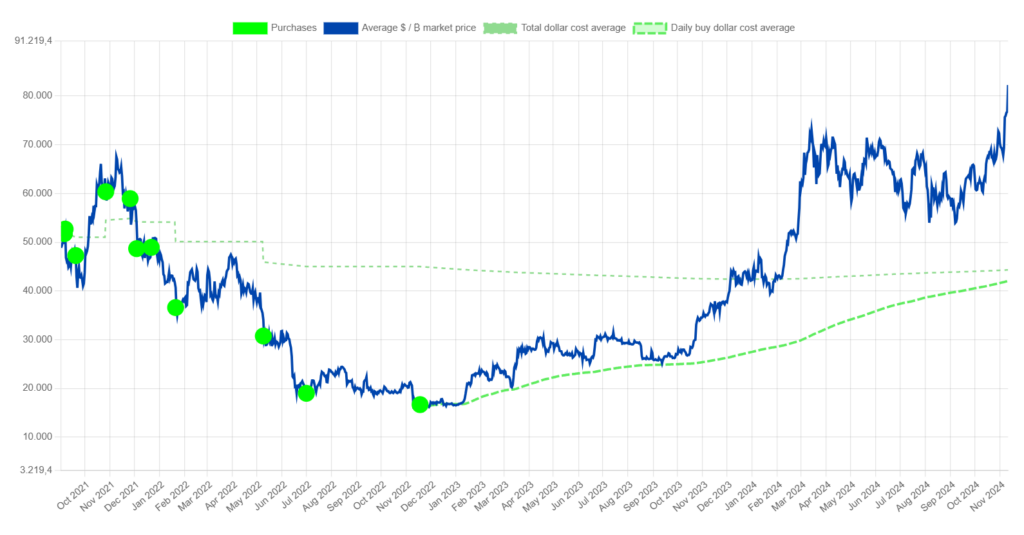
As reported by CriptoNoticias, the positive balance arrived at the beginning of this year, after a long period of unrealized losses in which the government’s bitcoiner strategy experienced a lot of criticism.
The recovery of the investment became evident at the end of 2023, once the cryptocurrency exceeded USD 42,000 per unit. As the average price of BTC purchased by the Salvadoran government is USD 44,313, the investment I would only fall into losses again unrealized if BTC falls below that range.
Until now, Bukele has not commented on the issue. Although last March, when bitcoin marked the ATH that took it to exceed USD 72,000, he challenged his opponents: “I’m still waiting,” said a publication by the Salvadoran president in X, where a human skeleton appeared watching a computer to refer to a long wait.
Bukele addressed politicians, analysts, journalists and specialists who questioned El Salvador’s investment in bitcoin, which even now they remain silent.
On the topic this time Rodrigo Icaza raised his voicemember of the Panama Chamber of Digital and Blockchain Commerce. “Where are those who questioned @nayibbukele for his strategy of creating a reserve in #bitcoin?” he wrote on his X account on November 11, drawing attention to the fight that the president has waged to defend the digital currency .
«You have to be willing to fight in your respective countries. Bukele hit his. “Enjoy the results,” added the businessman who has worked on creating proposals for the regulation of bitcoin in Panama.
Bitcoin demonstrates its potential as a strategic reserve
The profits obtained by the Salvadoran government thanks to the bitcoin rally are presented just when the debate is open on including Satoshi Nakamoto’s creation in the countries’ strategic reserves. Donald Trump’s victory in the United States raises the possibility that the strategy implemented by Bukele will also is launched in the northern country.
There are several legal steps that must be taken in the US, including overcoming resistance from some regulators and traditional institutions. If the proposal advances, a redefinition of the global financial landscape is expected following an emerging trend in which El Salvador is a pioneer.
As Senator Cinthya Lummis (proponent of the law to create BTC reserves in the US) has pointed out, along with all those who defend the proposal, the idea is to invest in assets that revalue faster than inflation. And among them the one that stands out the most is bitcoin.
It is known that – since 2014 – the annual price performance of BTC has significantly outpaced inflation and the growth of other asset classes. The historical trend of the cryptocurrency registers a compound annual growth rate of almost 64% in the last decade, explains a report from the River exchange.
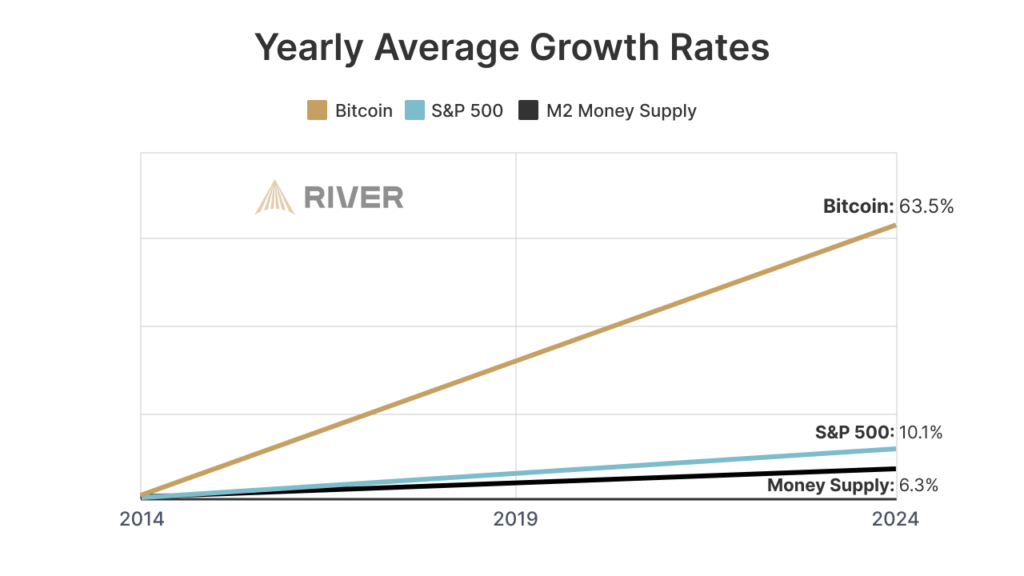
This is how the profits that the Central American country now obtains, after investing for three years in BTC, highlight the long-term potential of bitcoin. This counteracts the questions raised against it, due to its supposed impossibility of serving as a reserve. due to its volatility in the short term.