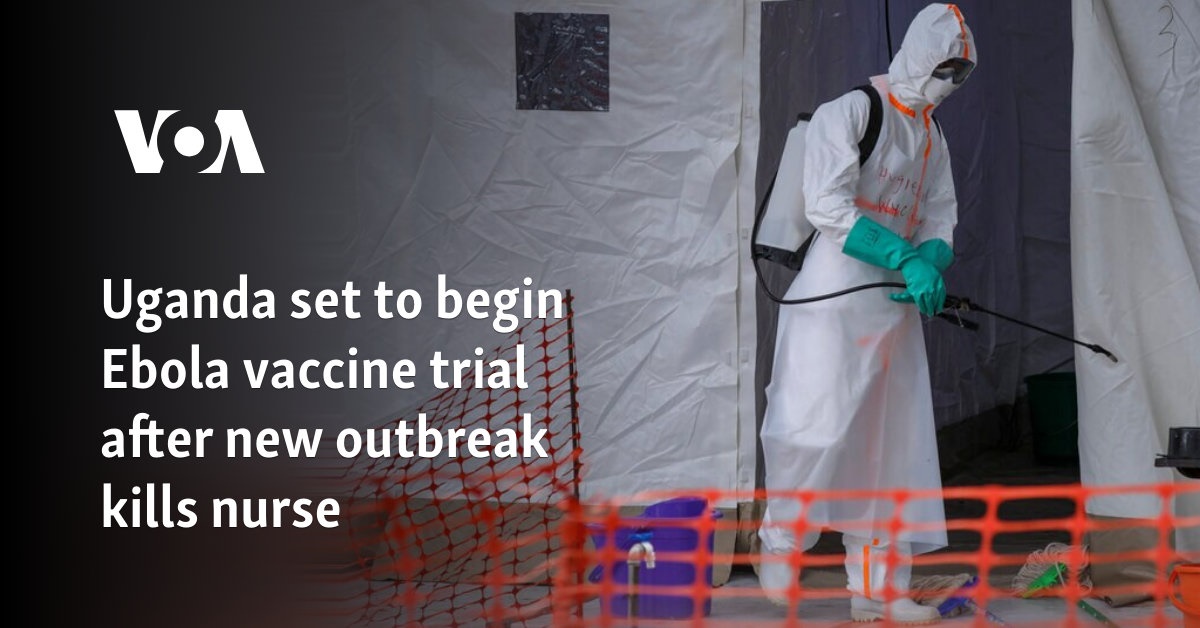
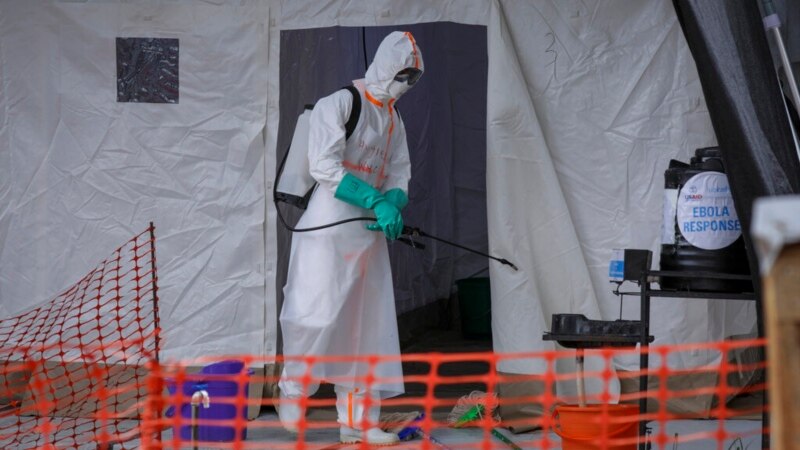
A top health officer said on Sunday that Uganda officials are preparing to deploy a test vaccine as part of Ebola’s efforts in the capital.
Pontiano Kalebu, Executive Director of the Uganda Virus Research Institute, said that a series of scientists is developing research protocols related to the employed deployment of more than 2,000 doses of a candidate vaccine.
He said that all necessary regulators are “protocol leg quick” to obtain approval. “This vaccine is not yet a license.”
The World Health Organization stated in a statement that its response to Uganda’s response included access to 2,160 doses of the test vaccine in support.
The WHO’s statement said, “Research teams have been deployed to work with the monitoring teams as approval is awaited.”
Candidates said that candidates have been provided through clinical testing protocols for further tests for efficacy and safety, along with vaccine.
The vaccine manufacturer was not immediately known. There are no approved vaccines for Ebola’s Sudan stress, who killed a nurse employed at the main referral hospital in Kampala. The person died on Wednesday and the authorities announced outbreak the next day.
Officers are still examining the source of outbreak, and there is no more confirmation.
Uganda had access to the candidate vaccine dose since the end of the outbreak of an Ebola in September 2022, which was killed in 55 people. Kalebu said that the officials of Uganda fled out time to start vaccine studies, when that outbreak, in Madhya Uganda, was declared after about four months.
A test vaccine known as RVSV-Zebov, between 2020 and 2020, is used to vaccinate 3,000 people in the risk of infection during the outbreak of Zaire stress of Ebola in East Congo, which is used in the spread of the disease Proven effective.
There have been several Ebola outbreaks in Uganda, including one in 2000, killing hundreds of people. In West Africa, the outbreak of Ebola of 2014-16 killed more than 11,000 people, the biggest death of the disease.
Tracing contact is very important for increasing the spread of Ebola, which manifests as a viral hemorrhagic fever.
According to the Health Ministry of Uganda, 44 contacts of the victim have been identified in the current outbreak, with 30 health workers and patients, including 30 health workers and patients.
Ebola in Uganda is the latest in a series of outbreaks of viral hemorrhagic fever in the East African region. Tanzania declared an outbreak of Marbberg disease like Ebola earlier this month, while in December Rwanda announced that Marburg had her outbreak. According to local health officials, Marburg’s outbreak in Kagera region of North Tanzania has killed at least two people.
It can prove to be difficult to respond to the outbreak of Kampala, as the city has a highly mobile population of about 4 million. The nurse who died was treating a hospital outside Kampala and later traveled to MBLE in the east of the country, where he was admitted to a public hospital. Health officials said that the man explains the services of a traditional ointment.
Ebola is spread by exposure to an infected person or physical fluid of contaminated material. Symptoms include fever, vomiting, diarrhea, muscle pain and sometimes internal and external bleeding.
Scientists do not know the natural reservoir of Ebola, but they suspect that the first person infected in an outbreak acquired the virus in contact with an infected animal or ate its raw meat.
Ebola was discovered in 1976 in South Sudan and two together in the Congo, where it took place in a village near the Ebola River, after which the disease was named.