14 April 2026
How India’s laws are still struggling to dismantle the caste system
To learn more about India’s caste system, DW spoke to Dr. Sumit Boudh, professor and executive director of the Center for Public Law and Jurisprudence at OP Jindal Global University in Sonipat, Haryana.
DW: If Dr. BR Ambedkar were to look at India today, what would he be most disappointed by, especially how caste has been addressed in law?
There is no need to speculate on this – BR Ambedkar himself made his disappointment clear early on, certainly in his resignation as Law Minister. [of India] In 1951.
That moment is instructive in at least two ways. First, there was his frustration with government inaction on what were then called “backward classes” – a concern that would take almost four decades to see concrete policy movements, and even then would provoke intense reaction, as was seen after the implementation of the Mandal Commission.
Second, his frustration with the obstruction of transformative legal reform, particularly the failure of Parliament to enact the Hindu Code Bill. These were not marginal concerns; He moved to the center of social democracy.
If we extend that arc to the present, similar patterns persist: hesitancy to undertake structural reforms, postponement of equality in the name of political expediency, and the emergence of laws – such as those regulating marriage and changing religious status (often referred to as religious conversion or ‘love jihad’) – that would have been deeply troubling to Ambedkar. The continuity between that moment and the present is hard to ignore.
Has regressive and problematic legal language contributed to the strengthening of caste hierarchies, even within frameworks designed to dismantle them?
If I had to answer in one word it would be: efficiency.
The constitutional language of “efficiency” appears to be neutral, but in practice it functions as a dense term. It is routinely invoked to question, undermine, or oppose reservations and other forms of affirmative action.
What is not often examined is that “efficiency” is not an abstract quality – it arises under historically unequal social and educational conditions. When law and policy treat it as neutral, they effectively naturalize those inequalities.
So here, language does not simply reflect hierarchy; It actively legitimizes and reproduces it, even within frameworks that are explicitly designed to eliminate caste.
Which legal or policy frameworks designed to protect Dalits are being weakened today and where exactly is the gap?
India does not have comprehensive anti-discrimination laws. Instead, what we have is a patchwork – criminal law in some cases, constitutional remedies in others, and sector-specific frameworks addressing sexual harassment, caste oppression and disability.
However, discrimination often operates in an area that is neither strictly criminal nor easily addressed through constitutional litigation. This requires accessible civilian remedies.
The absence of such a framework means that many forms of caste discrimination – particularly in institutions such as education – are difficult to name, prove and redress. This is the difference.
And even where frameworks exist, they are often inadequately equipped to address institutional practices that reproduce inequality in less visible, but deeply consequential ways.
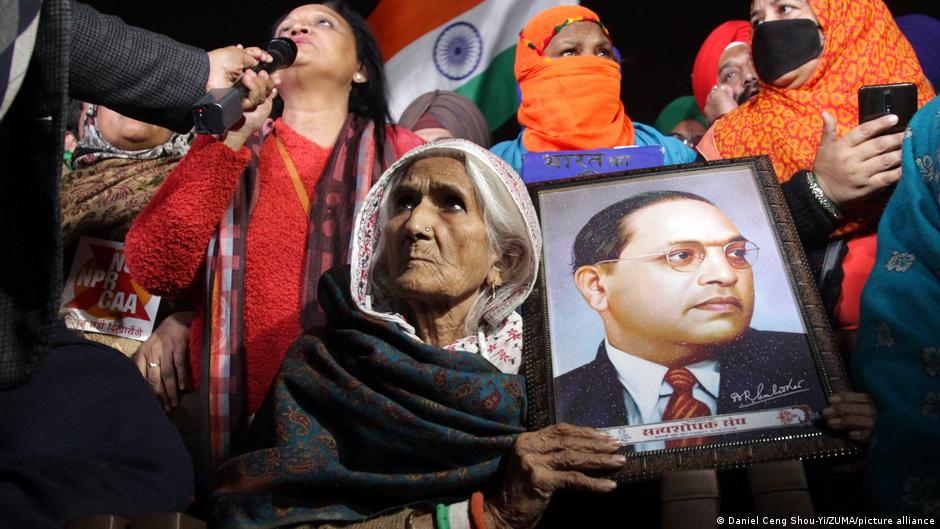
This feature is part of DW’s special coverage of Dr BR Ambedkar’s 135th birth anniversary.