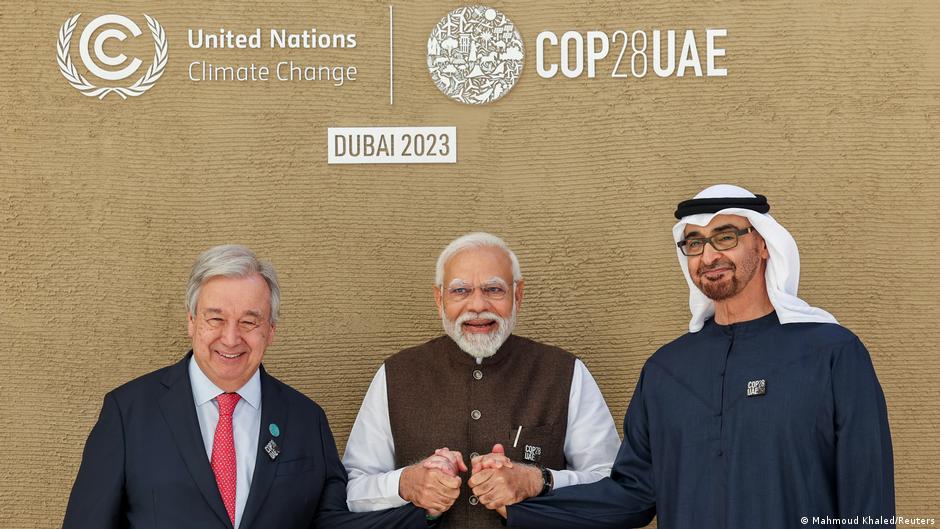
When Prime Minister Narendra Modi took the stage at the Dubai Climate Summit in December 2023, he pledged that India would host the climate summit. It was a moment of ambition, a sign that India was ready to lead, especially as the self-proclaimed voice of the global South.
The bid to host the UN Asia-Pacific Group in July 2025 was backed by the BRICS grouping of Brazil, China, India and South Africa.
But just 18 months later, India quietly wrote a four-paragraph letter on April 2, according to Climate Home News, which broke the story for the first time.
The annual Conference of the Parties or COP is the United Nations climate summit where 198 parties – 197 countries and the European Union – gather to measure progress and negotiate responses to climate change. Hosting the conference provides status, agenda-setting power, diplomatic visibility and a platform to shape the global conversation.
weak climate consensus
Experts and policy analysts say India’s withdrawal reflects a change in global priorities, with the COP standing lower than before amid global instability and a tug-of-war of priorities at home. Global climate consensus has weakened in recent years. The Paris Agreement, a 2015 global agreement under which countries set voluntary national targets to limit global warming, is under increasing strain, especially with the Trump administration withdrawing the US from the agreement for the second time.
Chandra Bhushan, head of the Delhi-based International Forum for Environment, Sustainability and Technology, said, “A major reason for India’s withdrawal appears to be the steadily declining relevance of the COP in driving meaningful global climate action.”
“The complete breakdown of trust between countries at the Belem summit in Brazil, where many countries reneged on previously agreed commitments, appears to be the turning point,” Bhushan said.
The summit was poorly attended and had low high-level political participation, including from the US, which significantly resulted in no high-level attendees.
Bhushan points out that India has demonstrated its willingness to engage in climate multilateralism: It recently updated its Nationally Determined Contributions (NDCs) for the years 2031-35 – which is the name of countries’ climate action plans under the Paris Agreement: India has pledged to reduce the emissions intensity of its economy by 47% below 2005 levels by 2035, ensuring that 60% of its installed power capacity Comes from non-fossil fuel sources, and will create one. Additional carbon sink of 3.5 to 4 billion tonnes of carbon dioxide through increased forest and tree cover.
But there is now a growing consensus within the country that domestic climate action will be central to achieving sustainable development. “This approach is likely to continue until more favorable conditions emerge for genuine and effective multilateral cooperation,” Bhushan said.
In this environment, hosting a summit brings diminishing returns. While the symbolic value remains, the ability to generate meaningful results or even attract global attention has become less certain.
bear the financial burden
Avinash Mohanty, global area head of climate change and sustainability at international development organization IPE Global, considers India’s withdrawal as pragmatic.
“First, the global system is falling short. Developed countries have pledged $100 billion (€91.4 billion) per year by 2020 in climate finance, but have repeatedly not delivered. Even new promises, such as $300 billion (€273 billion) annually by 2035, meet only a fraction of what developing countries need. Additionally, the US undermined confidence by pulling out of the Paris Agreement twice It is,” Mohanty told DW.
According to Mohanty, for countries like India, which have consistently emphasized equity and climate finance, the imbalance becomes harder to ignore.
According to Mohanty’s estimates, India has achieved this domestically by surpassing 50% non-fossil installed capacity, reaching 200GW of installed renewable energy capacity and cutting emissions intensity by more than a third since 2005, using its own resources rather than external funding.
Mohanty argues, “Hosting COP33 will come at a cost. It will mean spending significant money and political capital to support a global process that, from India’s perspective, has not yielded fair results for the Global South.”
“Instead, India is shifting strategy, focusing on platforms it can shape more directly, such as the International Solar Alliance and similar alliances,” he said.
avoid scrutiny
Hosting COP33 would have placed India at the center of the next global stocktake cycle. It is the mechanism under the Paris Framework that assesses collective progress on emissions reductions and climate targets.
For India, this will mean a deeper examination of its coal dependence, emissions trajectory and timeline for transition. While India has made significant progress in implementing renewable energy, it is still the world’s second largest consumer and producer of coal.
Jayant Basu, a Kolkata-based environment and climate correspondent, told DW, “As host, India will have faced pressure to show strong climate action on future targets, timelines for cutting emissions and its dependence on coal — especially with a global review of progress under the Paris Agreement taking place.”
Basu suggests that the government of India is rearranging its priorities ahead of the 2029 general elections. “With so many demands on the system, the government may have instead chosen to focus on domestic priorities and other major events,” Basu said.
Additionally, hosting the conference could increase pressure from countries and climate advocates, potentially constraining policy flexibility at the domestic level, which could be bad timing ahead of the election. Rajamani said, “Increased scrutiny will be not only of India’s domestic energy choices, but also of India’s engagement with dissenting and activist voices, non-state actors and civil society.”
A missed opportunity?
“I would characterize it as ‘wasting our time’ rather than undermining the global climate consensus,” Lavanya Rajamani, a professor of international environmental law at the University of Oxford, told DW.
Rajamani said, “India’s withdrawal is more likely to be driven by domestic factors, but it comes at a time when international attention has been sufficiently diverted that the decision will have less political and reputational consequences.” “However, this is a missed opportunity for India to play a leadership role in the region,” he said.
For now, it appears that India is choosing its performances on the world stage more carefully.
Edited by: Kate Martyr