Germany is hosting an international conference on Wednesday to raise funds to help people affected by the war in Sudan.
Wednesday also marks the third anniversary of the war between the Sudanese army led by Abdel-Fattah Burhan and the paramilitary Rapid Support Forces (RSF) led by Mohamed Hamdan Dagalo.
Before the start of the conference, German Foreign Minister Johann Wadeful said he hoped that more than $1 billion (about €850 million) could be raised.
“This huge humanitarian crisis in Africa must not be forgotten,” he told German radio broadcaster Deutschlandfunk.
What did Germany say before the Sudan conference?
“Confirmations are still coming in,” Wadefull said Wednesday morning. “We want to achieve more than the last conference in London – which was a billion [US] Dollars,” he said.
German Development Minister Reem Albli Radovan said Germany would release another €20 million on top of the €155.4 million earmarked for projects in Sudan late last year.
Wadefull said that, despite tight budgetary constraints, Berlin should attempt to fill the funding gap left by the Trump administration’s deep cuts to US foreign aid.
He said he had also spoken to German Economy Minister Lars Klingbeil in light of Germany’s recent aid cuts and said it was not a “moral-ethical obligation” but a way to prevent people from fleeing the country.
Sudan was entering its fourth year, with no end in sight
The wars in Iran and Ukraine have diverted international attention from the war in Sudan, but the impact of the conflict has not diminished. Some statistics after the Three Years’ War are as follows:
- According to the Armed Conflict Location and Event Data (ACLED), at least 59,000 people have been killed, although the actual death toll may be much higher.
- According to UNICEF, the dead are believed to include about 4,300 children.
- According to the World Food Program (WFP), 19 million people are facing severe hunger.
- About 9 million people have been internally displaced, with another 4.5 million fleeing to neighboring countries.
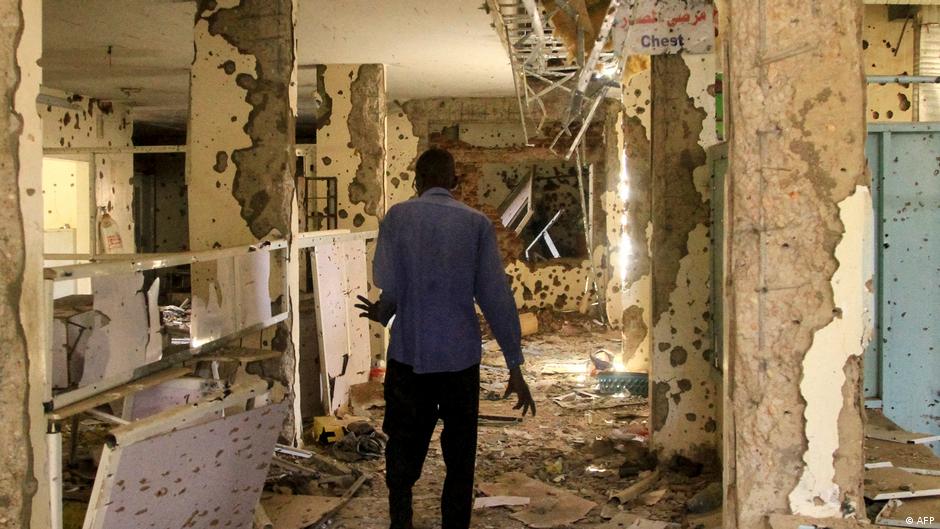
- According to the World Health Organization (WHO), about 217 health facilities have been targeted in verified attacks.
The conflict followed the ouster of longtime dictator Omar al-Bashir in 2019. Hopes for change were dashed due to internal conflict between Burhan and his deputy at the time, Dagalo, as they tried to fill the power vacuum.
The country is now divided between the army in Khartoum which controls much of the north, east and central regions, including the country’s Red Sea ports and oil refineries, and the RSF which controls parts of Darfur and the Kordofan region in Sudan’s south and west.
The war has taken on an international aspect due to interest in Sudan’s oil fields and gold mines, with the army receiving support primarily from Egypt and the RSF, according to increasing evidence, being supported by the UAE, although the UAE has denied involvement.
Millions of people are caught up in this violence, including large-scale sexual violence. This is particularly the case in Darfur where the RSF has been accused of war crimes and crimes against humanity.
UN humanitarian chief Tom Fletcher said, “This solemn and stark anniversary marks another year when the world has failed to hold Sudan to account.”
Edited by: Rana Taha