Foundation, a reference platform for digital artists and non-fungible token (NFT) collectors on Ethereum, announced on April 15 its permanent closure.
According to the statement signed by one of its co-founders, identified in X as Kayvon, the platform attempted to sell itself in early 2026 to a buyer who intended to continue its operations. That buyer was Blackdove, an infrastructure company for digital art, which finally concluded that building its own marketplace was the most appropriate path for its business.
Foundation was a platform where digital artists could publish and sell their works as NFTs, that is, as unique tokens registered on Ethereum that certify ownership of a digital file. With the closing, its web interface stopped working permanently and will not activate again.
What happens with NFTs and what should users do?
What doesn’t disappear immediately are the assets themselves. According to Kayvon’s statement, NFTs remain the property of their owners on the blockchain, since Foundation never had custody of them.
What is at risk are the image, video or audio files linked to those NFTs, which the Foundation kept accessible through a system called IPFSa decentralized file storage network. The team committed to continuing to keep those files available for one more yearbut without specifying an exact start or end date of that period.
During that year, the Foundation report recommends that each user make their own backup of the files they care about. Without that action, NFTs could remain on-chain records pointing to files that no longer exist: the token would still be yours on the network, but trying to view it would result in a broken image or error, because the original file would no longer be available on any server.
For those who have NFTs listed on the Foundation marketplace, the situation is more complex. Those assets are held in a smart contract on the platform. The team promised to develop a technical solution so that users can remove them, but without offering a date or details about how that process will work.
The debate that the closure opened
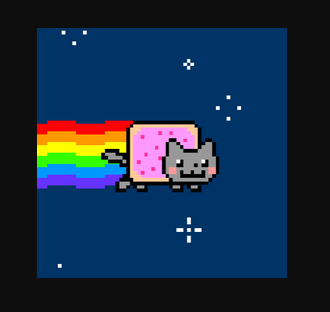
The creator behind Nyan Cat, a viral internet meme of an animated flying cat, summarized in X his experience with Foundation as one of accumulated disappointment. He claimed to have brought about 20 classic meme creators onto the platform, generating $2.8 million in sales and about $420,000 in commissions for Foundation, only to see the platform use one of his works without permission in a commercial.
He also emphasized that now, in light of the closure, the Foundation asks artists to pay monthly to pinthat is, for keep active and accessible on the internet the files of their own works hosted on the platform. “Foundation is dying and they have the gall to ask artists they have milked for years to pay to keep their own work visible,” he wrote.
Finally, Foundation’s announcement also generated reactions in the Bitcoin ecosystem, particularly those who use protocols like Ordinals to add arbitrary data into Bitcoin transactions.
From the Ordinals Ord.io explorer account in Bitcoin, they pointed out That the shutdown illustrates why they consider it important to store art completely on-chain, using protocols like Ordinals, instead of relying on external infrastructure like Foundation, which employs IPFS.
Developer and digital artist Costo Bravo pointed out in the same direction, noting that fees for registering works in Bitcoin through Ordinals are currently at historic lows, approximately 100 times lower than during the peak of 2023 and 2024.