Initially the effective blockade of shipping through the Strait of Hormuz by Iran followed by the US naval blockade of Iranian ports, is affecting many sectors of India’s economy, highlighting the country’s dependence on the vital trade and energy corridor.
India has substantial trade relations with the Middle East, accounting for about 15% of India’s exports and 20.1% of imports from April to December 2025, according to commerce ministry data. A significant portion of India’s energy imports, exports and remittances still depends on the Strait of Hormuz.
“When it is disrupted, the effects grow rapidly, ranging from higher fuel costs and inflation to weaker export earnings and pressure on household incomes,” Lekha Chakraborty, senior economist at the National Institute of Public Finance and Policy, told DW.
Chakraborty said small and medium-sized enterprises (SMEs) in southern Kerala and Kandla in Gujarat are most at risk. “Operating on margins of just 5% to 8%, they cannot absorb sharp payment increases in freight, insurance and delays associated with the Strait of Hormuz. Many rely on informal credit that dries up when delays occur, while fixed-price contracts with a narrow group of Gulf buyers leave little room for adjustment,” Chakraborty said.
“The result is immediate cash flow strain, order cancellations and layoffs,” he said.
Spice traders, small exporters feeling the pressure
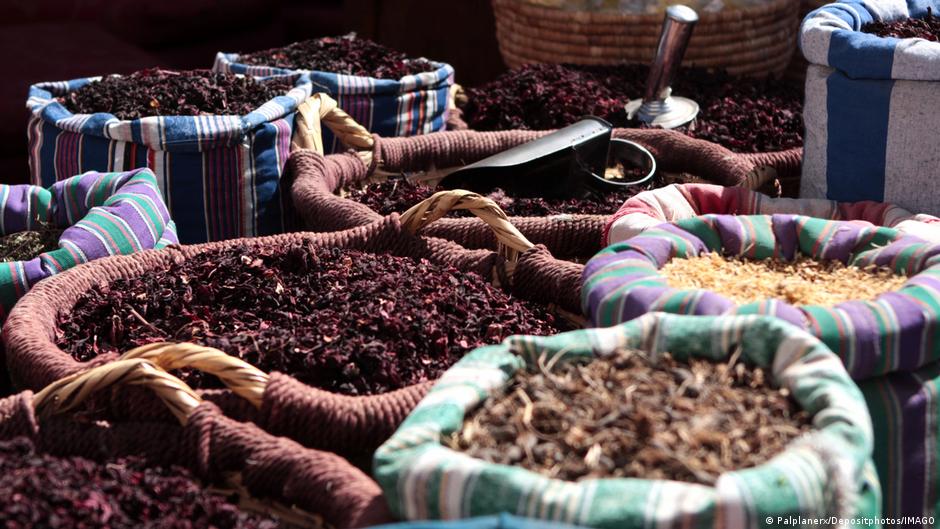
Exporters in Kerala, India’s spice hub, say the disruption is already visible on the ground. The Middle East, especially the UAE, is the center of India’s spice trade, not only as a buyer but as a redistribution centre.
Gulshan John, managing director of Nedspice, a global spice industry company, told DW that the current crisis risks causing reduced demand, delays in orders and uncertainty in payments. “For exporters, this means trade is not stopping, but becoming much less predictable,” he said.
John said, “The figures point to a meaningful but devastating hit. Against quarterly exports of about $1.2 billion (€1.1 billion), the spice industry could lose between $90 million (€83 million) and $180 million in three months.”
“The additional burden from freight, logistics and insurance alone could be around $30 million to $60 million. The impact will be uneven, with small and medium exporters suffering the most as they lack the margins to absorb sudden shocks,” he said.
There is no single official count, but industry estimates suggest that several hundred exporters in Kerala are already affected, especially in and around Kochi city.
Kerala-based agriculture exporter Abraham Thomas said the disruption is already affecting shipments, delaying export consignments and increasing uncertainty.
“Containers are currently stuck at major transit hubs, including Khorfakkan port in the UAE and Sohar port in Oman, halting deliveries to Gulf markets,” Thomas told DW.
Ships are taking longer routes, freight rates have increased, and marine insurance premiums have increased due to war risks. In some cases, ships are rerouting around the Cape of Good Hope – the southern tip of Africa. This results in shipment delays and higher costs across the board. For exporters working to tight deadlines, particularly in perishable goods or contract-based trade, this can quickly translate into losses or broken deals.
Ceramic and textile industries affected
Its influence is already spreading across all sectors. Rice exporters are facing difficulties securing shipments, while import-dependent industries such as fertilizers, tires, paints and chemicals are facing higher costs and potential supply disruptions.
Manufacturing clusters of textiles, ceramics and construction materials, including limestone and sulphur, also face disruption in both imports and exports.
“Freight rates have soared from about $300 to $8,000 per container, eroding margins of groups like Morbi Ceramic and Surat Textiles,” Rushabh Shah, an investment banker at STIR Advisors, an Ahmedabad-based boutique investment banking and advisory firm, told DW. Because many companies depend on export receipts for working capital, delayed shipments as cash flow stalled and credit lines tightened are accelerating the growth. turns into a liquidity crisis.”
Shah points out that the long-term risk is the loss of markets as buyers in the Gulf and Europe are already looking for alternatives in Vietnam, Türkiye and Bangladesh. “Once the supply chain changes, Indian exporters may struggle to regain those relationships. In hubs like Morbi, furnaces are starting to idle, not because of lack of demand, but because exports are at a standstill and input supply is uncertain,” he said.
Is the Indian government doing enough for SMEs?
The government, on its part, has offered limited relief by easing export credit timelines, expanding insurance cover and providing some logistics support to small and medium exporters to relieve them of rising freight traffic and delays. However, for many small and medium exporters, the existing support is falling short.
“There are few tools to reduce freight costs, limited insurance cover and no instant credit backstop. What starts as a logistics disruption risks becoming a deep, long-lasting shock without policy support,” Shah said.
Chakraborty said, “The conclusion is structural. India’s trading system remains vulnerable to shocks in one region. Without diversifying routes, markets and energy sources and creating stronger financial buffers for small exporters, each crisis will expose the same fault lines.”
Edited by: Kate Martyr