Since February 28, the price of bitcoin (BTC) has shown strength in a chaotic scenario.
The conflict drives its use as an alternative currency in the global financial system.
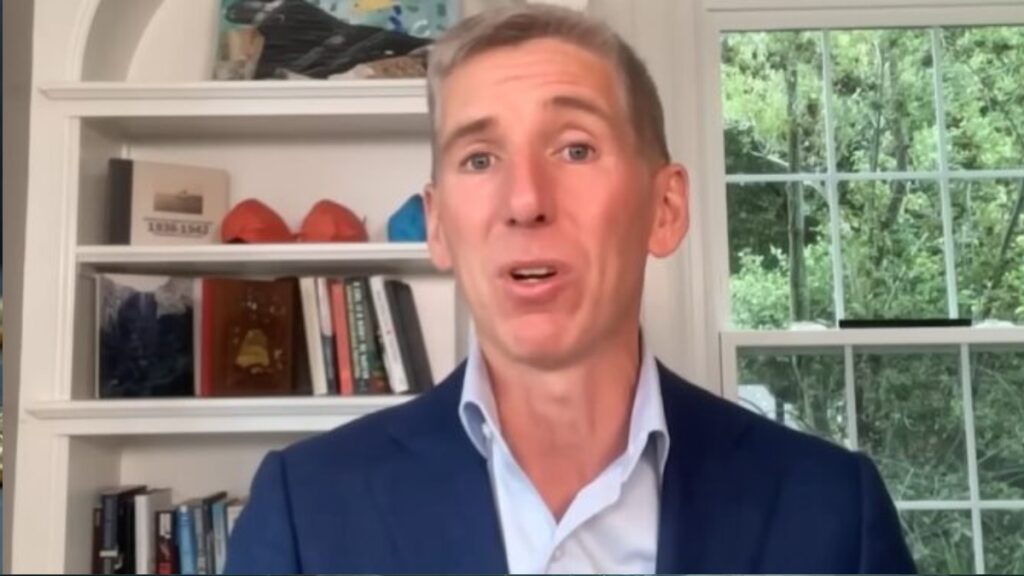
The conflict between the United States, Israel and Iran is reinforcing an idea that Matt Hougan, chief investment officer at Bitwise, sums up directly: “buying bitcoin is like making two bets at once.”
In a analysis published on April 14, 2026 in his X account, the executive maintained that The geopolitical crisis is revealing two dimensions of bitcoin. The first, which is currently trending, is the bet that bitcoin will consolidate itself as “digital gold” and compete with physical gold within the reserve of value market. The second is that, in certain contexts, it can also begin to function more like a currency.
For Hougan, the good performance of the bitcoin price during this geopolitical crisis took the market by surprise. “Bitcoin is a risk asset, and many assumed it would fall in the face of a geopolitical shock of risk aversion,” he said.
However, he ruled out the most common explanations and was blunt: “bitcoin’s strength during this crisis comes directly from the conflict itself. Understanding why is essential.”
From there, he develops his thesis. The first bet is the best known: “It is betting that BTC will become ‘digital gold’ and compete with physical gold in the $38 trillion ‘store of value’ market.”
This comparison is supported by several key characteristics: BTC has a supply limited to 21 million units, cannot be issued at the discretion of central banks, and is resistant to censorship, allowing value to be transferred without intermediaries.. In addition, its monetary policy is predictable thanks to the halving, the event that reduces the issuance of new currencies every four years and reinforces their scarcity over time.
But Hougan introduces a second dimension that, according to him, is beginning to gain weight in the market: “one day, perhaps, bitcoin could act as a traditional currency.”
Hougan himself describes it as a highly speculative bet, linked to unlikely scenarios within a financial system dominated by the dollar.
That scenario began to change in 2022, when the United States expelled Russia from the SWIFT-based financial system, leading several countries (such as Iran and China) to develop alternative infrastructures. At that time, according to the executive, space began to open up for assets that do not depend on financial networks controlled by governments.
In this context, the conflict with Iran appears as a turning point. Hougan mentions a specific case: Iran reported that would begin charging a toll of $1 per barrel (equivalent to 20 million dollars a day) in BTC to any vessel that transited the Strait of Hormuz, a fact that was reported by CriptoNoticias.
Despite this, Hougan himself warns that this type of use also poses risks, such as evasion of sanctions or money laundering, which introduces additional regulatory tensions.
Beyond specific cases, the Bitwise manager proposes a different way of understanding the potential of bitcoin, comparing it with traditional financial instruments: “Options gain value when one of two things happens: either the probability of reaching the target price improves, or the volatility of the underlying market increases.”
According to their analysis, the conflict with Iran activated both factors at the same time: it increased the probability that bitcoin will be used as a currency and increased the volatility of the global financial system.
This leads to a broader conclusion about its potential: “If bitcoin starts playing a dual role, we may need to revise our targets upwards.”
In other words, Hougan posits that the conflict in the Middle East is not only reinforcing bitcoin’s narrative as a safe haven asset, but could also expand its reach as a monetary alternative within an increasingly fragmented financial system.
Despite Hougan’s optimism, that does not mean that BTC is only now beginning to be used as a medium of exchange. In fact, for years the currency created by Satoshi Nakamoto has been used for payments, remittances and international transfers in different contexts, especially in economies with exchange restrictions or high inflation. What changes with the current conflict is the scale and type of actor that could turn to the digital asset.